Start with the charging system, not a guess
An alternator keeps the battery charged while the engine runs and supplies power for the vehicle's electrical system. When it is not charging correctly, a battery light, dim headlights, slow cranking, repeated jump-starts, unusual electrical behavior, or a stalled vehicle can follow. Those symptoms are stressful because the car may start one minute and leave you parked the next.
Rise High checks the charging system before steering you toward an alternator replacement. A weak battery, loose or corroded connection, damaged belt, wiring issue, or another electrical fault can look similar from the driver's seat. Testing first gives you a clearer repair direction and helps keep you from paying for a part that does not solve the real problem.
Start With The Right Visit
For a new battery light, a no-start, dimming lights, or a charging problem without a confirmed cause, use the $150 diagnostic visit.
Confirmed Alternator Repair
When alternator replacement is confirmed and the vehicle, parts, location, and repair are a safe mobile fit, a repair visit may be the more direct option.
Signs the charging system needs attention
- The battery or charging warning light comes on while the engine is running.
- Headlights, interior lights, or dashboard lights dim or flicker.
- The vehicle needs repeated jump-starts even though the battery is not old.
- The engine cranks slowly, stalls after starting, or loses electrical power while driving.
- You hear a new squeal near the belt area, especially after starting the vehicle.
- A shop or prior diagnostic test has already confirmed the alternator needs replacement.
What gets checked before an alternator is recommended
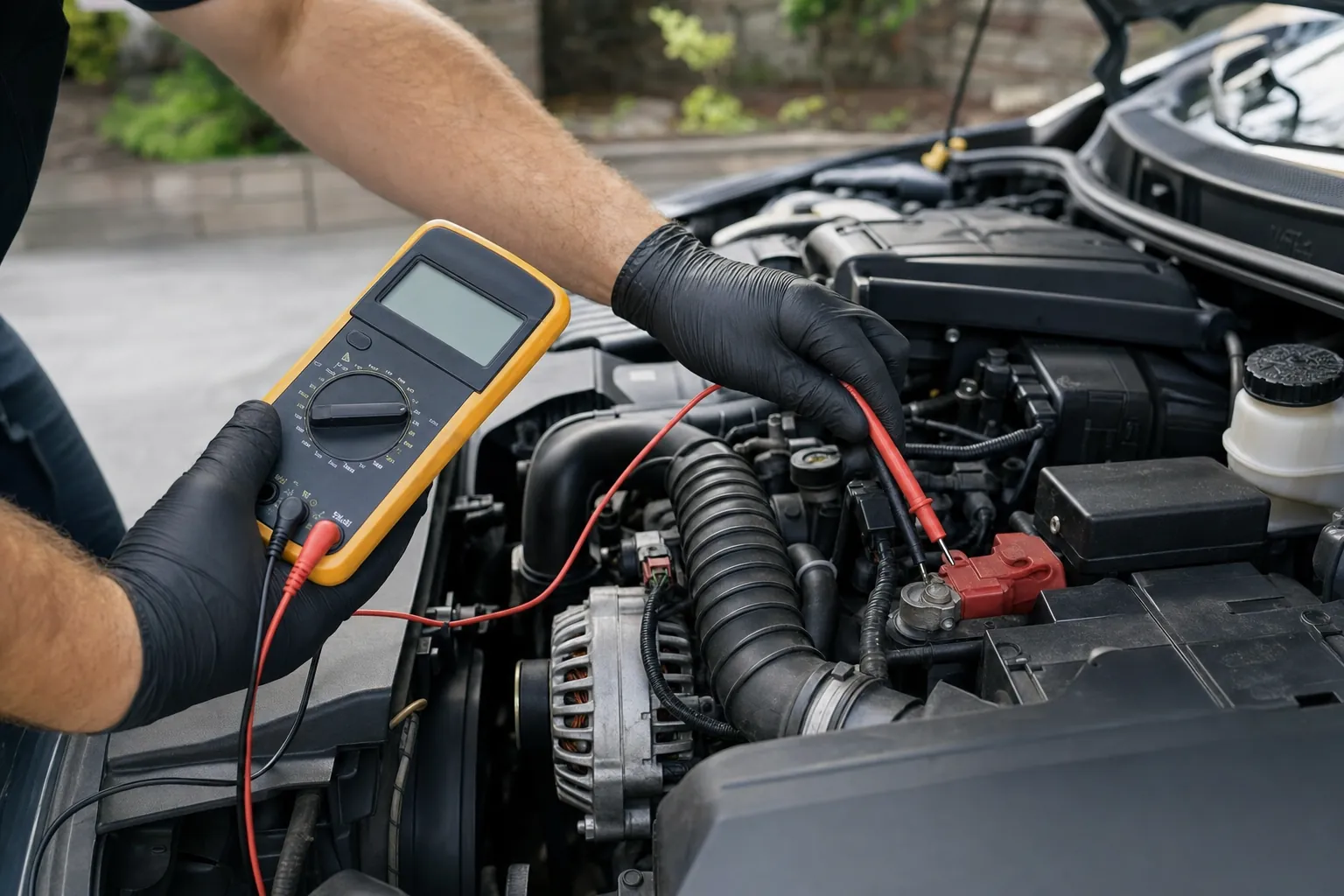
The goal is to find out whether the alternator is actually keeping the battery charged and whether power is getting through the rest of the system as it should. Rise High looks at the vehicle's symptoms, battery condition, terminal connections, charging output, belt condition, and the related electrical clues that can point to the right repair.
That process matters when the car has gone dead more than once, the warning light comes and goes, or a new battery did not fix the issue. An alternator can fail gradually, but electrical trouble does not always trace back to the alternator. A clear diagnosis gives you the best chance of fixing the problem once instead of replacing several parts in sequence.
Battery And Connections
Check battery condition, terminal security, and visible corrosion before assuming the charging system is at fault.
Charging Output
Test charging-system behavior and related electrical clues to confirm whether the alternator is the right repair direction.
Clear Service Fit
Explain whether the work can be handled where the vehicle is parked or whether a shop is the safer, more practical choice.
Alternator replacement that may fit a mobile visit
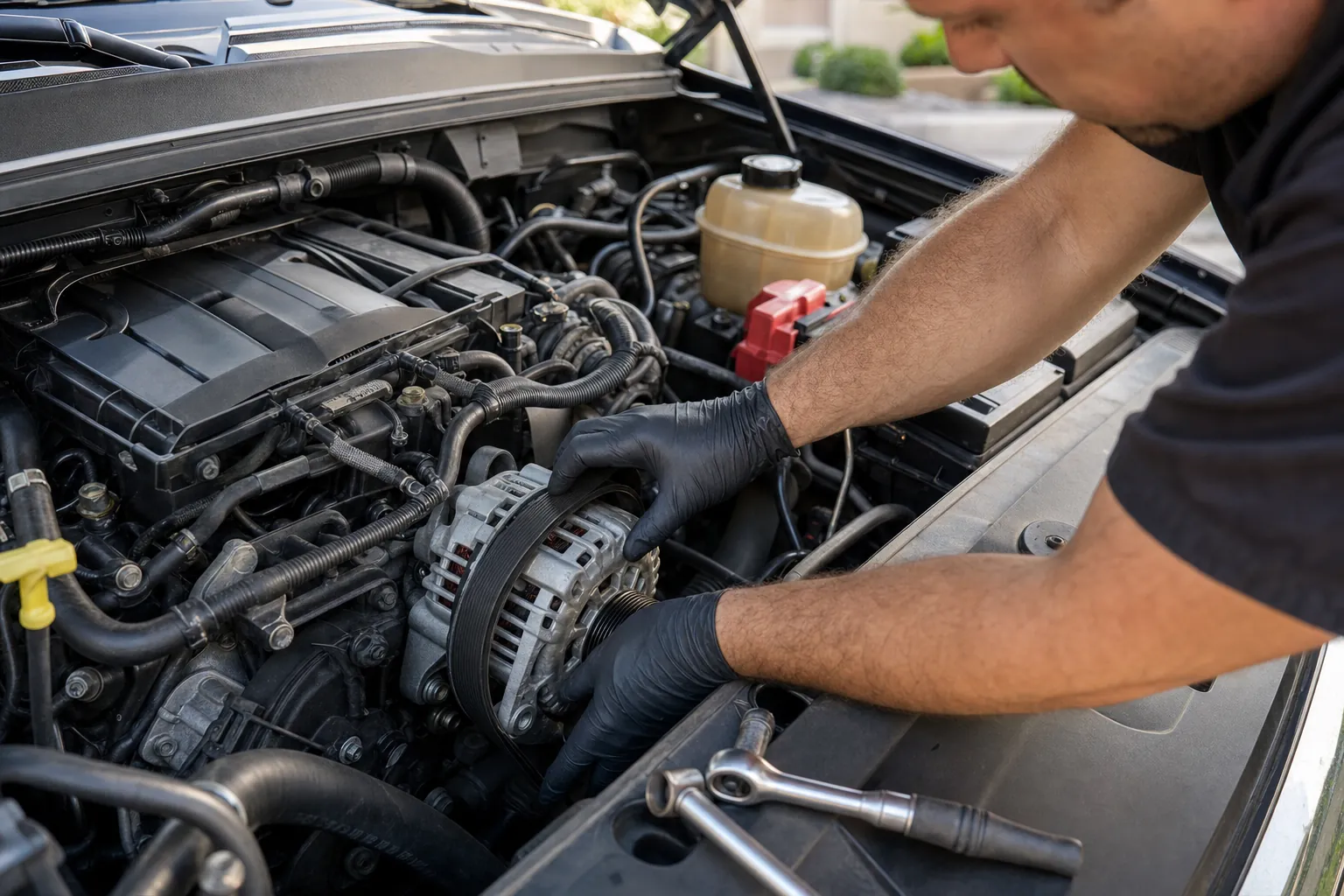
Many alternator replacements are a good mobile-service fit for gasoline and hybrid passenger vehicles when there is safe access to the engine bay, the correct part is available, and the vehicle is parked in a workable location. A driveway, home, office lot, apartment area, garage, or other safe parking location can work when there is room to inspect and repair the vehicle properly.
Rise High does not force every job into a mobile appointment. Some vehicles require extensive component removal, lift access, specialized equipment, major wiring repair, or a controlled shop setting. If the work is outside the right mobile scope, you get a direct answer before committing to the wrong visit. That protects the repair quality and avoids wasting a day on a job that needs a different setup.
Help the visit start smoothly
When you call or text, share the vehicle year, make, model, current location, and the symptoms you are seeing. Mention whether the battery light is on all the time or only sometimes, whether the car still starts, whether it has needed a jump, and whether any recent battery or electrical work has been done. Those details help Rise High confirm the right appointment and arrive prepared for the charging-system concern.
If the vehicle is parked in an apartment lot, office garage, or shared parking area, make sure mobile work is allowed and that there is enough access around the front of the vehicle. Keep the keys available and avoid running the engine repeatedly if the battery light is on or the vehicle is losing power. A safe, accessible work area gives the mechanic a better chance to inspect the system carefully and complete a confirmed mobile-friendly repair without delays.
What to do when the battery light comes on
A battery light is a charging-system warning, not a promise that the vehicle will make it to the next destination. If the alternator is not keeping the battery charged, the vehicle can lose power as the battery drains. Dimming lights, slow cranking, odd electrical behavior, or a vehicle that stalls are signs to get help instead of continuing to drive and hoping the warning clears.
Call or text Rise High with the year, make, model, location, warning lights, and what the vehicle is doing. If the cause is uncertain, book diagnostics so the battery, alternator, belt, terminals, and related electrical system can be checked together. If a trusted diagnosis has already confirmed the alternator, share that information so Rise High can help determine whether a mobile repair appointment is the right fit.
Mobile alternator help across Dallas-Fort Worth
Rise High serves drivers across Dallas-Fort Worth, including Dallas, Fort Worth, Forney, Plano, Frisco, McKinney, Garland, Rowlett, Irving, and nearby communities. Mobile service can save the tow and the shop wait when the repair is a safe fit, especially when the vehicle is already parked at home, work, an apartment, or another accessible location.
For an unconfirmed charging problem, start with diagnostics. For a known alternator replacement, a repair visit may be the more direct path. Either way, the first step is a clear conversation about the vehicle, the symptoms, the location, and what can be handled properly on site.
Frequently asked questions
Can Rise High replace an alternator at my home or work?
Many alternator replacements can be handled where the vehicle is parked when the diagnosis, vehicle access, parts, and work area are a safe fit for mobile service. Rise High confirms that before the appointment.
Does a battery light always mean I need an alternator?
No. A battery light can point to a charging-system problem, but the alternator, battery, battery terminals, belt, wiring, or another fault may be involved. Testing the system first helps avoid replacing the wrong part.
Should I book diagnostics before alternator replacement?
Book diagnostics when the cause is uncertain, the battery light just came on, the car loses power, or the vehicle will not start. A repair visit is a better fit when the alternator replacement need is already confirmed.
Can I drive with the battery light on?
Do not assume the vehicle will keep running. If the charging system is not keeping the battery charged, the car may lose electrical power and stall. Call or text with the warning light, symptoms, and location before driving farther.
When is a shop a better choice for alternator work?
A shop is the better choice when the vehicle needs extensive teardown, lift access, specialized equipment, major wiring repair, or a controlled indoor work area. Rise High will be direct when mobile service is not the right fit.