Brake trouble deserves a clear answer
Brake symptoms are easy to dismiss until they become urgent. A squeal can be worn pads, but it can also be hardware, debris, or another issue. Vibration can point to brake components, but it can overlap with other vehicle concerns. A soft pedal, warning light, fluid leak, pull to one side, or grinding sound needs prompt attention instead of guesswork.
Rise High starts with what the vehicle is doing, then helps determine whether the repair can be handled where it is parked. When mobile service is the right fit, many brake repairs can be completed without arranging a tow or spending the day at a shop. When it is not the right fit, you get a straightforward recommendation before money is spent on the wrong appointment.
Start With The Right Visit
Use diagnostics when the brake problem is uncertain, the vehicle has a warning light, or the symptoms do not clearly point to one confirmed repair.
Confirmed Brake Repair
Use a repair visit when the needed work is known and the vehicle, parts, location, and repair are a safe fit for mobile service.
Signs you should get the brakes checked
- Brakes squeal, scrape, grind, or make a new clicking sound.
- The steering wheel, brake pedal, or vehicle vibrates while stopping.
- The car pulls left or right when you press the brake pedal.
- The pedal feels soft, low, unusually hard, or different from normal.
- A brake warning light comes on, brake fluid is leaking, or stopping distance has changed.
- You already know the vehicle needs pads, rotors, a caliper, or brake hardware replaced.
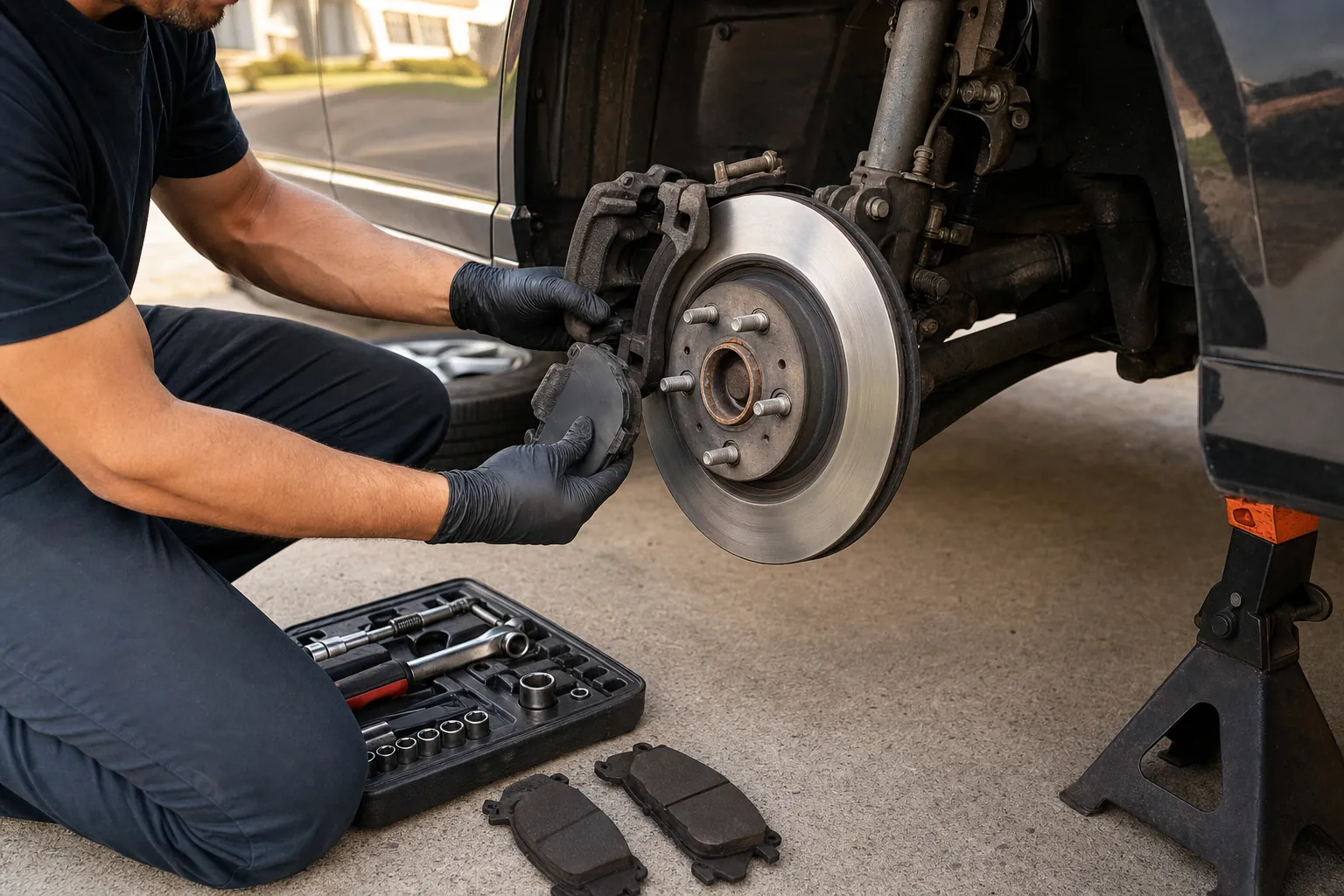
Brake repairs that may fit a mobile visit
Rise High focuses on mobile-friendly work for gasoline and hybrid passenger vehicles, including cars, SUVs, and light trucks. The work must be safe to perform at the location, and the vehicle needs enough access for the mechanic to inspect and repair it properly.
Pads And Rotors
Inspect brake wear and handle many pad and rotor repairs when replacement is the right direction and the job is a safe mobile fit.
Calipers And Hardware
Check common caliper and brake-hardware concerns that can cause uneven wear, noise, pulling, or a brake that does not release correctly.
Honest Limits
Explain when the issue needs a lift, specialized equipment, or a shop environment instead of forcing a poor mobile-service fit.
What gets checked before parts are recommended
A brake job should solve the problem that brought you in, not just replace the most obvious part. Rise High looks at the driver's symptoms, visible brake condition, pad and rotor wear, hardware, caliper movement, and other clues that help point to the right repair. That is especially important when one wheel is wearing differently, the vehicle pulls during braking, or the noise started after recent work.
If the vehicle is making a noise but the cause is not confirmed, book diagnostics first. If a shop has already identified the needed pads and rotors, or you know the exact repair, a repair appointment may be the more direct path. Call or text with the year, make, model, location, symptoms, and any estimate or diagnosis you already have so Rise High can help you choose the right visit.
When a shop is the better brake-repair choice
Mobile service is valuable because it saves the tow and the wait, not because every job belongs in a driveway. Some brake problems need a lift, extensive line repair, major rust removal, specialized bleeding equipment, significant teardown, or an indoor shop setting. Those are not shortcuts worth taking.
Rise High will tell you when a repair is outside the right mobile scope. That protects the vehicle, the repair quality, and your time. If a mobile appointment is appropriate, the goal is the same: inspect carefully, explain the repair direction, and complete the work where the vehicle already sits.
Mobile brake repair across Dallas-Fort Worth
Rise High serves drivers across Dallas-Fort Worth, including Dallas, Fort Worth, Forney, Plano, Frisco, McKinney, Garland, Rowlett, Irving, and nearby communities. A driveway, home, office lot, apartment area, garage, or roadside location can work when access and safety allow.
If the vehicle is unsafe to drive, do not push it to the shop just to get an answer. Call or text Rise High with the symptoms and location. For uncertain brake trouble, book diagnostics. For a confirmed mobile-friendly repair, book a repair visit.
Frequently asked questions
Can Rise High repair brakes at my home or work?
Many brake repairs can be handled where the vehicle is parked when the repair, vehicle, parts, and work area are a safe fit for mobile service. Rise High will confirm that before the appointment.
Should I book diagnostics before brake repair?
Book diagnostics when the cause is unclear, a warning light is on, the vehicle pulls, the pedal feels different, or there is a new noise or vibration. A repair visit is a better fit when the needed brake repair is already confirmed.
Can you replace brake pads and rotors?
Rise High can handle many pad, rotor, caliper, and brake-hardware repairs on gasoline and hybrid passenger vehicles when the job is appropriate for mobile service.
What brake problems need a repair shop?
A shop is the better choice when the vehicle needs a lift, extensive brake-line work, major rust removal, specialized equipment, or a controlled indoor work area. Rise High will be direct when a mobile repair is not the right fit.
Is it safe to drive with grinding brakes or a warning light?
Do not assume it is safe. Grinding, a brake warning light, a soft pedal, a strong pull, leaking fluid, or a major change in stopping distance should be checked promptly. Call or text with the symptoms and vehicle details before driving it further.