What Is a Mobile Mechanic?
A mobile mechanic comes to your home, work, or apartment for on-site diagnostics and repairs. Learn what they can fix and when a shop is better.
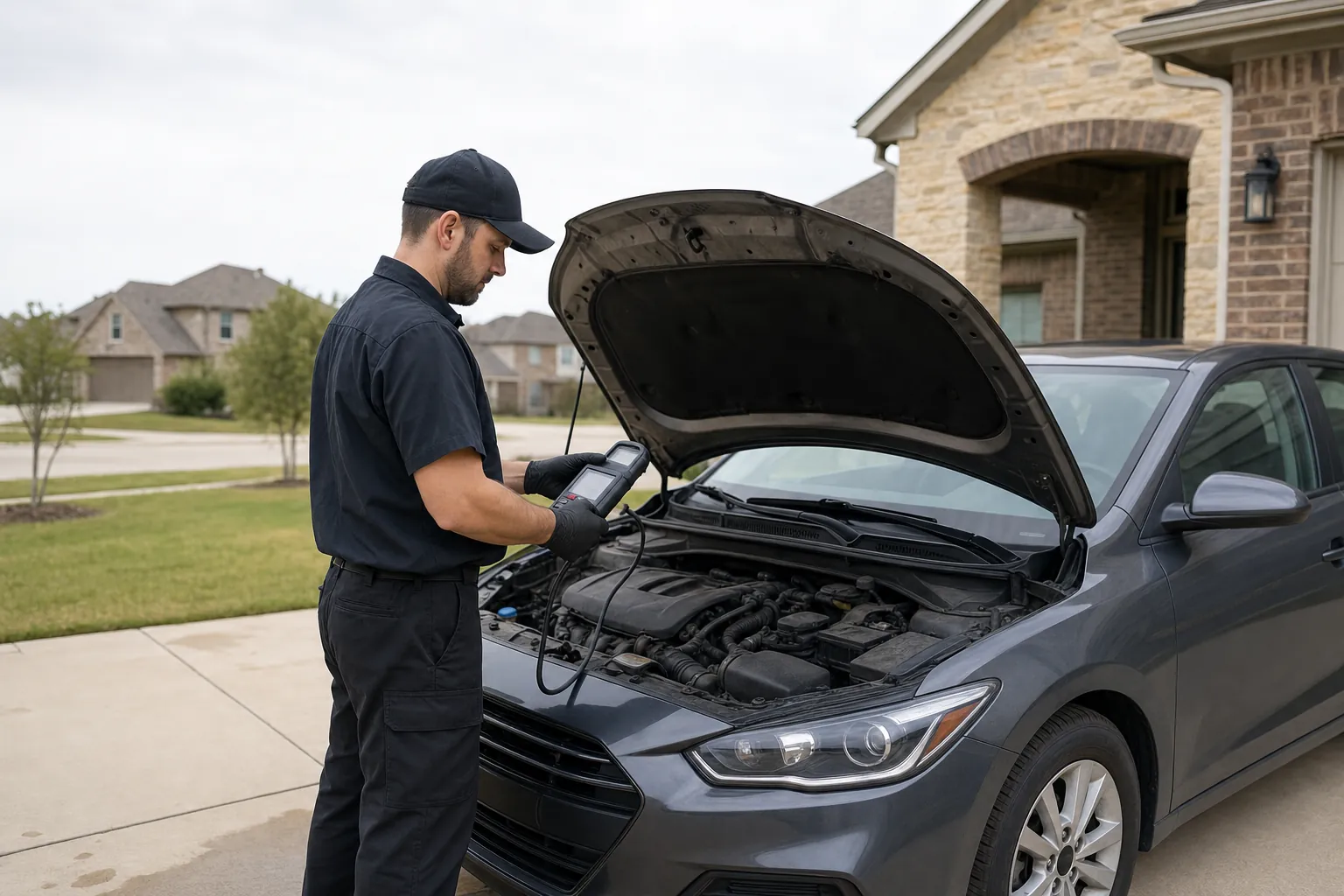
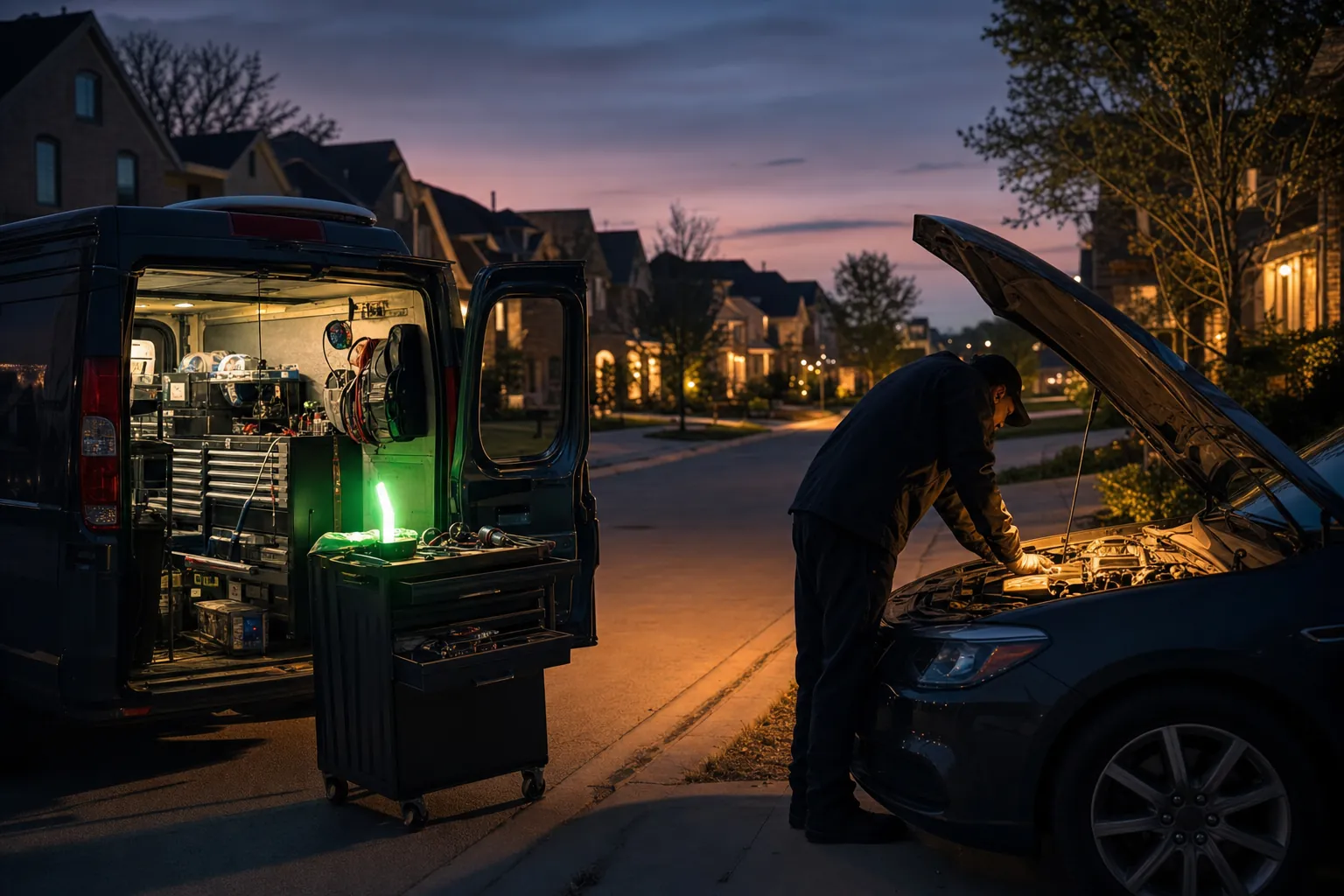
A mobile mechanic comes to your home, work, apartment, or another safe parking area to diagnose and repair your car where it is already parked. These visits can be a strong fit for common problems, but not every repair belongs outside. The value is getting the right work done without adding a tow, a shop drop-off, and a wasted day when the job is a safe fit.
For a Dallas-Fort Worth driver, mobile repair can be especially useful when a car will not start, a warning light needs real diagnosis, the brakes are making noise, or a battery, starter, or alternator problem has stranded the vehicle. The best result starts with a clear decision: is this a job that can be diagnosed or repaired safely on site, or does it need the equipment and setup of a full shop?
Quick Answer
Mobile mechanics bring professional diagnostic and repair work to your location. They are a strong fit for many common issues, but repairs needing a lift, alignment equipment, major teardown, or an indoor bay still belong at a shop.
What a mobile mechanic actually brings to the job
A proper mobile visit is more than showing up with a socket set. The technician should arrive with the diagnostic equipment, test tools, hand tools, safety gear, and parts plan needed for the symptom you described. The service happens where the vehicle sits, but the thinking should be the same as it would be in a repair bay: inspect, test, confirm the fault, explain the options, and get approval before moving into paid repair.
That is why a mobile mechanic should ask about the vehicle year, make, model, engine, symptoms, warning lights, recent work, and location before the appointment. Those details help determine whether the repair is mobile-friendly and whether the technician can bring the right parts or should begin with testing. A vague “my car is acting weird” call can still be helped, but it is normally a diagnostic appointment, not an honest promise to replace a specific part.
Consumer guidance matters here too. The Texas Attorney General’s car repair guidance recommends written authorization before a vehicle is inspected, tested, diagnosed, or disassembled for an estimate. Whether the car is at a shop or your home, you should understand what is being checked, what it costs, and when the repair changes from diagnosis to parts and labor.
Repairs that are often a good fit for mobile service
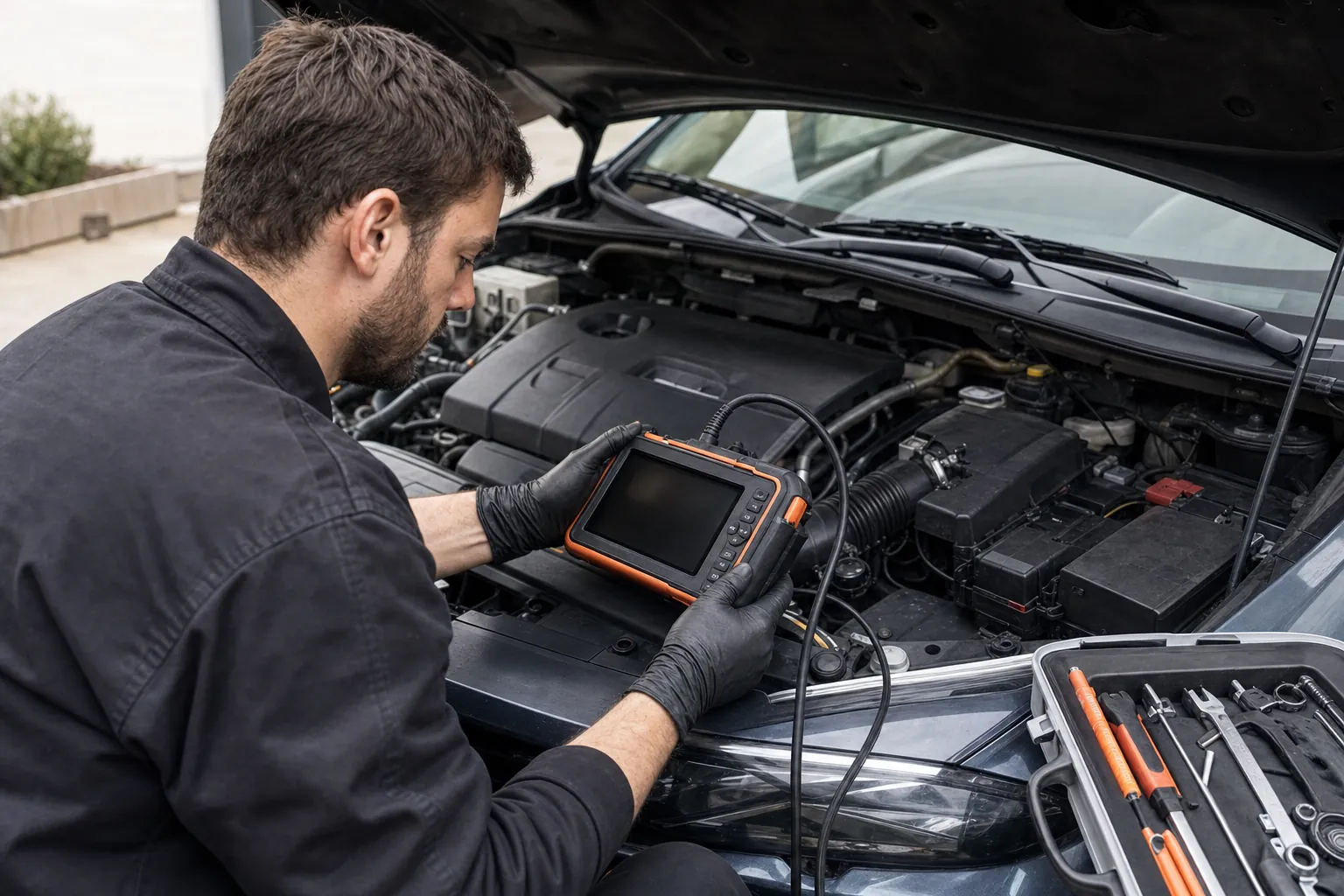
The right mobile job is usually one that can be completed safely with the vehicle on level ground and without a large fixed machine. That covers more work than most drivers expect. Common fits include warning-light diagnostics, no-start testing, battery and terminal service, starter and alternator work, many brake jobs, sensors, ignition components, cooling-system repairs, and selected suspension or steering repairs.
No-start calls are a good example. A car that will not crank or will not start may have a weak battery, corroded terminals, a failed starter, a charging problem, wiring trouble, a fuse or relay issue, or something unrelated to the starting system. The National Highway Traffic Safety Administration specifically advises drivers to have the battery and charging system checked when needed, which is why battery replacement should follow testing when the actual cause is uncertain.
Mobile service is also valuable when the vehicle does run but needs a clear answer before parts are ordered. A scan code may point toward a system, but it does not automatically prove which part failed. A technician can use code information, live data, electrical checks, and a physical inspection to narrow down the cause. That protects you from buying a sensor, battery, or alternator based on a guess.
A mobile visit should start with fit
The important question is not “Can someone come to me?” It is “Can this job be done safely and correctly where the vehicle sits?” A trustworthy answer may be yes, no, or “let’s diagnose it first.”
When a repair shop is the better choice
Mobile mechanics are not a replacement for every shop. A full facility has a lift, alignment rack, tire equipment, heavy-duty presses, secure indoor space, and the ability to keep a vehicle apart for longer repairs. Those advantages matter when the job needs access under the vehicle, precision alignment, major engine or transmission work, large-scale disassembly, welding, or a controlled environment.
A shop may also be the smarter move when the vehicle cannot be parked safely, the work area is too tight, weather makes the repair risky, or the repair requires several days and parts that cannot be confirmed until the vehicle is opened up. There is no prize for forcing a bad-fit repair into a parking lot. The right call is the one that gets the work done correctly and keeps everyone safe.
That division of labor can save money. A mobile technician can sometimes diagnose the problem and tell you clearly that a shop needs to complete the next step. You avoid guessing, and the shop receives useful information about the symptom and confirmed system. For a vehicle you are thinking of buying, a pre-purchase inspection can provide the same kind of clarity before you take on someone else’s repair problem.
Mobile mechanic vs. tow and shop visit
When a car is parked at home or work, the real comparison is often not mobile mechanic versus shop labor alone. It is mobile service versus arranging a tow, finding a ride, dropping the vehicle off, waiting for inspection, and returning when the work is finished. If the repair can be done safely on site, mobile service can remove a surprising amount of disruption from the day.
That does not mean mobile is automatically the lowest price. A shop may be more efficient for a lift-dependent repair, an alignment, or a job that needs several technicians and fixed equipment. A mobile appointment is the better value when it avoids a tow or prevents a simple repair from turning into an all-day logistics problem. The right comparison includes the repair itself, any towing expense, the time you lose getting to and from a shop, and whether the vehicle is even safe to drive there.
For example, a flat battery can be a quick mobile repair if testing confirms the battery is the issue. But a battery that keeps dying may point to a charging, wiring, or parasitic-draw problem. In that case, the useful first appointment is diagnostic work, not an automatic battery sale. This is the same practical distinction explained in Rise High’s mobile mechanic cost guide: testing is what separates an informed repair decision from throwing parts at a symptom.
How a good mobile mechanic visit works
A smooth appointment begins before the technician arrives. Share the vehicle details, the symptoms, the location, and whether the vehicle can move. Be specific about what changed: does it fail only when cold, after rain, while braking, after a jump-start, or when a warning light appears? Small details can point the diagnosis in the right direction and help the technician prepare.
At the visit, a professional should explain the first step. If the cause is unknown, that means diagnosis. If the repair need is already confirmed, it may mean inspecting the vehicle and verifying the parts before starting. You should be told what the appointment fee covers, what needs approval, and what may change if testing uncovers a different problem. Rise High starts every appointment from one service selection page, so you can choose the help that fits the problem.
Once the problem is confirmed, the technician can explain the repair options, part choices, expected time, and whether the job is still appropriate for mobile service. The answer may be a same-visit repair, a return appointment with parts, or a recommendation to use a shop. That last option is not a failure. It is professional judgment.
How to prepare your vehicle and location
Set the appointment up for success by parking on reasonably level ground with room around the vehicle. Have the keys available, remove major clutter from the work area, and share any apartment, gate, garage, parking, or property restrictions ahead of time. If the car is on a busy shoulder, a steep driveway, or inside a cramped garage, say so before the appointment. The location can determine whether the work is safe to perform.
Bring the basics too: your vehicle information, the symptoms, any warning-light messages, recent repair history, and a note about what happens before the problem appears. If the vehicle has been jumped, overheated, or had parts replaced recently, that detail can prevent duplicated work. The goal is not to diagnose the car yourself. It is to give the technician a clean starting point.
Questions to ask before booking
A good first conversation should make the next step clearer, not leave you guessing. Ask whether your symptom sounds like a diagnostic visit or a repair visit, what booking or travel fee is due, and whether the technician expects the work to fit a mobile setting. You should also ask how approval works if testing points to a different issue than you expected.
- Is this a diagnosis, a confirmed repair, or a combination of both?
- What information should I send before the technician comes out?
- Is my driveway, apartment lot, or work location safe and suitable for the job?
- What will the visit fee cover, and what needs approval before parts or labor begin?
- If the vehicle needs a shop, can the technician explain why before I spend money on the wrong service?
Be cautious of anyone who promises a major repair without asking basic questions about the vehicle and symptom. A clear process is a better sign than an instant answer. The technician may be able to quote a known repair, but a warning light, no-start condition, or intermittent electrical problem deserves enough testing to confirm what actually failed.
What Rise High can help with in DFW
Rise High Mobile Mechanics serves Dallas-Fort Worth drivers with mobile-friendly diagnostics and repairs for gasoline and hybrid passenger vehicles. That includes check-engine and electrical troubleshooting, no-start issues, brakes, battery and charging problems, starter and alternator work, suspension and steering repairs, cooling issues, and selected light engine repairs.
The business is built around meeting the vehicle where it is parked, then being honest about the right next step. If the fault needs testing, start with diagnosis. If the repair is already known, share the vehicle details and book the repair visit. If the job needs shop equipment, you should hear that before anyone starts taking parts off in your driveway.
Not Sure What Your Car Needs?
Call or text Rise High with the vehicle details, symptoms, and location. You will get a clear recommendation on the right appointment type.
Frequently asked questions
What does a mobile mechanic do?
A mobile mechanic travels to the vehicle and performs diagnostics, maintenance, or repairs that can be completed safely without a full repair bay. The exact work depends on the vehicle, the symptom, the available space, and the tools the repair needs.
Can a mobile mechanic fix a car that will not start?
Often, yes. A no-start problem can come from a battery, starter, alternator, wiring, fuse, relay, fuel issue, or security-system problem. A diagnostic visit is the right first step when the cause has not been confirmed.
When should I take my car to a shop instead?
Choose a shop when the repair needs a lift, alignment rack, large equipment, extensive teardown, a controlled indoor environment, or longer-term storage. A good mobile mechanic should tell you when the job is not a safe fit for a driveway or parking lot.
How do I prepare for a mobile mechanic visit?
Have the year, make, model, symptoms, warning lights, and location ready. Park on reasonably level ground with room around the vehicle, make sure the keys are available, and mention any gate, parking, or property-access restrictions before the visit.
How much does a mobile mechanic visit cost?
Rise High's diagnostic and repair bookings require a $50 non-refundable deposit. A diagnostic visit is $150 total, with the remaining $100 applied toward repair work booked within seven days of the diagnosis.