Car Clicks but Won't Start? What to Check First
Car clicking but not starting? Learn the safe first checks, why a bad starter is not certain, and when to choose $150 on-site diagnostics.
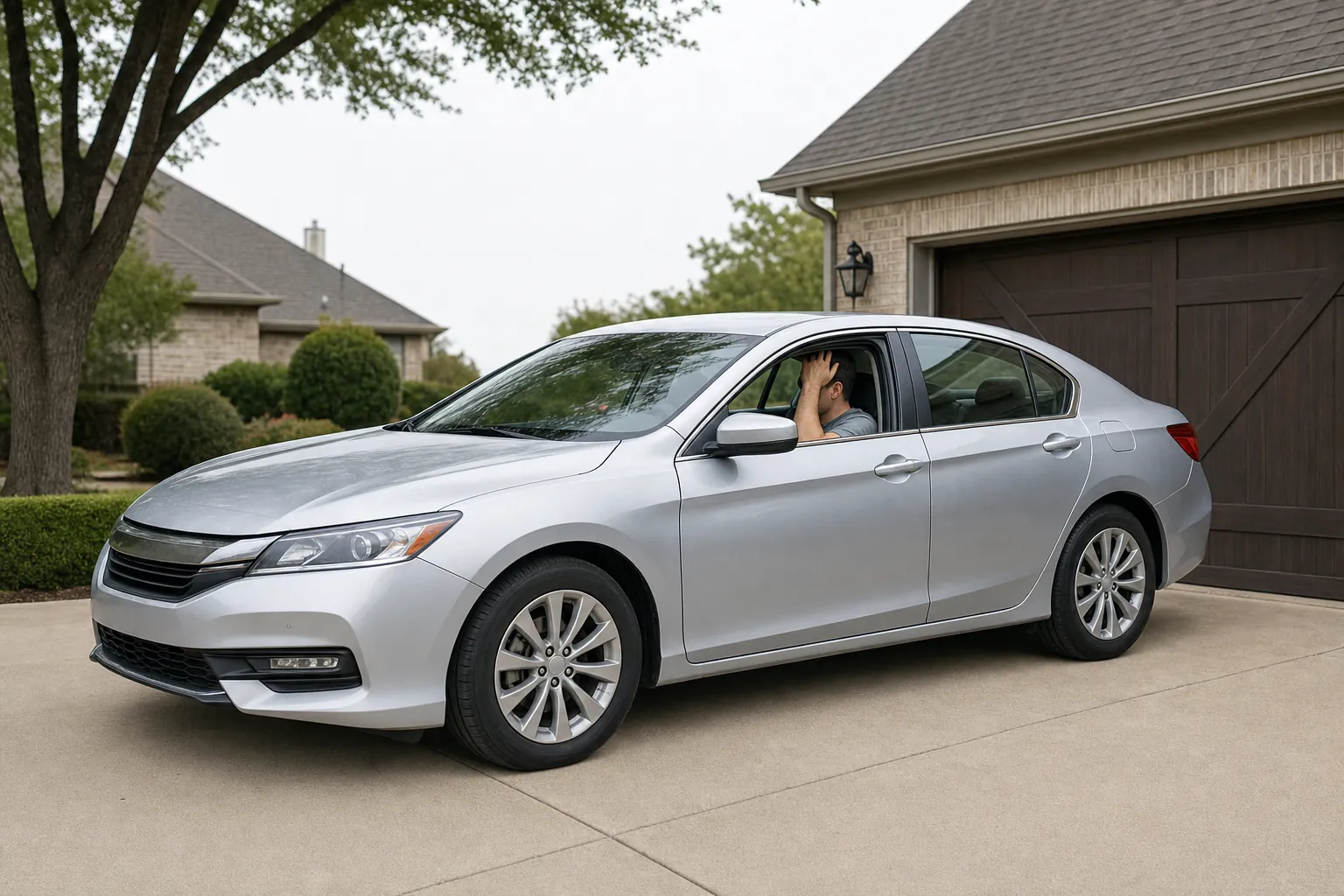
If your car clicks but will not start, do not assume the starter is bad. Rapid clicks often point to a battery or connection problem, while one solid click can have several causes. Make a few safe observations, then choose the $150 on-site diagnostic when the cause is not confirmed.
For a Dallas-Fort Worth driver, this often happens at the worst moment: before work, in an apartment lot, or after a stop when the vehicle was running normally. A click is a clue, not a confirmed repair. The right next step depends on whether the vehicle makes rapid clicks, one heavy click, or no sound at all, and whether the engine ever starts to turn.
Quick Answer
If your car clicks but will not start, do not assume the starter is bad. Check for a safe, obvious battery-connection issue, note whether the clicks are rapid or a single thud, and choose diagnostics when the cause is unclear.
Rapid clicks and one click are different clues
Rapid, repeated clicking usually means the starting system is repeatedly trying to engage but does not have stable power. A low battery is common, but loose terminals, corrosion, damaged cables, or a poor ground can create the same pattern. The dash may still light up because accessories need far less power than the starter motor.
One solid click can point toward the starter or starter solenoid, but it is not a verdict. The starter may be receiving a signal without enough current to turn the engine. A cable, relay, fuse, ground, park or neutral switch, ignition switch, security system, or wiring issue can also stop the engine from cranking.
No click and no crank is a separate path. That can involve the battery, key or fob, start button, brake-pedal switch, gear-position switch, fuse, relay, wiring, or another control issue. When the engine cranks normally but does not run, the starter may already be doing its job and the diagnosis moves toward fuel, spark, sensor, air, timing, or anti-theft concerns.
Start with a few safe observations
Before calling for help, take one calm look at the situation. Put the vehicle in Park, set the parking brake, and make sure accessories are off. If it is safe to do so, look at the battery terminals for an obviously loose connection. Do not remove cables, bypass fuses, or strike the starter. Those shortcuts can damage the vehicle, create a safety problem, and still leave the real fault unknown.
Make no more than one or two short start attempts. Listen for the pattern, watch whether the interior lights dim heavily, and note whether the engine turns at all. If the car starts with a jump, that matters, but it does not automatically prove the battery is the only problem. The battery may be weak, the connection may be poor, or the charging system may not be replenishing it after driving.

Try Park and Neutral, but do not force the shifter
On an automatic vehicle, a worn or misadjusted gear-position switch can prevent a start if the vehicle does not recognize Park or Neutral. With your foot on the brake and the parking brake set, try one brief start attempt in Park, then one in Neutral. Do not attempt this while the vehicle is moving, and do not force the shifter if it feels stuck.
If the vehicle starts in Neutral but not Park, tell the technician exactly what happened. It is valuable diagnostic information. It does not mean you should keep relying on Neutral starts or ignore the issue. A starting safety switch affects whether the vehicle starts in the intended gear position and needs proper attention.
Why lights can work while the car still only clicks
Headlights, the radio, and dashboard lights can make a battery look healthy when it is not healthy enough for starting. The starter needs a short burst of high current. A battery with a weak cell, low state of charge, or a connection that has high resistance may run small electrical loads but fail when the starter asks for power.
This is also why a recent battery replacement does not rule out the battery path. A new battery can have a loose terminal, damaged cable end, poor ground, incorrect fitment, or an underlying charging problem. Testing needs to look at the battery condition and the path from the battery to the starter while the vehicle is being asked to start.

A click is not a parts diagnosis
Battery, terminal, cable, ground, starter, relay, fuse, and control problems can overlap. A proper test is cheaper than replacing the most plausible part and finding the car still will not start.
What a jump-start does, and does not, tell you
If the car starts immediately with a jump, the battery path deserves attention. The battery may be discharged, weak under load, or connected through a terminal or cable that is not carrying current well. It also raises a second question: why was the battery low? A car that needed one jump after a dome light was left on is a different situation from a car that needs repeated jumps after normal driving.
A jump-start does not clear the starter, alternator, wiring, or connection from the list. The alternator is responsible for replenishing the battery after the engine starts. If the vehicle starts with a jump and then dies, the battery warning light appears, or the same no-start returns soon afterward, the charging system or an electrical fault may still be involved. Tell the technician exactly what changed after the jump rather than treating it as proof that a new battery is the answer.
Use reasonable caution when attempting a jump. Follow the vehicle manual and the jump-pack or cable instructions, keep sparks away from the battery, and do not jump a visibly damaged or leaking battery. If you are unsure, a diagnostic visit is safer than connecting cables by guesswork.
When the starter is more likely to be involved
A starter becomes more likely when the battery and connections test well, the vehicle has a no-crank symptom, and the starting circuit is supplying the correct power and command. Intermittent behavior can also matter. A vehicle that clicks once, starts after several attempts, or changes after heat soak may have a starter-related issue, but those symptoms still need to be separated from cable, connection, relay, and control faults.
Starter access varies widely by vehicle. Some starters are practical to replace where the car sits. Others require major disassembly, lift access, or a safer shop environment. Rise High's mobile starter replacement service is for confirmed starter concerns that fit the vehicle and worksite, not for every clicking sound.
What a diagnostic visit actually checks
A diagnostic visit is not a guess based on the sound. Depending on the vehicle and symptom, the checks may include battery condition, terminal security, voltage drop through the cables, ground paths, fuses, relays, starter command, charging performance, and stored fault information. The goal is to identify whether the engine is being prevented from cranking or whether it is cranking but missing something it needs to run.
This approach matters when a car has already had parts replaced. Replacing a battery, then a starter, then an alternator can become expensive quickly when the original fault is a cable, connection, relay, wiring issue, or another control problem. Diagnosis narrows the decision before parts and labor are approved.
For an unclear no-start, Rise High charges $150 total for on-site diagnostics. A confirmed repair visit starts with a $50 booking and travel fee before parts and repair labor. That distinction helps you choose a test-first appointment when the cause is still open instead of booking a repair that may not match the fault.

Details to share before the technician arrives
Good information helps the visit begin with the right plan. Have the year, make, model, engine if known, and exact location ready. Describe the sound: repeated rapid clicks, one heavy click, a slow crank, normal cranking with no start, or silence. Mention whether the vehicle recently needed a jump, whether a battery, alternator, starter, or terminal was replaced, and whether any warning lights appeared before the no-start.
Also describe the worksite. An open, level driveway or parking space is very different from a steep drive, garage with limited access, busy shoulder, or gated apartment complex. Rise High's appointment process explains why the symptom and access details matter before a mobile visit. The goal is not for you to diagnose the vehicle yourself. It is to help the mechanic arrive prepared to confirm the problem safely and efficiently.
- Note whether the clicks are rapid, a single click, or followed by any engine cranking.
- Share what happened after a jump-start, if one was attempted safely.
- Mention recent battery, alternator, starter, or electrical work.
- Provide the vehicle details, location, and any gate, garage, or parking restrictions.
Know when to stop and use a shop or tow
A mobile visit is not the right answer for every no-start. A repair shop is often the better choice when the diagnosis points to extensive wiring work, engine mechanical trouble, a module or security-system issue, major disassembly, or equipment that needs a lift. It is also the better choice when the vehicle is on a busy roadway, unstable ground, a steep driveway, poor lighting, or a location without enough room to work safely.
If a warning appears along with the no-start, check the vehicle identification number through NHTSA's recall lookup before paying for work that could be related to a manufacturer campaign. When you approve testing or repairs, get the scope and cost explained clearly. The Texas Attorney General's car repair guidance recommends clear written authorization before repair work begins.
How Rise High helps with a clicking no-start
Rise High Mobile Mechanics helps Dallas-Fort Worth drivers with on-site diagnostics, battery and charging checks, starter concerns, electrical faults, and mobile-friendly repairs for gasoline and hybrid passenger vehicles. When the car clicks but will not start, the first job is to determine whether the issue is in the battery path, the starting system, or another system entirely.
If testing confirms a mobile-friendly repair and the vehicle is in a safe location, Rise High can explain the next step. If the fault needs a repair shop, you get a direct answer before spending money on the wrong repair visit. Drivers can also read the guide for a car that will not start when the battery seems good and learn when a mobile starter replacement makes sense.
Get the Clicking No-Start Tested Where It Sits
Choose Diagnostics in the Rise High app, then share your vehicle identification, location, and what happens when you try to start it. Rise High can confirm the right next step before a repair visit.
Frequently asked questions
What does rapid clicking when starting a car mean?
Rapid clicking often means the starter is not getting enough usable power, commonly because the battery is low or a battery connection is loose or corroded. It is a useful clue, not a final diagnosis, because cable and ground problems can create the same sound.
Can a bad starter make one click?
It can, but one solid click does not prove the starter has failed. A weak battery under load, damaged cable, bad ground, relay, fuse, wiring problem, or missing start signal can also leave a vehicle with a single click and no crank.
Should I keep trying to start a car that only clicks?
No. One or two brief attempts are enough to note the symptom. Repeated attempts can drain the battery and make the original problem harder to separate. Record what happens, then arrange testing if the car will not start.
Should I book a battery visit or diagnostics for a clicking car?
Choose a battery visit when the battery has been confirmed bad. Choose diagnostics when the cause is not confirmed, the battery seems fine, the symptom is intermittent, or the vehicle still clicks after a jump or battery replacement.
Related posts
How Much Does a Mobile Mechanic Cost?
How much does a mobile mechanic cost in Dallas-Fort Worth? Rise High charges $150 for diagnostics and a $50 booking and travel fee for confirmed labor-only repairs.
Can a Mobile Mechanic Replace a Starter?
When a mobile starter replacement makes sense, why testing comes first, and when a Dallas-Fort Worth repair shop is the better call.
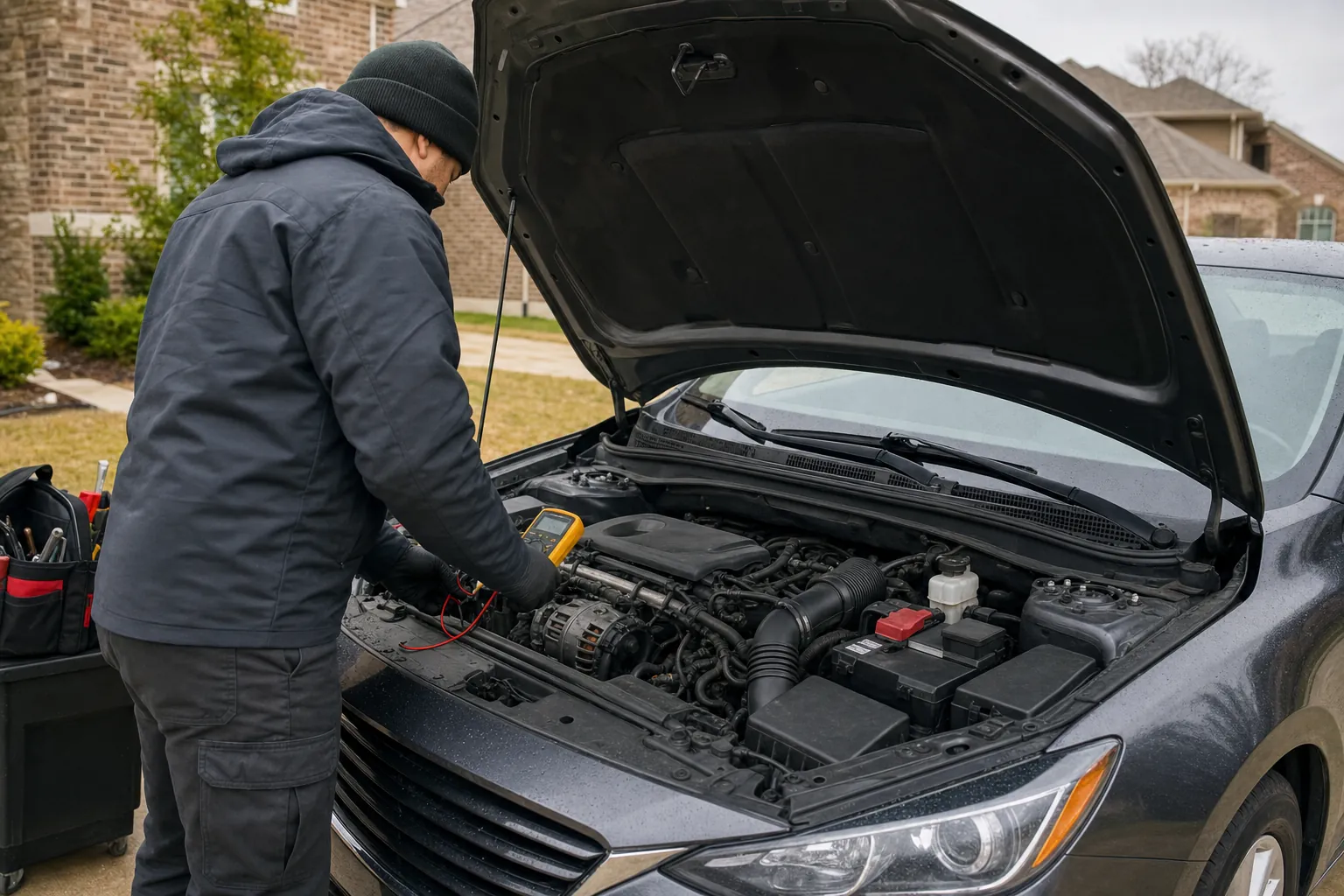
Can a Mobile Mechanic Replace an Alternator?
Yes, often. Learn when a mobile mechanic can replace an alternator at your home or work, when testing comes first, and when a shop is safer.
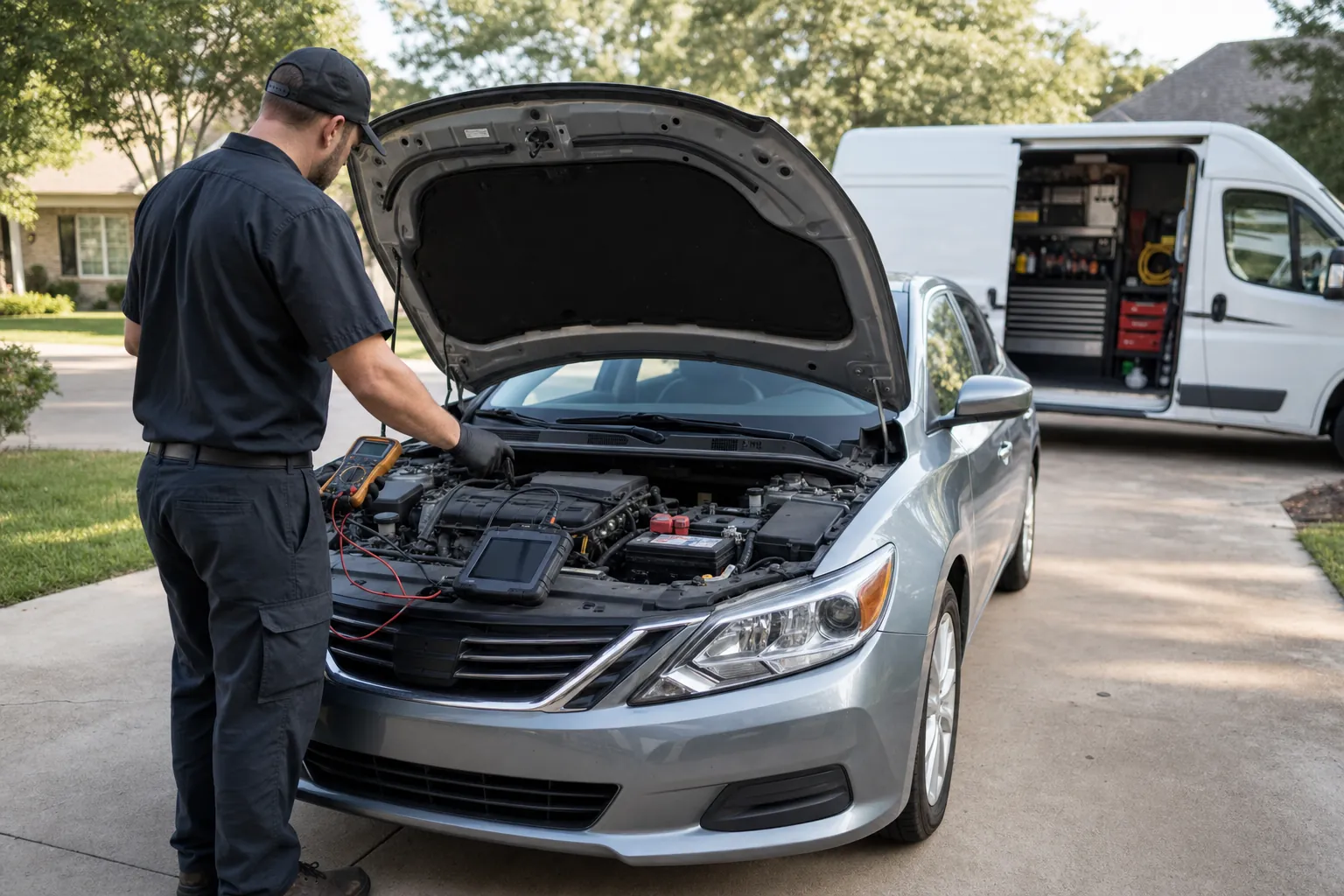
Car Won't Start but Battery Is Good? Next Steps
What to check when your car will not start but the battery seems good, plus when Dallas-Fort Worth drivers should book mobile diagnostics.