Can a Mobile Mechanic Replace an Alternator?
Yes, often. Learn when a mobile mechanic can replace an alternator at your home or work, when testing comes first, and when a shop is safer.
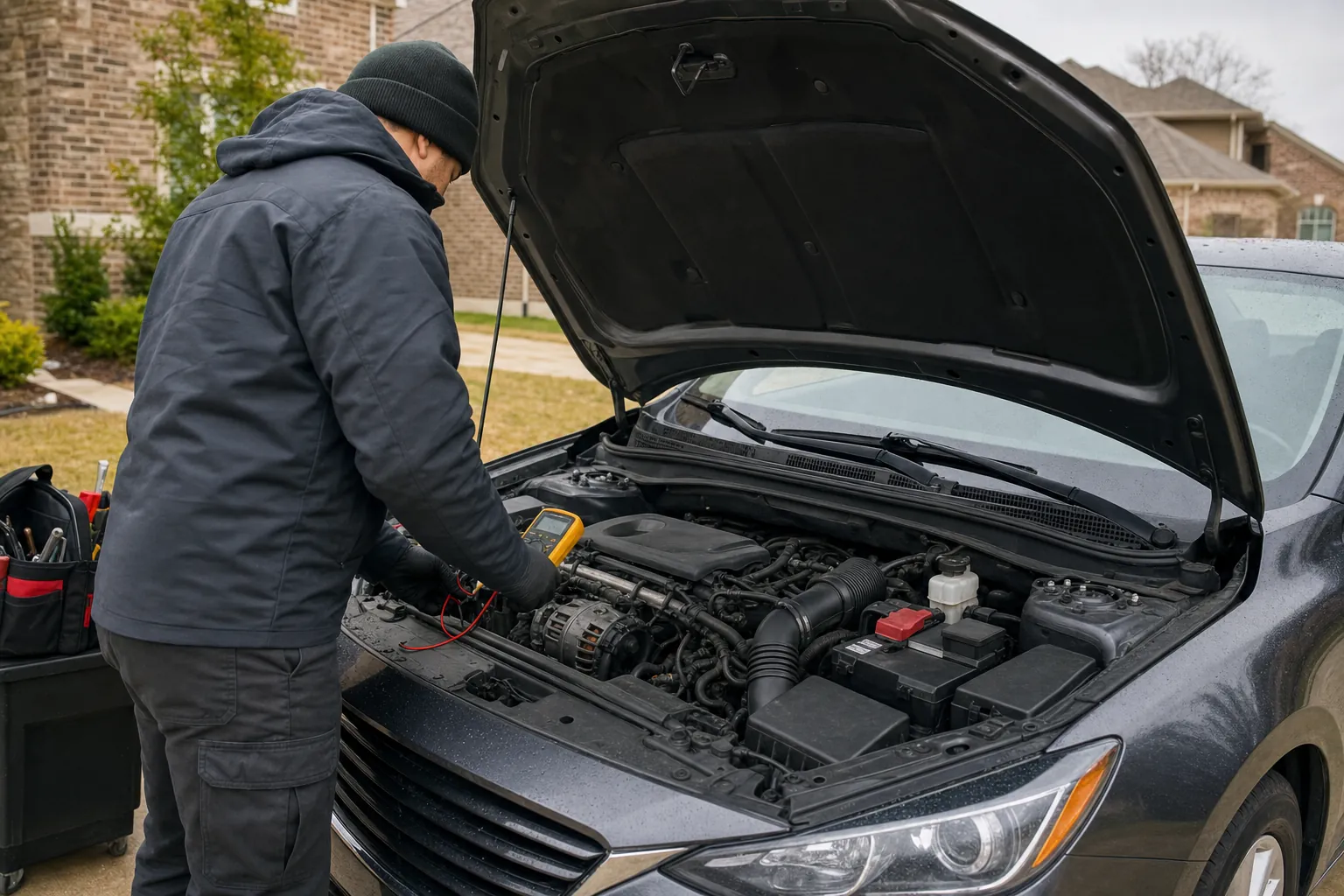
Yes, a mobile mechanic can often replace an alternator where your car is parked. The repair is a strong fit when testing points to the alternator, the vehicle has safe access, and the work can be completed without major teardown or shop equipment. The important part is confirming the failure first. A battery light, repeated jump-start, or no-start does not automatically mean the alternator is the failed part.
For Dallas-Fort Worth drivers, that distinction can save a tow, a missed day at a shop, and the cost of replacing the wrong part. The alternator, battery, terminals, belt, wiring, and related controls work together. A charging problem can leave the vehicle parked at home, work, or an apartment lot, but the right first step depends on what the system is actually doing.
Quick Answer
A mobile alternator replacement is often possible when the diagnosis is confirmed and the vehicle, part, access, and work area are a safe fit. When the cause is unclear, start with charging-system testing.
When mobile alternator replacement is a good fit
An alternator creates electrical power while the engine is running and helps keep the battery charged. On many gasoline and hybrid passenger vehicles, it can be reached from the engine bay or a safe underneath position. When access is straightforward, the vehicle is parked on level ground, and the correct replacement part is ready, a qualified mobile mechanic may be able to test the system, replace the alternator, and confirm charging performance at the same location.
This can be especially helpful when the car is already stuck where it sits. A driveway, office lot, apartment parking area, or other accessible space may avoid the time and expense of arranging a tow. It is not a promise that every alternator job belongs outside a shop. It is a practical option when the vehicle and location make a proper repair possible.
A confirmed alternator failure is the best case for a repair visit. If the alternator is charging poorly, the battery and connections test appropriately, the belt and related hardware are sound, and the fault is clear, an on-site replacement may be the right next step. Rise High's mobile alternator service is built around checking that fit before the work begins.
Why the battery light does not prove the alternator is bad
The battery light is usually a warning about the charging system, not a label for one failed part. An alternator problem can trigger it, but so can a worn or damaged belt, loose battery terminal, corroded cable, wiring fault, weak battery, or another electrical issue. Lights that dim, a vehicle that needs several jumps, a burning rubber smell near the belt, unusual electrical behavior, and a car that loses power while driving all deserve attention, but none of those symptoms should become an automatic alternator quote.
Testing protects you from an expensive guess. A technician may check battery condition, terminals, charging output, belt condition, voltage drop, and electrical connections before deciding whether the alternator is the cause. The exact procedure depends on the vehicle and complaint, but the purpose stays the same: identify the system that is not doing its job before parts are ordered.
That is why an unknown battery-light or no-start problem usually belongs with on-site diagnostics first. If testing instead points to a battery concern, a mobile battery visit may be the better repair. If the issue involves wiring, fuses, relays, or another circuit, Rise High's mobile electrical repair service gives drivers a more appropriate next step.
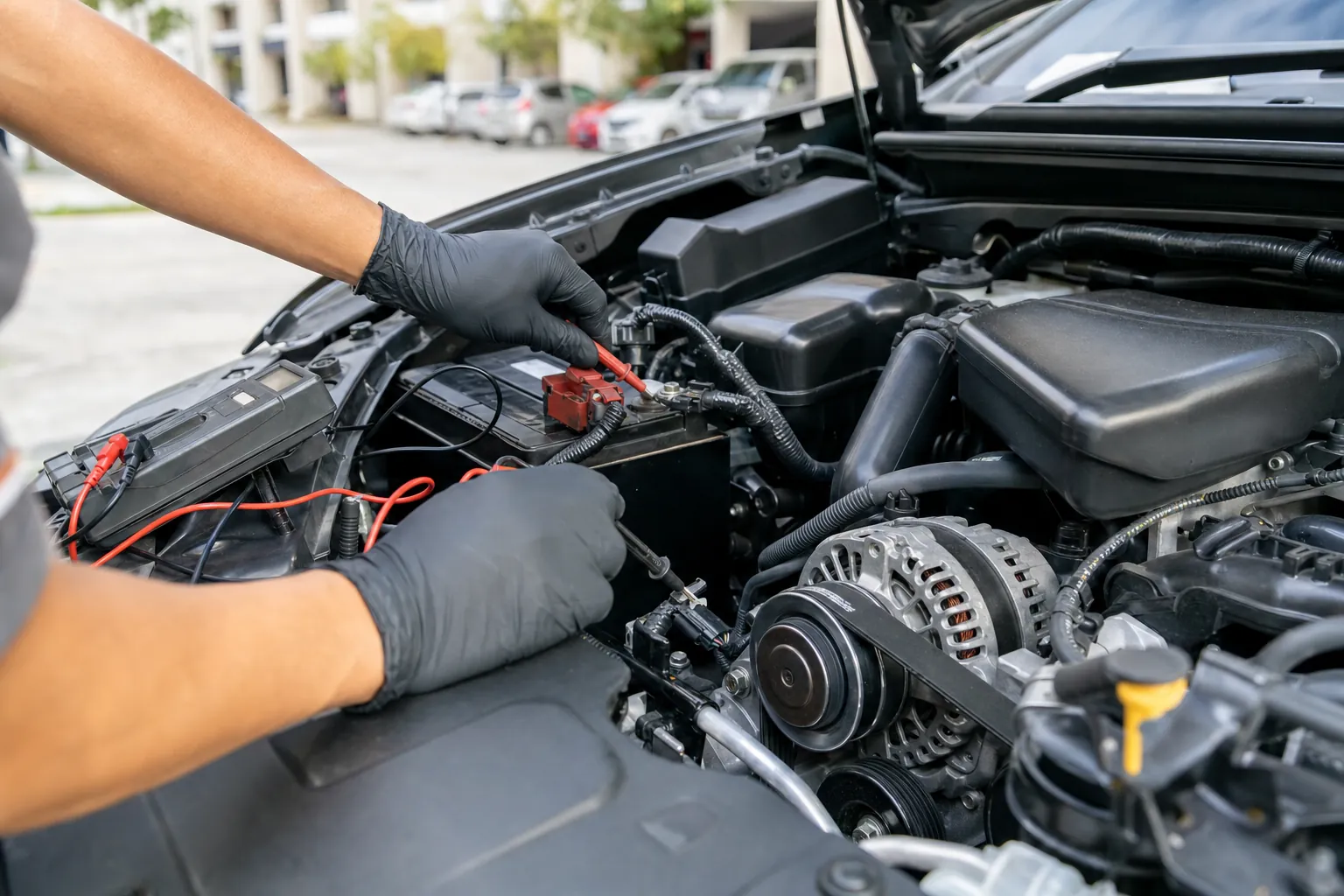
A charging warning is a system clue
The alternator is one possibility, but the battery, belt, terminals, and wiring can create similar symptoms. Confirming the cause is better than paying for several plausible parts in a row.
How a technician separates an alternator problem from a battery problem
A weak battery and a weak charging system can imitate each other. A battery may be too low to start the car because it is old, has a poor connection, or was drained by a light or electrical draw. It may also be low because the alternator did not recharge it while the engine was running. Replacing only the battery can make the car start today while leaving the original charging fault in place.
That is why a useful check looks at the battery and the charging system together. The technician considers the customer's symptom, checks battery condition and terminal connections, looks for belt or wiring concerns, then sees how the system behaves with the engine running. A battery that starts the vehicle after a jump but quickly loses power, a charging warning that appears while driving, or lights that change brightness with engine speed can all guide the investigation. They still do not prove the failed part by themselves.
The same caution applies after a recent alternator replacement. A new part does not automatically rule out a belt issue, battery issue, cable problem, installation concern, or a separate electrical fault. Clear testing gives the driver a repair direction based on the vehicle's actual condition, instead of a cycle of replacing parts that share the same symptom.
A jump-start can hide the original fault
A jump may get the engine running, but it does not tell you whether the battery was drained, the alternator was not charging, or a connection needs attention. Treat it as a clue, then have the system checked.
What affects whether the work can be done on site
Alternator access varies widely between vehicles. Some units sit near the top or front of the engine where the repair is relatively direct. Others are surrounded by intake pieces, cooling components, brackets, exhaust parts, or other hardware that turns the job into a much longer teardown. Vehicle design, corrosion, prior repairs, and the condition of the mounting hardware can all change the plan.
The work location matters just as much. A level driveway or open parking space gives the mechanic room to inspect the vehicle, position tools, and work safely. A steep driveway, crowded garage, busy shoulder, poor lighting, soft ground, apartment restriction, or limited access under the hood can make a normally mobile-friendly repair the wrong choice for that day.
Share those conditions before booking. Let the mechanic know where the vehicle is, whether it can move, and whether there are gates, garage clearances, parking rules, or other access concerns. A clear description helps determine whether you are booking a diagnostic visit, a confirmed repair visit, or a shop appointment. The appointment process explains the details that help Rise High arrive prepared.
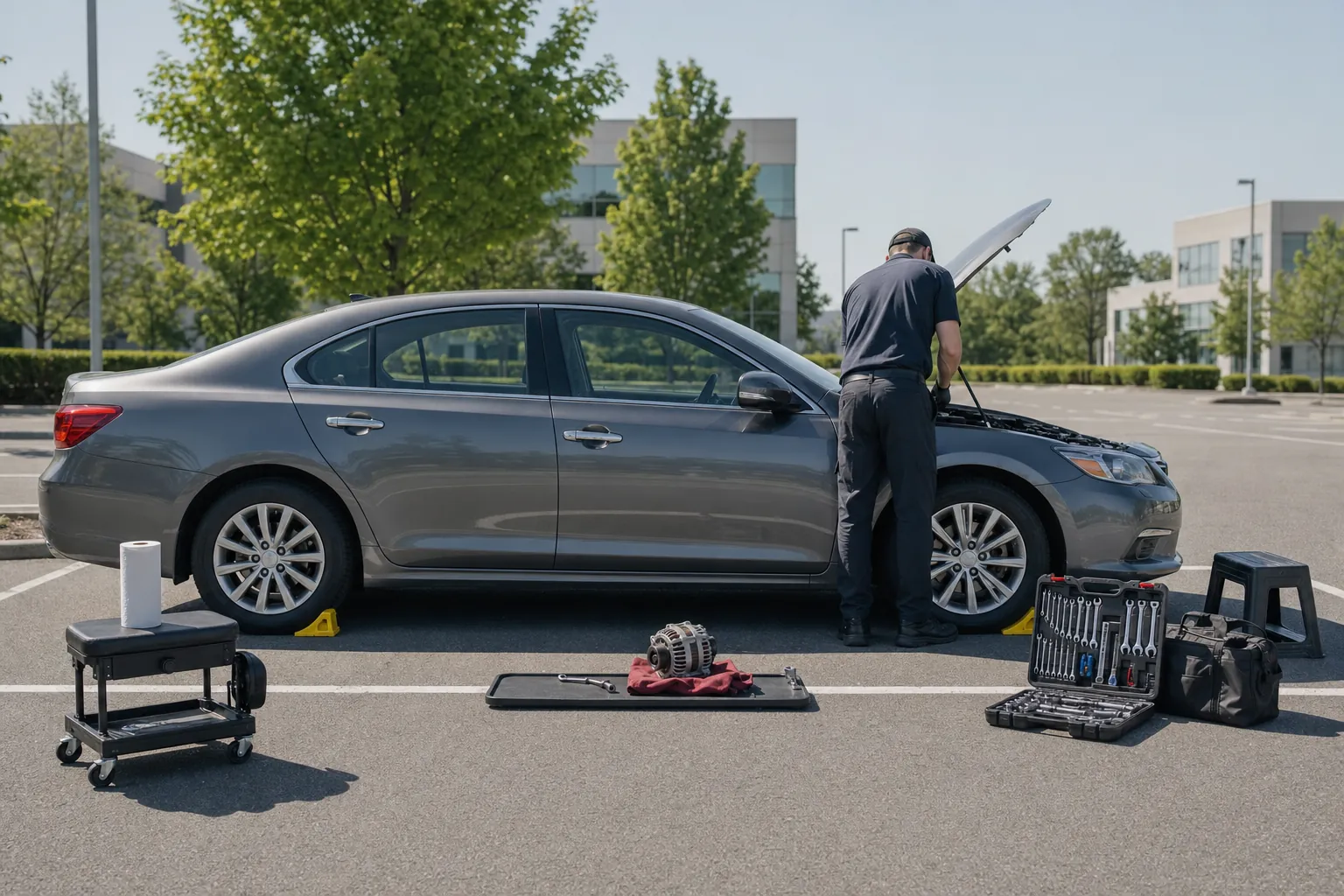
When a repair shop is the better call
A repair shop is often the better option when the alternator needs lift access, major components must be removed, the vehicle has damaged or seized hardware, or the diagnosis opens into a deeper electrical or engine problem. A full shop has more room, fixed lifting equipment, and a controlled setting for work that may keep the vehicle apart for longer than a mobile visit should.
It is also the better call when the work area is unsafe. No convenient repair is worth rushing beside traffic, working on unstable ground, or ignoring a property rule that prevents the technician from doing the job properly. A good mobile mechanic should explain that boundary before starting, not after you have paid for a repair that cannot be completed.
That does not make an initial mobile visit a waste. Testing can still identify the failed system and make the next shop appointment more focused. The goal is to fix the vehicle correctly with less duplicated work, not to force every repair into a driveway. Drivers comparing the two options can also read how mobile mechanic costs compare with a repair shop.
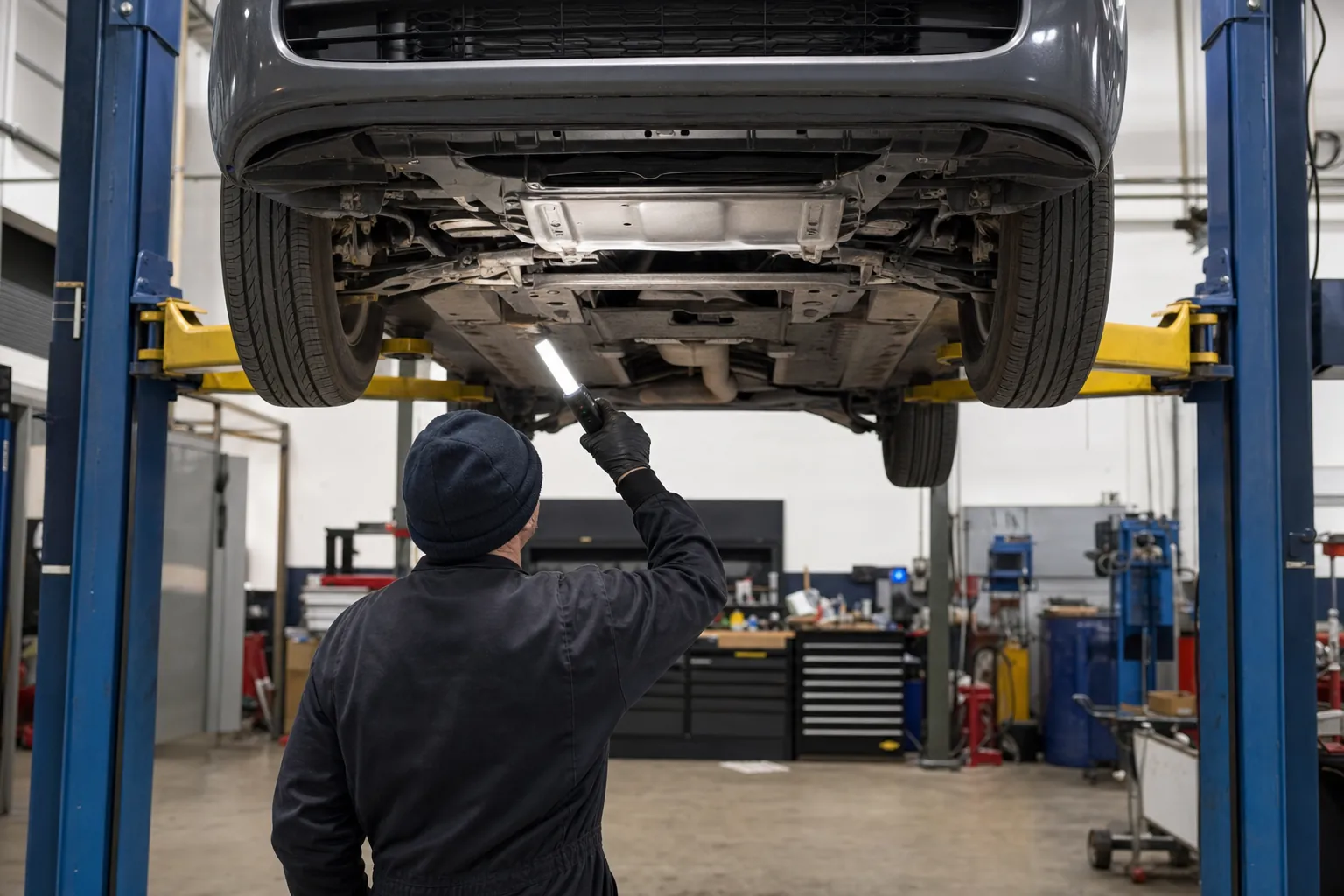
What to do if the battery light comes on
Do not assume the vehicle will keep running until you reach your next stop. If the charging system is not keeping the battery supplied, the car can lose electrical power as the battery drains. Dimming headlights, warning messages, slow cranking, repeated jump-starts, odd electrical behavior, or a vehicle that stalls are reasons to stop guessing and arrange help.
When you call, share the vehicle year, make, model, location, warning lights, and what changed before the problem started. Mention whether the battery light is steady or intermittent, whether the car still starts, whether it has been jumped, and whether a battery, belt, starter, or alternator was recently replaced. Those details help the technician begin in the right place.
A no-start can overlap with a charging problem, but it can also come from the battery, terminals, starter circuit, fuse, relay, wiring, or another fault. If the engine will not crank, the guide on mobile starter replacement explains why testing the starting system first is important. For a broader view of what can be handled on site, see what a mobile mechanic does.
Get clear approval before the repair expands
Before work starts, make sure you understand whether you are booking diagnostics or a confirmed repair, what the visit fee covers, which part is being quoted, and when you will approve additional labor or parts. A vehicle can reveal a second issue after inspection, but the repair should not expand without a clear conversation.
The Federal Trade Commission's auto repair guidance recommends getting a written estimate and asking questions about the work, parts, and warranty before authorizing repairs. The Texas Attorney General's car repair tips similarly recommends clear written authorization before inspection, testing, diagnosis, disassembly, or repair. Those steps help drivers compare options and keep the visit focused on the confirmed problem.
- Share the vehicle year, make, model, location, warning lights, and whether the car still starts.
- Tell the mechanic about recent battery, starter, alternator, belt, or electrical work.
- Confirm whether the alternator failure was already tested or whether you need diagnostics first.
- Make sure the vehicle is on level ground with room to open the hood and work safely.
- Ask what happens if testing points to a battery, belt, wiring, or shop-only repair instead.
How Rise High helps with alternator and charging problems
Rise High Mobile Mechanics helps Dallas-Fort Worth drivers with on-site diagnostics, batteries, starting and charging concerns, electrical faults, brakes, and other mobile-friendly repairs for gasoline and hybrid passenger vehicles. When the cause is unclear, the best first step is a diagnostic visit. When testing has already confirmed the alternator and the vehicle is a safe fit for mobile work, a repair visit may be the more direct option.
That diagnostic-first approach is there to protect drivers from buying a part based only on a warning light or a recent jump-start. Rise High checks the situation, explains whether the repair fits the vehicle and location, and gives a straight answer when a full repair shop is the better route. The guide on choosing a reliable mobile mechanic covers the questions worth asking before any repair visit.
Get The Right Charging-System Visit
Call or text with the vehicle details, location, warning lights, and symptoms. Rise High can help you choose diagnostics, a confirmed repair visit, or a shop appointment.
Frequently asked questions
Can a mobile mechanic replace an alternator at my home or work?
Often, yes. A mobile alternator replacement can be a good fit when the diagnosis is clear, the alternator can be reached safely, the right part is available, and the vehicle is parked on level ground with enough room to work. The mechanic should confirm those details before promising the repair.
Does the battery light always mean I need an alternator?
No. The battery light is a charging-system warning. The alternator may be involved, but a weak battery, loose or corroded terminals, a damaged belt, wiring fault, or another electrical problem can cause similar symptoms. Testing helps identify the right repair.
Should I book a diagnostic visit before alternator replacement?
Book diagnostics when the battery light just came on, the car keeps needing a jump, lights are dimming, the vehicle has lost power, or no prior test has confirmed the alternator. A repair visit is more direct when the alternator replacement need is already known and the vehicle is a safe fit for mobile work.
When should alternator work go to a repair shop?
A repair shop is usually the better choice when the alternator has difficult access, the vehicle needs a lift, major components must come apart, the work area is unsafe, hardware is badly damaged, or testing points to deeper electrical or engine problems. A good mobile mechanic should explain that before beginning work.
Related posts
How Much Does a Mobile Mechanic Cost?
How much does a mobile mechanic cost in Dallas-Fort Worth? Rise High charges $150 for diagnostics and a $50 booking and travel fee for confirmed repairs, plus parts and labor.
What Is a Mobile Mechanic?
A mobile mechanic comes to your home, work, or apartment for on-site diagnostics and repairs. Learn what they can fix and when a shop is better.
Are Mobile Mechanics Cheaper Than a Repair Shop?
Are mobile mechanics cheaper? Compare towing, travel fees, diagnostics, and Dallas-Fort Worth mobile mechanic pricing before you book.
Are Mobile Mechanics Reliable? A Driver's Guide
How to choose a reliable mobile mechanic, what to ask before they arrive, and when a Dallas-Fort Worth repair shop is the safer choice.
Can a Mobile Mechanic Replace a Starter?
When a mobile starter replacement makes sense, why testing comes first, and when a Dallas-Fort Worth repair shop is the better call.
Mobile Brake Repair: What Can Be Done at Home?
What mobile brake repair can cover, when diagnosis comes first, and when Dallas-Fort Worth drivers should choose a repair shop.
Car Won't Start but Battery Is Good? Next Steps
What to check when your car will not start but the battery seems good, plus when Dallas-Fort Worth drivers should book mobile diagnostics.

Car Clicks but Won't Start? What to Check First
A car that clicks but will not start may have a battery, cable, starter, relay, or safety-switch problem. Learn what the sound can tell you before booking service.
Car Won't Start After Getting Gas? What to Do First
If your car will not start after refueling, note whether it clicks or cranks, avoid repeated starts, and see when mobile diagnostics can help.
Car Cranks but Won't Start? What to Check First
A car that cranks but will not start needs a different diagnosis than a no-crank problem. Learn what to note, what to avoid, and when to book mobile diagnostics.
Car Loses Power While Driving? What to Do Next
If your car loses power while driving, get somewhere safe, note the warning signs, and find out whether the issue is engine, charging, fuel, or electrical related.