Battery Light On While Driving? Alternator, Battery, or Belt
If the battery light comes on while you drive, cut electrical load, get somewhere safe, and test the charging system before buying an alternator or battery.
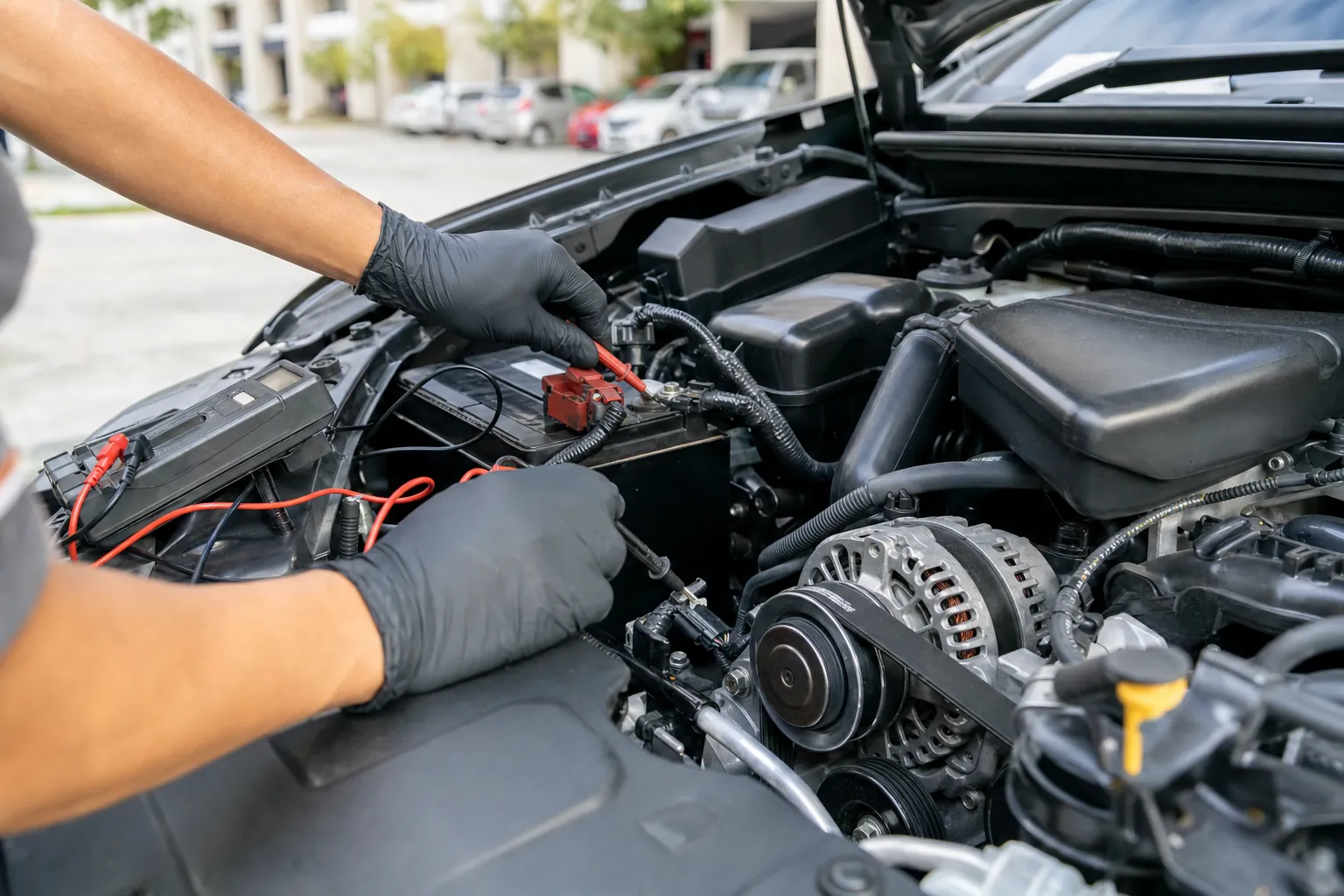
A battery light that comes on while you are driving is usually a charging-system warning, not just a battery warning. It often means the vehicle is no longer producing enough electrical power to run itself and recharge the battery. Turn off what you can, get to a safe place soon, and do not buy an alternator or battery until the cause is tested.
For a Dallas-Fort Worth driver in the middle of a commute, the hard part is deciding how far to go. The car may feel normal for a while, then lose power steering assist, flicker the gauges, or stall once the battery runs low. The steps below explain what to do first, what the clues can mean, and when on-site diagnostics or a tow makes more sense.
Quick Answer
A battery light while driving usually means the charging system is not keeping up. Turn off the A/C, stereo and other accessories, drive only as far as a safe parking spot, and stop right away if you hear squealing or slapping, see steam, or the temperature gauge climbs. The cause can be the alternator, the drive belt, the battery, a connection or wiring, so test before replacing parts.
What the battery light actually means
The red battery-shaped light on the dash is usually labeled a charge warning light in the owner's manual. When you first turn the key, it should come on briefly as a bulb check and then go out once the engine is running. If it stays on or comes on later while the engine runs, the vehicle is telling you that system voltage is outside the range it expects.
That is why the name is a little misleading. The light does not test the battery's health. On most gasoline vehicles, it is watching whether the alternator and its controls are charging the electrical system. When charging stops or drops too low, the car runs on whatever is stored in the battery. How long that lasts depends on the battery's condition and how much electrical load is on, so there is no safe number of miles to count on.
Some vehicles show a message such as "Service battery charging system" or a voltage gauge reading instead of, or along with, the red light. Treat those the same way. On some models, a light that flickers on and off can also point to a charging problem that comes and goes, which still deserves testing.
What to do in the first few minutes
Your goal is to protect yourself first and the battery second. A car with no charging output can keep running for a while, but once voltage drops, it may stall in traffic and may not restart. Plan to stop in a safe parking lot, at home, or at work rather than pushing for a long highway drive.
- Turn off the A/C or heater fan, stereo, seat heaters, phone chargers and other accessories you do not need.
- Keep headlights on if you need them to be seen. Safety comes before saving the battery.
- Watch the temperature gauge. If it climbs, pull over as soon as it is safe and shut the engine off.
- Head for a safe parking spot off the road. A highway shoulder is not a safe place to work on a car.
- Once parked, avoid shutting the engine off and restarting it over and over to "see if the light goes away." Each restart uses battery power you may need.
- Write down what you noticed: noises, smells, flickering lights, other warning lights, and how long you drove after the light appeared.
If you are stuck in traffic and cannot exit right away, reducing load is the most useful thing you can do. If you are already close to home, getting the vehicle parked there is often better than stopping somewhere you cannot leave it.
Can you keep driving with the battery light on?
Only as far as you need to reach a safe place, and sometimes not even that far. Manufacturer guidance is clear on the main point. Nissan's owner's manual section on the charge warning light, for example, tells drivers to stop the vehicle safely as soon as possible when the light comes on while driving, check the alternator belt with the engine off, and not to continue driving if the belt is loose, broken or missing. Check your own vehicle's manual, because the exact wording and warning layout vary by make.
The belt detail matters because on many engines the same drive belt (often called the serpentine belt) turns more than the alternator. Depending on the vehicle, it may also drive the water pump, the A/C compressor and the power steering pump. If that belt fails, you can lose charging, cooling and steering assist at the same time. Driving on with an overheating engine can turn a belt problem into a much larger repair.
If the belt is intact and nothing else seems wrong, the car may run for a while on battery power. That time is uncertain. A newer, healthy battery with light load may last longer than an older battery running the blower fan in Texas heat. Once voltage drops, you may notice dimming lights, a flickering dash, a slow or erratic gauge cluster, or the engine stumbling and stalling.
Alternator, battery, or belt: how the clues differ
No single symptom proves which part failed, but the pattern helps a technician start in the right place. Share these clues instead of a guess about the part.
Drive belt: A loud squeal, chirp or slapping sound right before the light came on can point toward the belt, belt tensioner or a pulley. So can a temperature gauge that starts rising or steering that suddenly feels heavy. With the engine off and cool, a quick look may show a belt that is missing, shredded or off its pulleys. Do not reach near the belt with the engine running.
Alternator: If the belt looks intact and turning but the light stays on, the alternator, its internal regulator or its wiring are common suspects. A whining or grinding noise from the alternator area, a burning-electrical smell, or headlights that brighten and dim with engine speed can be clues. Many alternators fail gradually, so a light that flickered for a few days before staying on is worth mentioning.
Battery: A battery with an internal problem can upset charging-system readings, and some modern vehicles monitor battery condition closely. Still, a battery light that appears while driving is not the classic sign of a simply old battery. An old battery more often shows up as slow cranking or a no-start. Replacing the battery alone can leave the real charging fault in place, and a new battery can then run down too.
Hybrids are different. Many hybrid vehicles do not use a conventional belt-driven alternator. Their 12-volt battery is often charged from the hybrid system through a converter, and a charging or system warning can involve hybrid components. Those vehicles need a hybrid-aware diagnosis rather than a standard alternator test, which is one reason Rise High's Plano hybrid and car repair page covers hybrid diagnostics separately.
A jump-start is not a repair
If the car dies after the battery light came on, a jump can get the engine running again, but it does not fix a charging problem. The battery may drain again within a short drive. Use a jump to reach a safe spot, not to get through the week.
Other causes worth checking
Not every battery light means a failed major part. Loose or corroded battery terminals, a damaged main cable, a poor ground connection, a blown fuse or fusible link in the charging circuit, or a disconnected plug at the alternator can all trigger the warning. Some of those are small fixes once they are found. Finding them takes testing, not just a visual guess.
A recent repair or battery replacement is an important clue. If the light appeared soon after other work under the hood, mention it. A connector that was not fully seated or a belt that was routed wrong can cause the same warning as a failed alternator. Likewise, a light that came on after driving through heavy rain or deep water, or after an aftermarket accessory was installed, is worth noting.
On some vehicles, the engine computer controls alternator output and can set a related trouble code. A scan can help, but a code that mentions charging voltage does not always say which part caused it. Voltage and connection testing confirm what the code suggests.
What a charging-system diagnostic checks
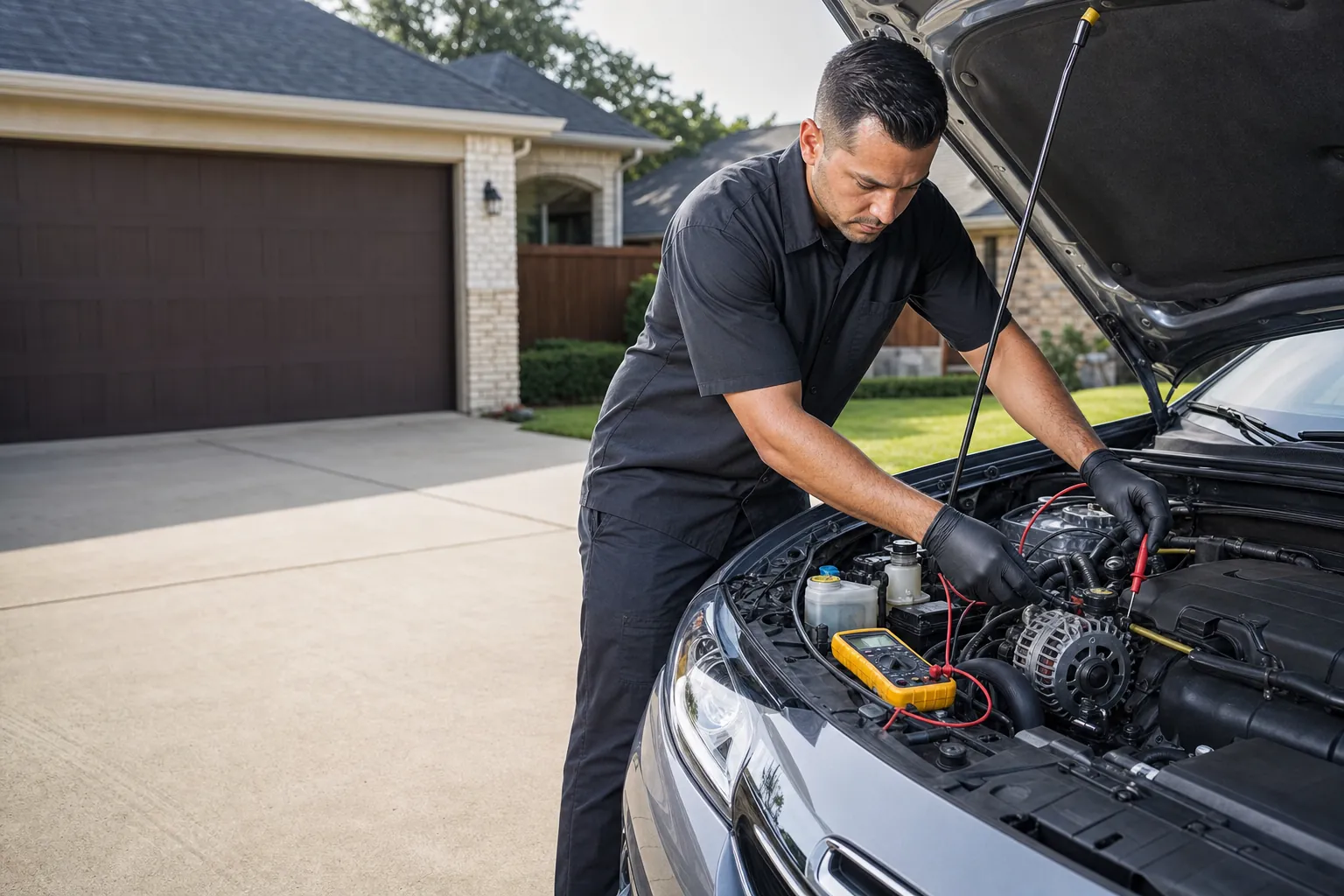
A charging-system diagnosis starts with what you saw and heard, then measures how the system actually behaves. Depending on the vehicle, a technician may check battery state and condition, battery terminals and main cables, charging voltage with the engine running and with electrical loads turned on, belt condition and tension, alternator connections and grounds, and relevant fuses. A scan tool can show stored codes and, on many vehicles, live voltage data.
The point is to separate the alternator, battery, belt and wiring before you spend money. An alternator replacement that does not fix a bad ground, or a new battery that cannot solve a broken belt, costs time and money and can leave you stranded again. Rise High's mobile electrical repair and on-site diagnostics are built around testing first.
When the cause is unknown, Rise High's diagnostic visit is $150 total. A $50 non-refundable deposit books it, and the remaining $100 is due when the diagnosis is complete. If you schedule the repair within 7 days after the diagnostic, $50 is credited toward that repair. If testing confirms the alternator, you can see what a mobile alternator replacement involves, or check an instant repair price on the Get a Quote page. A repair visit has a $50 booking and travel fee, separate from parts and labor. Rise High works labor-only, so you supply the approved parts.
When a shop or tow is the better choice
Mobile service works well when the car is parked somewhere safe and level, like a driveway, an apartment lot or an office parking lot. A tow or repair shop is usually the better call when the car died in a travel lane or on a highway shoulder, when the engine overheated badly, when the belt failure damaged other parts, or when testing points to extensive wiring repair, module programming or work that needs a lift.
Before paying for any repair, check whether your vehicle has an open safety recall with NHTSA's VIN recall lookup. Recall repairs are done by the manufacturer's dealers. When you approve work from anyone, ask for the scope and cost in writing. The Texas Attorney General's car repair tips recommend getting a written estimate and authorization before work begins.
How Rise High helps when the battery light comes on
Rise High Mobile Mechanics comes to homes, workplaces, apartment communities and safe parking locations across Dallas-Fort Worth for gasoline and hybrid passenger vehicles. Charging-system complaints are common on commuter cars that spend a lot of time in stop-and-go traffic. If you live east of Dallas, the Forney mobile mechanic page explains how visits work for drivers who commute on I-20 and US-80.
When the battery light comes on, start with a diagnostic visit unless you already have a confirmed cause. If testing shows a repair that fits a safe on-site worksite, such as an alternator, belt, or battery replacement, Rise High can explain the next step and the labor price. If the problem needs a shop, you get a clear answer before buying the wrong part. If the car will not start at all after the light came on, read what to do when the car won't start but the lights work.
Get the Charging System Tested Where the Car Is Parked
Open the Rise High app, select Book Diagnostic, and share the vehicle details, the location, and what happened when the battery light came on.
Frequently asked questions
What does the battery light mean when it comes on while driving?
It usually means the charging system is not keeping system voltage where it should be. The car may be running on stored battery power instead of being recharged. Common causes include the alternator, the drive belt, battery connections, wiring, and sometimes the battery itself.
How far can I drive with the battery light on?
There is no safe distance to count on. It depends on the battery's condition, the electrical load and the cause. Turn off accessories and drive only as far as a safe parking spot. Stop right away if you hear belt noise, the steering gets heavy, or the temperature gauge rises.
Is it the alternator or the battery?
A battery light while driving points more often to charging, such as the alternator, belt or wiring, than to a simply old battery. A weak battery can still be part of the problem. Testing charging voltage, the battery and the connections tells you which part actually needs replacement.
Will a new battery fix the battery light?
Usually not by itself. If the alternator, belt or a connection has failed, a new battery will run down too. Have the charging system tested before buying a battery or alternator.
Can a mobile mechanic fix a charging problem at my home or work?
Often, yes. Charging-system testing and many alternator, belt and battery repairs can be done at a safe, level parking spot. A shop is better when the work needs a lift, extensive wiring repair or programming, or when the car is stuck somewhere unsafe.
Related posts
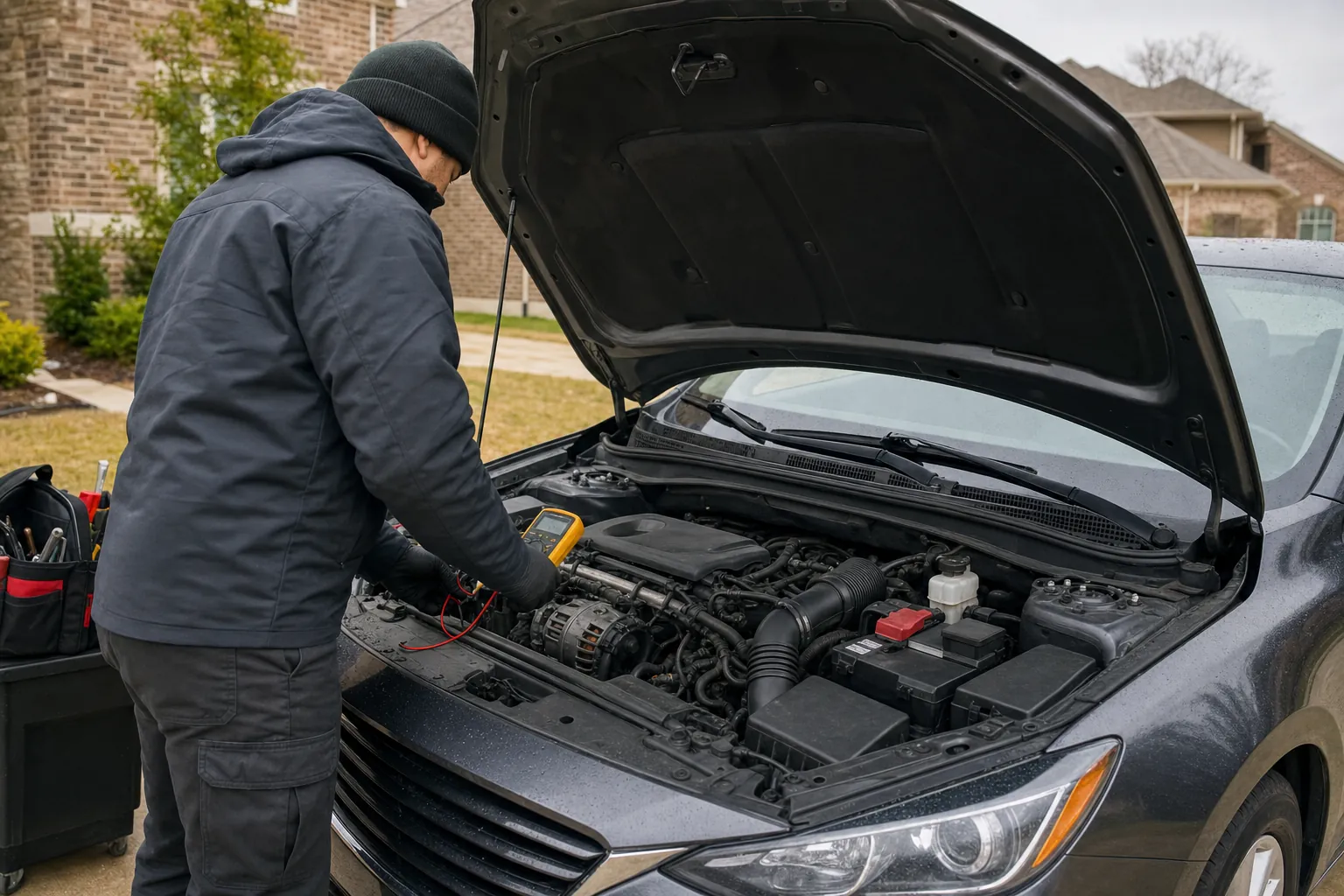
Can a Mobile Mechanic Replace an Alternator?
Yes, often. Learn when a mobile mechanic can replace an alternator at your home or work, when testing comes first, and when a shop is safer.

Car Loses Power While Driving? Pull Over Safely First
Car loses power while driving? Pull over safely, note warning lights and symptoms, then book mobile diagnostics in Dallas-Fort Worth when the cause is unknown.
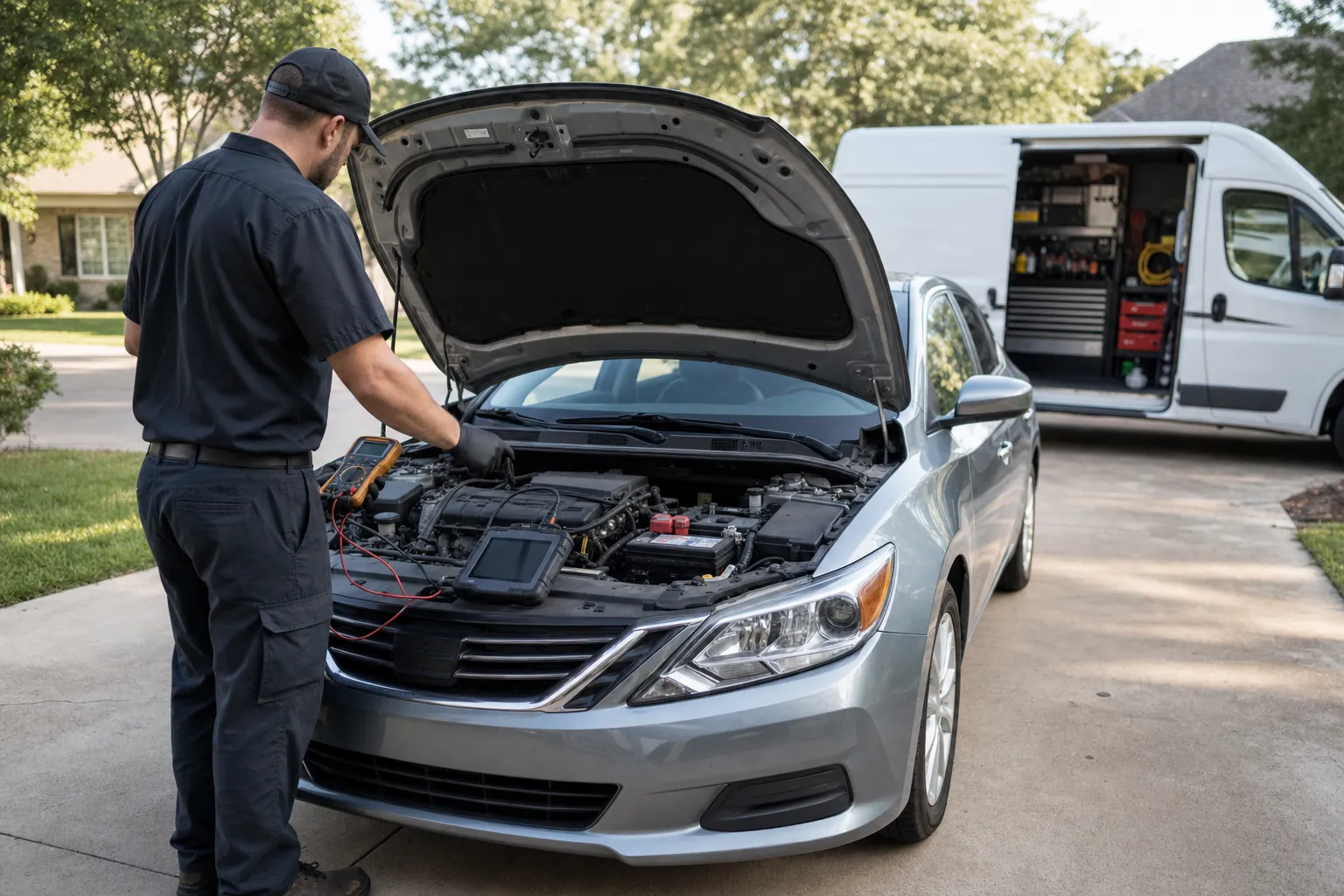
Car Won't Start but Battery Is Good? Next Steps
What to check when your car will not start but the battery seems good, plus when Dallas-Fort Worth drivers should book mobile diagnostics.