
Car Loses Power While Driving? What to Do Next
If your car loses power while driving, get somewhere safe, note the warning signs, and find out whether the issue is engine, charging, fuel, or electrical related.
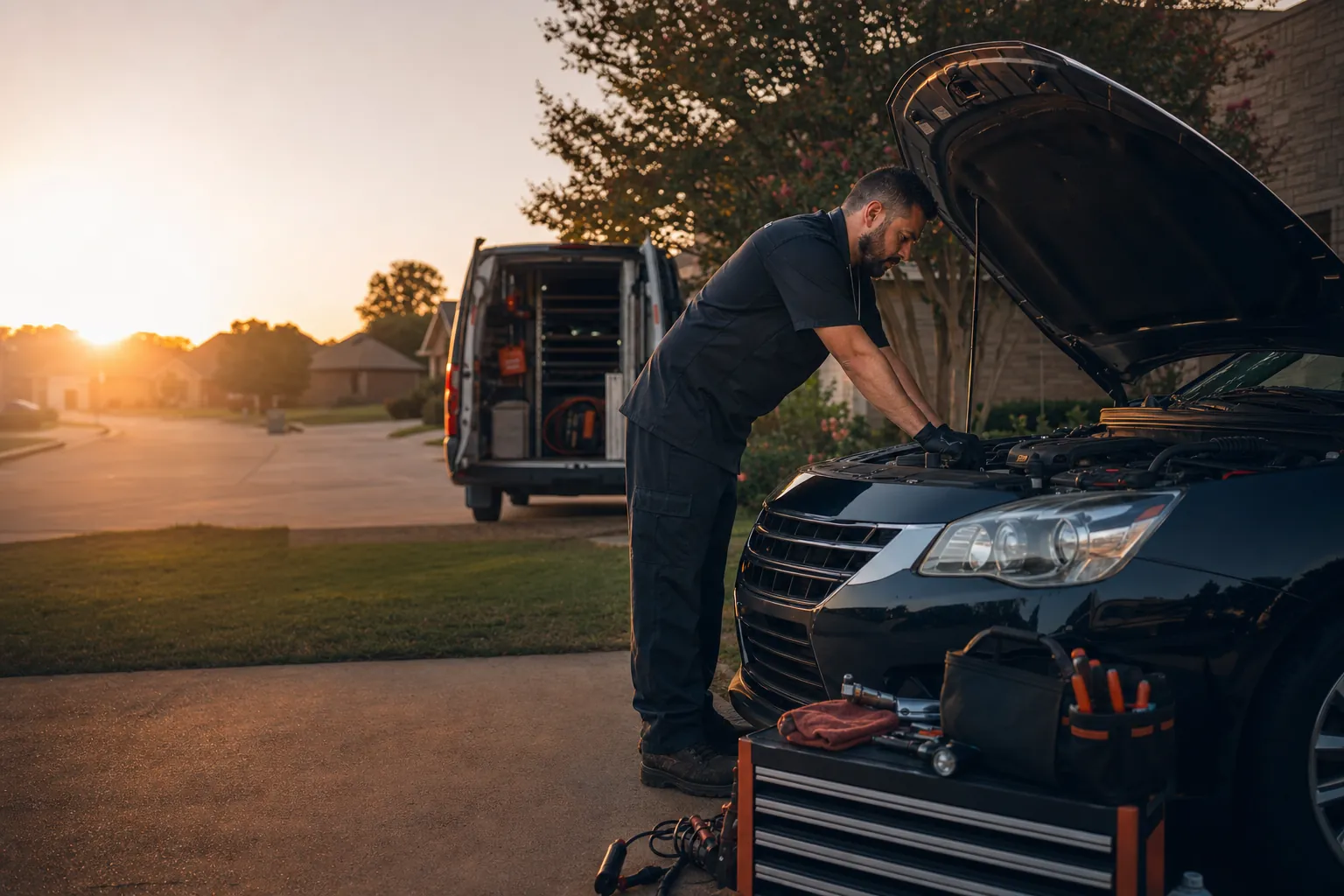
When a car loses power while driving, the most important job is getting it to a safe place, not trying to name the failed part from the driver's seat. The engine may hesitate, stop responding to the accelerator, run rough, stall, or leave warning lights on. Those details matter, but several systems can create a similar feeling. A charging fault, fuel delivery problem, ignition issue, sensor concern, electrical connection, or mechanical problem can all change the way a vehicle runs.
For a Dallas-Fort Worth driver, the useful next step is to protect the situation, note what happened, and arrange the right kind of diagnosis. That approach prevents a loss-of-power symptom from becoming a guessed alternator, battery, fuel pump, or sensor replacement. The cause needs testing before a repair plan is approved.
Quick Answer
If your car loses power while driving, get to a safe place, turn on the hazard lights, and avoid treating the symptom as proof of one failed part. If the cause is unknown, diagnostics are the right first booking.
Get to safety before troubleshooting
A sudden loss of power can feel alarming because the vehicle may not respond the way it normally does. Keep both hands on the wheel, turn on the hazard lights, and look for a safe place to pull over. Avoid abrupt steering or hard braking unless traffic conditions require it. If the engine stalls, steering and braking can feel different than usual, so give yourself extra room and bring the car to a controlled stop.
Once parked, do not keep trying to drive through the symptom. Stop immediately if you see smoke, smell raw fuel or burning material, notice an overheating warning, hear loud mechanical noise, or cannot control the vehicle normally. In an unsafe location or active traffic lane, prioritize roadside assistance or emergency help. A mobile repair visit begins only when the vehicle is parked in a safe, workable location.
If the car restarts, that does not make the event harmless. A vehicle that loses power once can do it again with less warning. Note the sequence while it is fresh: the road speed, whether the engine stalled, which warning lights appeared, how the accelerator felt, and whether anything changed after restarting.

What “loses power” can mean
Drivers use the phrase “lost power” for several different situations. Separating them helps a technician start in the right place.
The engine stays running but the car will not accelerate normally: The vehicle may feel weak, hesitate, surge, or struggle uphill. That can involve fuel delivery, air intake, ignition, sensor information, exhaust restriction, transmission behavior, or an engine-protection mode. It does not automatically mean the battery or alternator failed.
The engine stalls while the car is moving: A stall can happen suddenly or after rough running. The cause may involve charging voltage, fuel, ignition, electrical power or ground, engine controls, or a mechanical issue. How the vehicle behaved in the minute before the stall is valuable information.
The battery light or several lights come on before the engine dies: This can be a sign that the charging system needs attention, but it can also happen after the engine has already stalled. The timing matters. A warning that appears before the engine quits tells a different story from lights that appear once the key is on and the engine is off.
The engine runs, but other electrical items fade or stop working: Dim lights, changing gauge behavior, warning messages, or accessories shutting down can point toward a voltage or connection concern. They still need proper checks at the battery, charging system, cables, grounds, and related circuits before any part is replaced.
A warning light is a clue, not a parts list
A battery, check-engine, oil, or temperature warning can help direct the inspection. It does not confirm which part failed, and it should not be used as a reason to order parts before testing.
Common causes of a car losing power while driving
Charging-system trouble: The alternator, belt drive, battery connections, wiring, or a related control issue can keep the battery from being replenished while the engine runs. As voltage drops, the vehicle may show warning lights, behave unpredictably, or eventually stall. A recent battery replacement does not rule this out, because a healthy battery can still be left undercharged by another fault. Rise High's mobile alternator guide explains why testing comes before a replacement decision.
Fuel delivery: An engine needs steady fuel pressure and the correct control signals to keep running. A pump, relay, wiring issue, fuel-pressure concern, restricted supply, or another control problem can create hesitation, surging, stalling, or a no-start after the vehicle is parked. It is tempting to blame the fuel pump, but the same symptom can come from other systems. A proper check looks at the vehicle's actual behavior and fault information.
Ignition, air, or sensor information: Gasoline engines rely on timed spark, airflow, and accurate sensor data. An ignition component, sensor concern, intake issue, throttle-related fault, or wiring problem can reduce power or make the engine run poorly. The check-engine light may be helpful, but a code is a starting clue, not a complete diagnosis or a guarantee that the named component is bad.
Electrical connections and grounds: Loose, corroded, or damaged battery connections and ground paths can interrupt the vehicle's electrical supply under load. Because the failure can be intermittent, accessories may work normally one moment and the car may run poorly or refuse to restart later. Testing voltage drop and connection quality is more useful than judging a cable by how it looks from the outside.
Overheating or mechanical trouble: If a temperature warning appears, coolant is leaking, the engine makes loud unfamiliar noise, or the vehicle overheated before losing power, stop driving and arrange the correct level of inspection. Internal engine concerns, severe overheating, or repairs requiring a lift are not jobs to force into a parking lot.

What to write down before you call
You do not need to diagnose the car yourself. A short, accurate timeline helps much more than a guess about which part failed. Note whether the issue began while cruising, accelerating, idling, braking, after rain, after a recent repair, or after the battery had already been weak. Take a photo of any warning message once the vehicle is safely parked.
Also note what happened after the loss of power. Did the engine stall? Did it restart right away, need a jump, or crank without starting? Did the dashboard lights dim? Were there smells, smoke, vibration, or a noise from the belt area? Those answers help separate an unknown driveability problem from the related no-start paths covered in Rise High's crank-no-start guide and battery-good but no-start guide.
- Record the year, make, model, engine if known, and the exact location of the vehicle.
- Describe whether the engine hesitated, ran rough, stalled, or simply would not accelerate.
- Photograph warning lights or messages only after you are parked safely.
- Mention any recent battery, alternator, starter, fuel, or electrical work.
- Share gate, garage, parking, or access details before the appointment.
What not to do after the car loses power
Do not keep driving to see whether the problem clears up, especially after a stall, overheating warning, smoke, burning smell, or major change in how the vehicle responds. Do not disconnect the battery to erase a warning light before the car is inspected. That can remove useful information and may not address the problem that caused the power loss. Avoid pouring in additives, replacing parts because of an online guess, or making repeated start attempts. Those actions can change the symptom without identifying the fault.
If you need to move the vehicle a short distance after it restarts, make that decision based on safety, not convenience. A stable, nearby parking area is different from continuing through traffic or onto a highway. When in doubt, arrange towing or roadside support rather than risking another stall in a place where the vehicle cannot be controlled safely.
Why diagnostics should come before a repair booking
A loss of power is a symptom with several possible causes. Replacing the most familiar part may get expensive quickly and still leave the car unreliable. For example, a battery can be low because of a charging fault, a loose connection, repeated start attempts, or another electrical issue. A fuel-related symptom can come from delivery, wiring, sensors, or engine controls. The part that looks most likely online may not be the part that failed on your vehicle.
A diagnostic visit checks the vehicle's condition and the path that created the symptom. Depending on the make, model, and behavior, that may include battery and charging condition, connection quality, fault information, system voltage, visible leaks, relevant electrical checks, and the difference between a running problem and a no-start problem. The result should be a confirmed direction, not a shopping list built around a warning light.
Rise High charges $150 total for on-site diagnostics when the cause is unclear, with a $50 non-refundable deposit required to book. For a confirmed repair, the specific parts and labor are reviewed before you approve the work. The difference matters here because the first job is identifying why the car lost power, then deciding whether the repair is a safe fit for mobile service.

When mobile service can help, and when a shop is safer
Mobile diagnostics can be a good fit when the vehicle is parked safely at a home, apartment, workplace, or accessible parking area. After testing, some charging, battery, terminal, alternator, sensor, ignition, and electrical repairs may also be appropriate on site. The vehicle, confirmed repair, work area, and part access all determine the answer.
A repair shop is the safer choice when the problem points to internal engine work, major cooling-system repair, extensive wiring damage, transmission concerns, advanced programming, major disassembly, or lift-only access. It is also the right answer when the vehicle is on a busy roadway, steep ground, a cramped garage, or any location that does not leave a safe work area.
If the problem appears connected to an open recall, use NHTSA's VIN recall lookup before paying for work that may be covered by a manufacturer campaign. For any repair, get a clear explanation of what testing found, what work is being approved, and what the expected cost includes. The Texas Attorney General's car repair guidance also recommends clear written authorization before work begins.
How Rise High helps after a loss of power
Rise High Mobile Mechanics helps Dallas-Fort Worth drivers with diagnostic-first service for no-starts, battery and charging concerns, electrical faults, warning lights, and mobile-friendly repairs on gasoline and hybrid passenger vehicles. When a car loses power while driving, the goal is to understand what changed before anyone sells a part or books the wrong visit.
Start with diagnostics when the cause is unknown. If testing confirms a repair that fits the vehicle and a safe worksite, Rise High can explain the next step. If the right answer is a repair shop, you will know why before spending money on a repair that cannot solve the actual problem.
Get the Loss of Power Checked
Call or text with the vehicle details, location, warning lights, and what happened before the engine lost power. Rise High can help you choose diagnostics or a confirmed repair visit.
Frequently asked questions
What should I do first if my car loses power while driving?
Focus on getting the vehicle to a safe place. Turn on the hazard lights, avoid sudden moves, and coast to a safe parking area or shoulder if you can do so safely. Once parked, note the warning lights, sounds, smells, and whether the engine stalled or the vehicle simply would not accelerate.
Can a bad alternator make a car lose power while driving?
It can, but the symptom does not prove the alternator is the cause. A charging fault can leave the vehicle running on battery power until voltage drops, while fuel delivery, ignition, sensor, electrical, and engine problems can also reduce power or stall the engine. Testing is the way to separate those possibilities.
Can I drive a car after it loses power once?
Do not treat one loss of power as a harmless one-time event. If the vehicle stalled, showed warning lights, lost acceleration, overheated, smelled like fuel or something burning, or now runs differently, arrange an inspection before relying on it for normal driving. A repeat failure in traffic can be dangerous.
Should I book diagnostics or a repair visit?
Book diagnostics when the cause is unknown. A repair visit is the better fit only after reliable testing has confirmed the failed part and the work can be completed safely where the vehicle is parked. That keeps a symptom from turning into an expensive guess.
Related posts
Can a Mobile Mechanic Replace an Alternator?
Yes, often. Learn when a mobile mechanic can replace an alternator at your home or work, when testing comes first, and when a shop is safer.
Car Won't Start but Battery Is Good? Next Steps
What to check when your car will not start but the battery seems good, plus when Dallas-Fort Worth drivers should book mobile diagnostics.

Car Clicks but Won't Start? What to Check First
A car that clicks but will not start may have a battery, cable, starter, relay, or safety-switch problem. Learn what the sound can tell you before booking service.
Car Cranks but Won't Start? What to Check First
A car that cranks but will not start needs a different diagnosis than a no-crank problem. Learn what to note, what to avoid, and when to book mobile diagnostics.