Car A/C Blowing Warm Air? Causes and What to Check First
If your car A/C blows warm air, check airflow and listen for the compressor, avoid DIY refrigerant cans, and choose diagnostics before buying A/C parts.
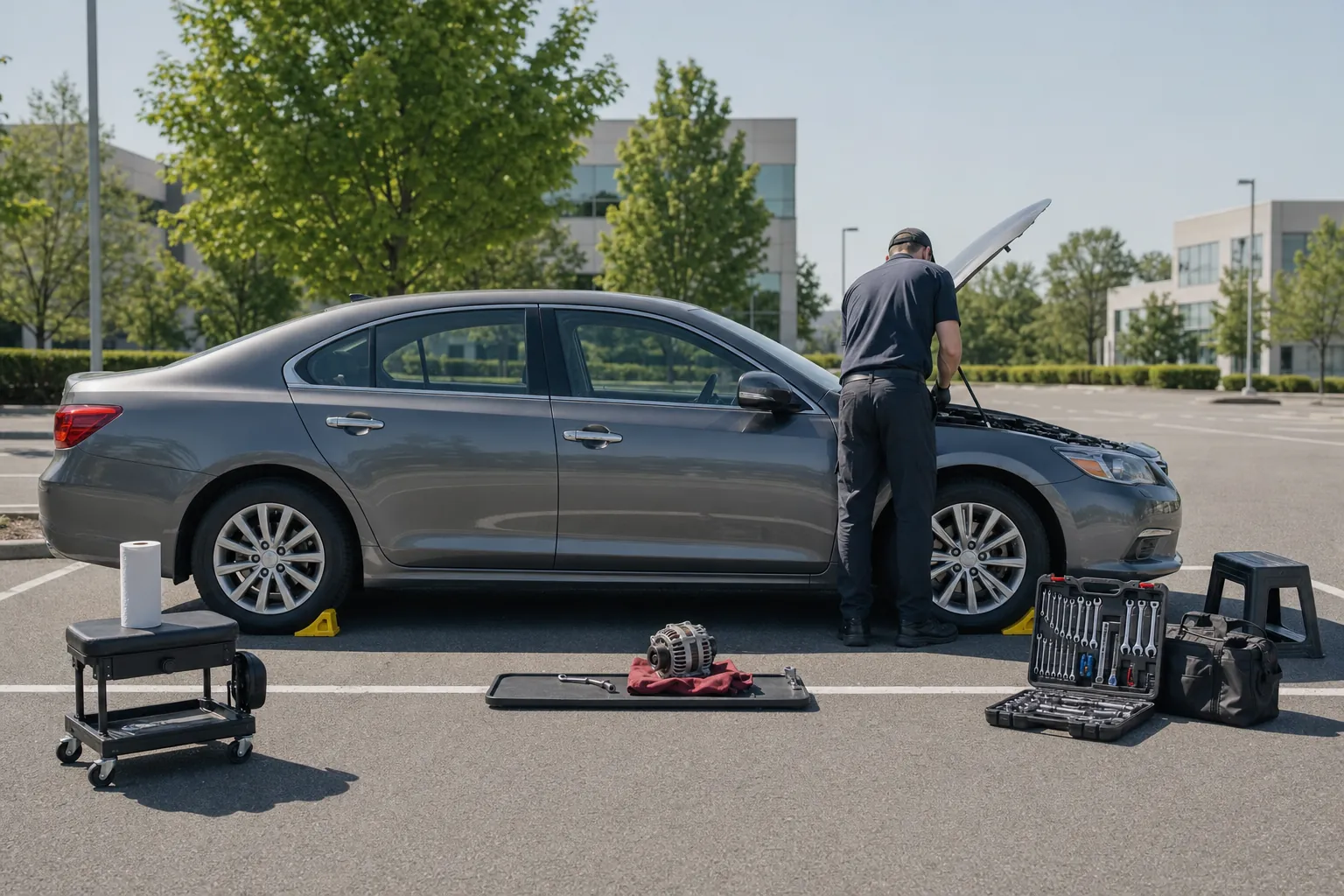
When the A/C starts blowing warm air in a Texas summer, it feels urgent. Even in the cooler months, a system that has quit is worth catching early, because a small problem can turn into a bigger one if the system keeps running. The good news is that a few simple observations can tell a technician a lot, and you do not need to guess at parts to get a useful answer.
This guide covers the most common reasons a car A/C blows warm air, what you can safely notice on your own, and when a mobile diagnostic visit makes sense. It also covers the cases where a repair shop with lift access or specialized equipment is the better choice.
Quick Answer
Warm A/C air can come from low refrigerant, a compressor or clutch that is not engaging, a cooling-fan or electrical fault, or an airflow problem. Note what you hear and feel, skip the parts guessing, and book diagnostics so the cause is confirmed first.
Warm, weak, or intermittent: start with what you notice
"The A/C is not working" can mean several different things, and the difference points the inspection in different directions. Air that is warm at every fan speed usually means the cooling part of the system is not doing its job. Air that is cool but weak often points to airflow, such as a blocked cabin air filter or a blower problem. Air that is cold for a while and then warms up can point to a system that cycles off, a fan that is not pulling air across the condenser, or moisture or ice in the system.
Also note when it happens. Does the air warm up only in stop-and-go traffic, then cool off at highway speed? That pattern can point toward condenser airflow. Does it blow warm from the moment you start the car? That can point toward the compressor, the refrigerant charge, or a control or electrical fault.
A few notes on your phone are more useful than a theory. Write down the outside temperature, how long the car had been running, whether the A/C light and fan work, and whether anything changed recently, such as a front-end repair, a jump-start, or a new warning light.

Common reasons a car A/C blows warm air
Low refrigerant. An automotive A/C system is sealed, so it should not lose refrigerant through normal use. If the level is low, the usual explanation is a leak somewhere in the system. Adding refrigerant may bring cold air back for a while, but it does not fix the leak, and the problem tends to return.
A compressor that is not engaging. The compressor circulates refrigerant, and it is normally switched on by a clutch when you turn on the A/C. When pressure is too low, many systems will keep the compressor from engaging to protect it. So a compressor that never turns on can be a symptom of low refrigerant, or it can be an electrical problem such as a relay, fuse, switch, or wiring fault. The two look alike from the driver's seat.
Condenser or cooling-fan problems. The condenser sits at the front of the car and gets rid of heat. If air is not moving across it, because a fan is not running or the fins are blocked with debris, the A/C can warm up in slow traffic. The same fans often serve the engine cooling system too, so a fan problem can matter beyond comfort.
Blend door or control faults. Inside the dash, doors direct air through the heater or the evaporator. If one is stuck or its motor fails, the A/C can be making cold air that never reaches the vents, or hot air can mix in. You may hear clicking behind the dash or notice one side of the car is warmer than the other.
Airflow restrictions. A clogged cabin air filter mainly causes weak airflow rather than warm air, but it can make a marginal system feel worse. It is also one of the cheaper things to check.
Warm air is a symptom, not a diagnosis
Low refrigerant, a stuck compressor clutch, a failed fan, and a blend door fault can all feel the same from the driver's seat. Confirming which one it is comes before buying refrigerant or parts.
Why a DIY refrigerant can is a gamble
Store-bought recharge cans are tempting because they are cheap and quick. The trouble is that they treat one possible cause, low refrigerant, without telling you why it is low. If the real problem is a leak, a bad clutch relay, or a fan that is not running, the can will not help, and overfilling a system can make cooling worse and stress the compressor.
Refrigerant is also regulated. Federal rules govern how it is handled and recovered, and technicians who work on vehicle A/C systems need the appropriate certification. The EPA's motor vehicle air conditioning page explains the rules and why refrigerant should not simply be vented. If you are unsure, the safer move is to have the system tested before anything is added.
Safe things you can check yourself
None of these require tools, and none of them involve opening the A/C system. Do them with the car parked in a safe spot, and stay clear of fans and belts when the engine is running.
- Turn the A/C on, set the fan to a medium speed, and see whether air blows at every setting.
- Listen near the front of the engine for a click when you switch the A/C on, and note whether you hear it or not.
- Look through the grille for leaves, plastic bags, or road debris in front of the condenser.
- Check the dash for a temperature warning, a battery light, or any other warning that came on at the same time.
- Note whether the air is warm on one side of the car only, or changes when you change the temperature dial.
- Check your owner's manual for the location of the cabin air filter and how long it has been since it was changed.
Watch the temperature gauge in traffic
Because the cooling fans and the condenser sit in front of the radiator, an A/C problem can overlap with an engine cooling problem. If the temperature gauge climbs, a warning light comes on, or you see steam, turn the A/C off, switch the heater to full hot to pull heat out of the engine, and pull over somewhere safe. Do not open a hot radiator cap. Highway shoulders are not safe work areas, so if you have to stop on one, call for roadside help rather than attempting any checks or repairs there.
An overheating engine is a different problem from a warm A/C, and it needs its own attention before you keep driving. If the engine is running hot, treat that first.
What a diagnostic visit looks at
A proper A/C diagnosis is about finding which part of the system is not doing its job. Depending on the vehicle and the symptom, a technician may check whether the compressor clutch engages, measure system pressures, look for signs of leaks, confirm that the cooling fans run, check fuses, relays and control signals, and scan for related fault codes. Which of those applies depends on what the car is doing.
The value is in separating a confirmed cause from a plausible theory. A low charge, a failed relay, and a fan fault each call for a different repair, and only one of them is fixed by adding refrigerant. Rise High's mobile car A/C repair page explains how A/C visits work, and the car diagnostics page covers the broader diagnostic process.

When a shop is the better choice
Many A/C diagnostics and some repairs can be done where the car is parked. Others need more than a driveway offers. A leaking evaporator or heater core, for example, can mean removing parts of the dash, and a compressor or condenser replacement on some vehicles requires major disassembly and proper refrigerant recovery equipment. A shop with lift access and full A/C service equipment is often the better place for those jobs.
A shop is also the right call if the parking location is not safe or level, if the car is overheating, or if you are not sure the vehicle is safe to drive. A diagnosis that tells you the repair needs a shop is still useful, because it keeps you from paying for the wrong visit.
What to share before the visit
You do not need to troubleshoot the A/C yourself. Have the VIN or the license plate and state ready, along with the current location and a short description of what the A/C does. Mention whether the compressor clicks, whether the air is warm at every setting, whether it changes in traffic, and whether any warning light is on. Say whether the car has had recent front-end body work, a battery or alternator replacement, or a previous A/C repair.
Also describe the work area. A level driveway, apartment parking space, or office lot works for many visits. A tight garage, a steep drive, or a busy road does not. If you are not sure what you need, the instant repair price tool can give you a price for a repair that is already confirmed, and diagnostics are the right start when the cause is unknown.
Cost and booking: what to expect
Rise High charges $150 total for an on-site diagnostic visit. A $50 non-refundable deposit books it, and the remaining $100 is due when the diagnosis is complete. If you schedule the repair within 7 days after the diagnostic, $50 is credited toward that repair. A repair visit carries a $50 booking and travel fee, separate from parts and labor. Rise High works labor only, so customers supply the approved parts.
That structure matters for an A/C problem. The first job is finding the fault, not picking a part in advance. If testing points to a repair that fits a safe mobile worksite, you get a clear next step. If it points to a shop, you know before you spend more.
Local notes for Forney and Plano drivers
A/C trouble tends to show up on the commute. Drivers in Forney who sit in traffic on US-80 and I-20, or Plano drivers on the Dallas North Tollway and US-75, spend long stretches at low speed where the condenser gets less airflow, which can expose a weak fan or a marginal charge. If that sounds like your pattern, mention it when you book. Rise High serves both areas, and you can read more on the Forney mobile mechanic page and the Plano mobile mechanic page. If your car shows a warning light along with the warm air, the check engine light diagnostics page explains that visit as well.
Get the A/C Tested Where It Sits
Open the Rise High app, select Book Diagnostic, and share the vehicle details, location, and what the A/C is doing.
Frequently asked questions
Why is my car A/C blowing warm air?
Common reasons include low refrigerant from a leak, a compressor or clutch that is not engaging, a cooling fan or electrical fault, or a blend door problem inside the dash. The symptoms overlap, so testing is the reliable way to tell them apart.
Will adding refrigerant fix a warm A/C?
Only if low refrigerant is the actual cause, and even then it does not fix the leak that let the level drop. A recharge can also hide the real problem or overfill the system. Have the system tested before refrigerant is added.
Why does my A/C only get warm in traffic?
At low speed there is less air moving across the condenser, so a weak or non-working cooling fan, a blocked condenser, or a marginal refrigerant charge can show up in traffic and ease on the highway. Mention that pattern when you book.
Can a mobile mechanic fix car A/C problems?
Many A/C diagnostics, and some repairs, can be done at your home, work, or a safe parking location. Jobs that need dash removal, major disassembly, or lift access are often better handled by a shop. A diagnosis tells you which applies.
Is it safe to drive with the A/C not working?
Usually yes, as long as the engine is not overheating and no warning lights point to another problem. If the temperature gauge rises or a warning light comes on, pull over somewhere safe and deal with that first.
Related posts
Battery Light On While Driving? Alternator, Battery, or Belt
If the battery light comes on while you drive, cut electrical load, get somewhere safe, and test the charging system before buying an alternator or battery.
How Much Does a Mobile Mechanic Cost?
How much does a mobile mechanic cost in Dallas-Fort Worth? Rise High charges $150 for diagnostics and a $50 booking and travel fee for confirmed labor-only repairs.

Car Loses Power While Driving? Pull Over Safely First
Car loses power while driving? Pull over safely, note warning lights and symptoms, then book mobile diagnostics in Dallas-Fort Worth when the cause is unknown.