Car Overheating in Dallas Traffic? What to Do Right Away
If your temperature gauge climbs in Dallas traffic, pull over safely, shut the engine off, let it cool, and get the cooling system tested before driving on.
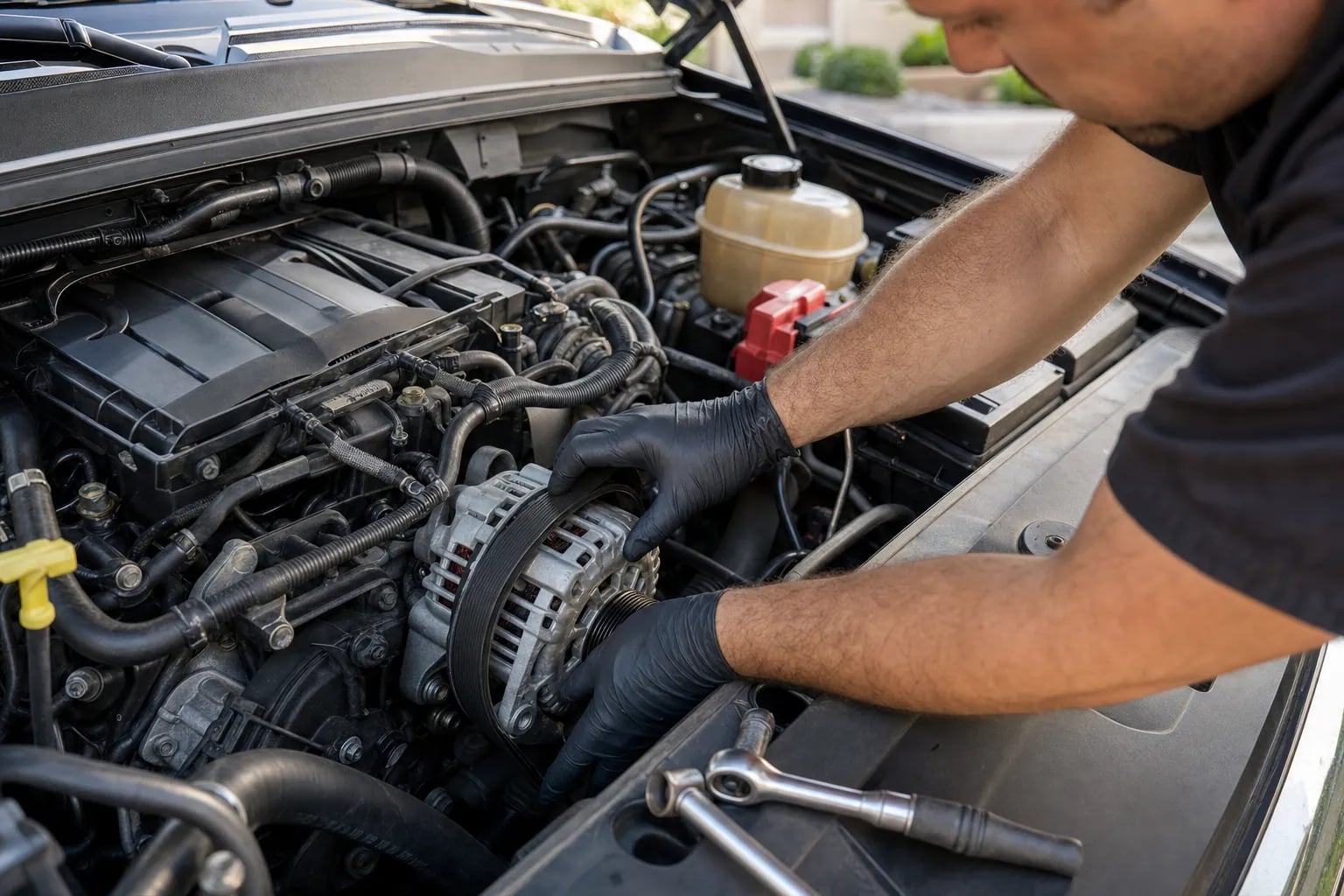
If your temperature gauge is climbing or a warning light says the engine is hot, do not try to make it to the next exit. Get to a safe place, turn the engine off, and let it cool. Driving an overheating engine can turn a hose or thermostat problem into a far more expensive engine repair.
Stop-and-go on I-35E, Central Expressway, LBJ or the Dallas North Tollway is hard on a cooling system, especially in a Texas summer. The good news is that most overheating has a short list of likely causes, and many of them can be tested and repaired where the car is parked. This guide covers what to do in the first few minutes, what usually causes the problem, and when a tow is the smarter call.
Quick Answer
Pull over somewhere safe, turn the engine off, and wait for it to cool before opening the hood. Never open a hot radiator or coolant cap. Do not keep driving. Book diagnostics to find out why it overheated before you buy parts or top off coolant and hope.
Car Overheated? We Come to You. Call Now
Rise High Mobile Mechanics comes to your home, workplace, apartment community, or safe parking spot across Dallas-Fort Worth, including Dallas. Call or text what the gauge did and what you saw, and we will tell you the next step.
The first five minutes: what to do when the gauge climbs
The moment you see the temperature gauge rising, a red coolant warning, or steam from under the hood, act early. The sooner you stop, the less likely the engine is to be damaged.
Start with safety. Turn on your hazard lights and move to the right, into a parking lot, a wide side street, or a gas station if you can reach one in a few seconds. A highway shoulder is not a safe place to wait or work. If you are on a freeway and cannot get off, pull as far from traffic as you can, keep your seatbelt on, and call for help rather than standing next to the car.
Once you are stopped, shift to park and turn the engine off. If you are still moving and cannot stop yet, some drivers turn the A/C off and run the cabin heater on high, because the heater core can pull a little heat out of the engine. It is uncomfortable in summer, and it is only a short-term measure to get you to a safe stop. It is not a fix.
- Turn on hazard lights and move to a safe, flat spot away from traffic.
- Shift to park and turn the engine off. Turn the A/C off first if you are still rolling.
- Wait at least 30 minutes before opening the hood. Steam or a hot hood can burn you.
- Never open a hot radiator or coolant reservoir cap. The system is under pressure and can spray scalding coolant.
- Take photos of the gauge, any warning lights, and any puddles under the car.
Why Dallas traffic is so hard on a cooling system
A car cools itself with a loop of coolant that carries engine heat to the radiator. At highway speed, plenty of air flows through the radiator. In slow traffic, there is far less air, so the cooling fans have to do the work. If a fan is weak, a fan relay or wiring is failing, or the radiator is partly clogged, the car may hold a normal temperature at 65 mph and creep up when traffic stops.
Add Dallas summer heat, a long afternoon commute, and the A/C running at full blast, and a cooling system with a marginal part can finally show it. That is why many drivers say the car only overheats in traffic, at a drive-through, or after sitting in a parking lot with the engine running. That pattern is a useful clue. Tell the technician about it.
It is also why a cooling problem that seems to "come and go" should not be ignored. Intermittent overheating usually means something is already weakened, not that the problem fixed itself.
Common reasons a car overheats
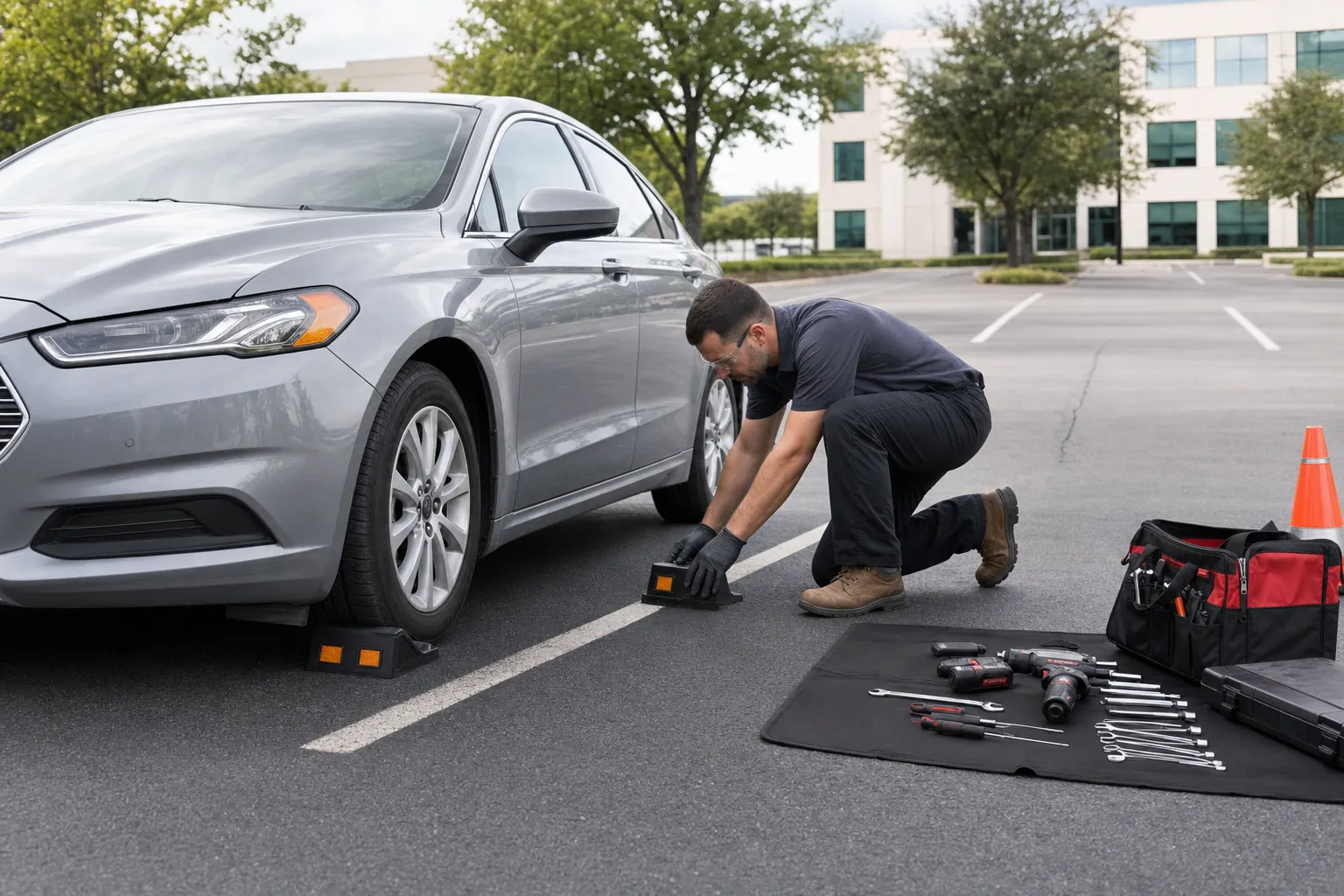
Several different faults can show up as the same symptom, a hot engine. Here are the usual suspects. Which one applies to your car is a question for testing, not guessing.
Low coolant from a leak. Coolant does not get used up. If the level is low, it went somewhere, often through a worn hose, a loose clamp, a radiator seam, a water pump seal, or a failing gasket. Topping off without finding the leak only delays the next overheat.
Thermostat stuck closed. The thermostat controls when coolant flows to the radiator. If it sticks closed, coolant cannot carry heat away and the temperature can rise quickly, sometimes with an upper radiator hose that is very hot while the lower one stays cooler.
Cooling fan not working. Electric fans depend on a motor, a relay or control module, fuses, and a temperature signal. A failure anywhere in that chain can cause overheating in traffic while the car seems fine at speed.
Water pump trouble. The pump moves coolant through the engine. A worn bearing, a leaking seal, or a slipping drive belt can reduce flow. A squeal, a wet spot near the front of the engine, or a loose belt can be clues.
Radiator or airflow restriction. A clogged radiator, a blocked condenser in front of it, or debris in the grille area can cut airflow.
Cap or pressure problems. The radiator or reservoir cap holds system pressure, which raises the coolant boiling point. A weak cap or a leak can let coolant boil over sooner than it should.
Internal engine problems. A head gasket or other internal failure can push combustion gases into the coolant. Signs can include repeated overheating, white exhaust smoke, bubbling in the reservoir, or milky oil. These are serious and are usually a shop job.
Adding coolant is not a diagnosis
If the level is low, topping off with the right coolant after the engine is fully cool may help you move the car a short distance to a safe spot. It does not tell you why the coolant was low, and it does not make a hot engine safe to drive across town.
What not to do when your car is overheating
A few well-meant shortcuts make things worse.
Do not open the radiator cap on a hot engine. Do not pour cold water onto a hot engine or radiator, because sudden cooling can stress metal parts. Do not keep driving "just to get home" with the gauge in the red. Do not rely on stop-leak products or additives as a repair before the leak is found. And do not keep restarting a car that overheated to see whether it behaves, because each hot restart risks more damage.
Also do not ignore the warning if the gauge falls back to normal after a few minutes of driving. If it hit hot once, something caused it.
What to check after it cools down
Once the engine has cooled for at least 30 minutes and you are in a safe spot, you can make a few simple observations. You are looking for clues to pass on, not trying to repair the car yourself.
Look under the car for fresh drips. Coolant is often green, orange, pink, or blue and can smell sweet. Look at the reservoir level against the min and max marks. Check whether the drive belt looks intact. Notice whether a hose looks swollen, cracked, or wet. Listen for the fan when the engine is running and warm, if it is safe to restart for a moment.
If you see a large leak, steam coming from the engine, a snapped belt, or milky residue under the oil cap, leave the engine off. If the level is low and there is no obvious large leak, adding the correct coolant to a fully cool system may get you to a safe place, but plan on having the system tested before driving it normally.
What a mobile cooling-system diagnosis covers
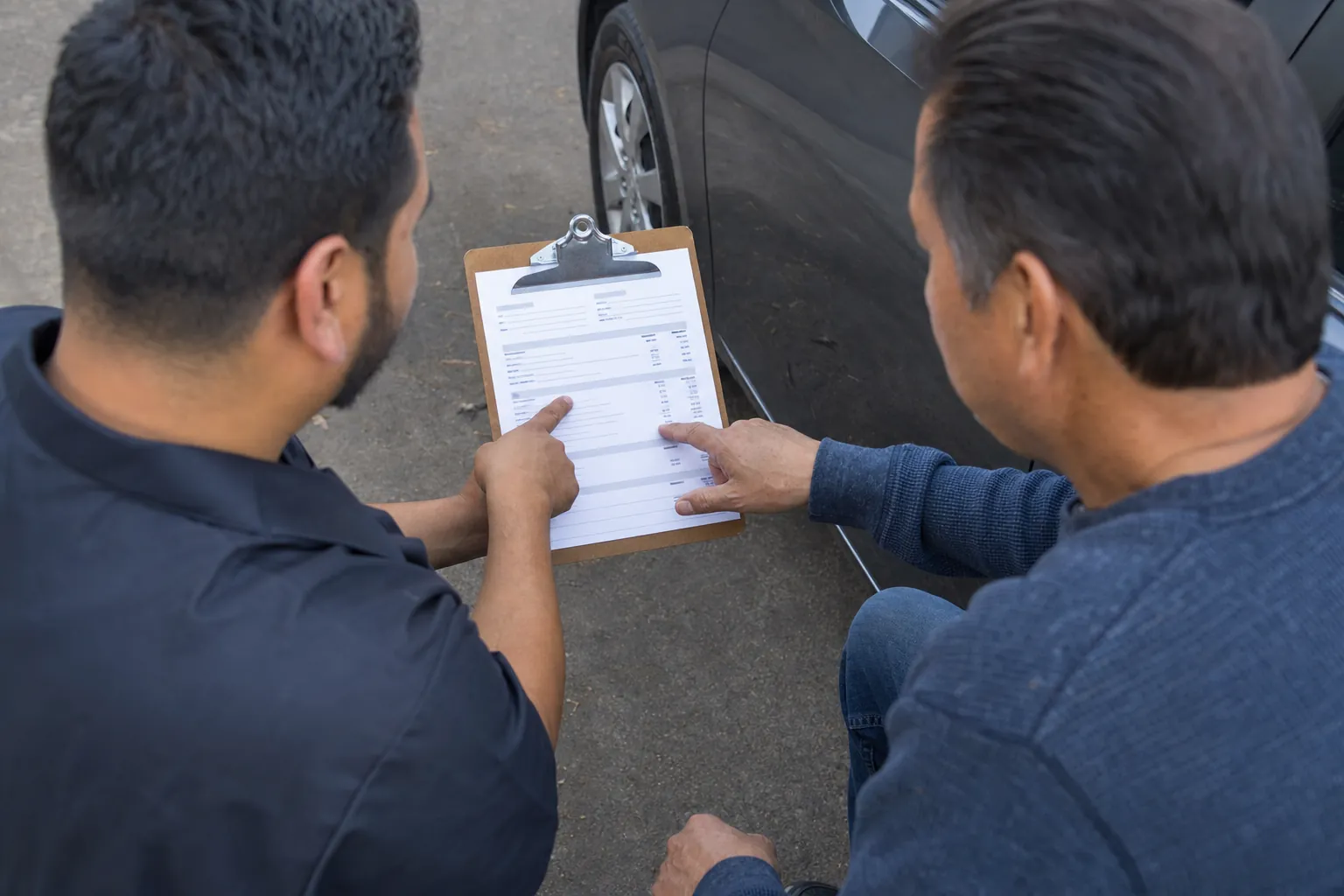
A cooling diagnosis starts with your story: when the gauge rose, whether it happens in traffic or at speed, whether the A/C was on, and whether you have seen leaks or lost coolant. From there a technician may inspect hoses, clamps, the radiator, the cap, the drive belt, and the fans, scan for stored fault information, and check for signs of a leak or of combustion gases in the coolant.
The point is to find the failed part before anything is replaced. A thermostat, a hose, a water pump, a fan, and a radiator can all cause the same symptom, and they cost very different amounts. Rise High charges $150 total for an on-site diagnostic visit. A $50 deposit books it, and the remaining $100 is due when the diagnosis is complete. If you schedule the repair within 7 days after the diagnostic, $50 is credited toward that repair.
If the diagnosis finds a repair that fits a mobile worksite, the repair visit carries a $50 booking and travel fee, separate from parts and labor. You can also check typical repair pricing with the instant repair quote tool. For a broader look at how a warning light or temperature warning gets investigated, see our car diagnostics in Dallas page and our check engine light diagnostics page.
Repairs a mobile mechanic can often handle
Many cooling repairs are practical in a driveway or parking lot when the car is cool, level, and in a safe spot. Depending on the vehicle, that can include replacing a thermostat, a radiator or heater hose, a drive belt, a cooling fan, a water pump, or a failed sensor. The labor-only option also applies: if you supply approved parts, Rise High can install them.
Rise High works on gasoline and hybrid passenger vehicles: cars, SUVs, and light trucks. We do not work on diesel engines, and we do not do standalone oil changes, fluid flushes, or tire work.
On a hybrid, the cooling system may also cool the battery pack or power electronics, so a temperature warning deserves careful diagnosis rather than a quick top-off.
When a shop or a tow is the better choice
Mobile service is not the right answer for every overheating event. Choose a tow to a repair shop if the car is stuck somewhere unsafe, such as a highway shoulder or a busy road. A shop is also usually the better place for suspected head gasket or internal engine damage, a cracked block, major disassembly, or repairs that need a lift.
Choose a tow if the engine overheated badly, the temperature stayed in the red for a while, you hear knocking, or the engine will not turn over after cooling. Driving it can make the damage worse.
If you are close to a safe place and the car is stable once cool, mobile diagnostics can tell you which side of that line you are on, before you commit to a bigger repair.
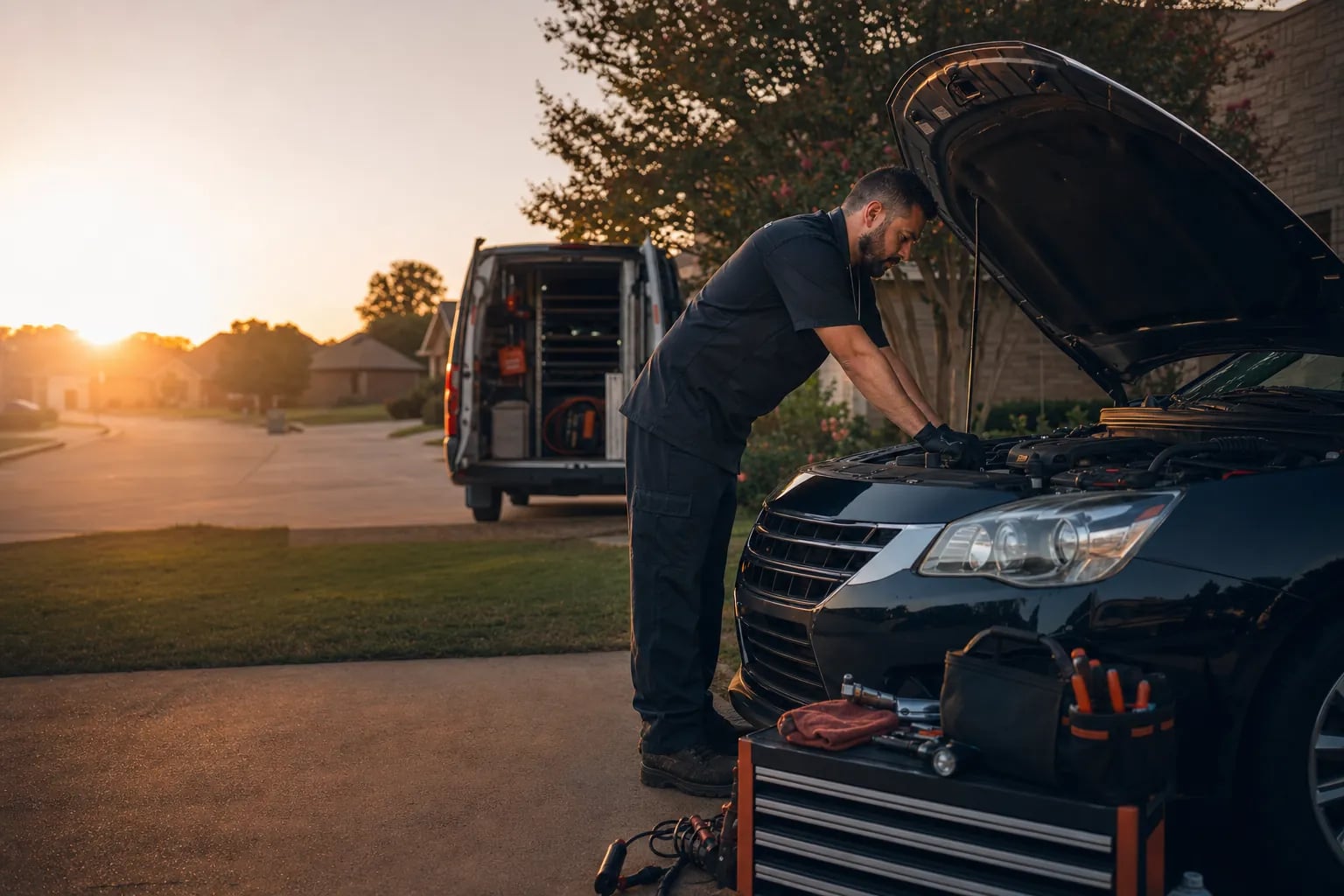
Overheating across Dallas-Fort Worth
Rise High serves drivers across the metroplex, and our Dallas page lists the ZIP codes we cover. Commuters in Plano who spend a lot of time on the Tollway and US-75, and drivers in Forney who commute west on US-80 and I-30, run into the same long stop-and-go stretches that stress a cooling system.
If the car cooled down and you got it home or to work, the best next step is to leave it parked and book diagnostics there. For related symptoms, see our guides on a car that loses power while driving, A/C blowing warm air, and the battery light coming on while driving.
Details to share when you call or book
You do not have to diagnose the problem. A few facts help the visit go faster: the year, make, and model, where the car is parked, whether it will start, and what the gauge or warning light did. Mention whether it happened in traffic or at speed, how long the engine ran hot, whether you added coolant, and whether you saw steam, smell, or leaks. Tell us about the work area too. A level driveway, apartment space, or office lot usually works. A busy road does not.
Get the Cooling System Tested Where It Sits
Open the Rise High app, select Book Diagnostic, and share the vehicle details, location, and what the gauge did.
Frequently asked questions
What should I do first if my car starts overheating in traffic?
Turn on your hazard lights, move to a safe spot, shift to park, and turn the engine off. Wait at least 30 minutes before opening the hood, and never open a hot radiator or coolant cap. Then call for help rather than driving on.
Can I drive a car that is overheating?
It is risky. Driving with the gauge in the red can cause serious engine damage. If the car has fully cooled and you only need to move a short distance to a safe place, that is different from driving across town. When in doubt, book diagnostics or arrange a tow.
Why does my car only overheat in traffic?
At low speed there is less air moving through the radiator, so the cooling fans carry more of the load. A weak or failed fan, a clogged radiator, or a marginal coolant level can show up in stop-and-go traffic and ease at highway speed. Mention that pattern when you book.
Is it okay to just add coolant and keep driving?
Adding the correct coolant to a cool system can be a short-term step, but it does not explain why the level was low. If there is a leak or another fault, the car can overheat again. Have the system tested before relying on it.
Can a mobile mechanic fix an overheating car?
Often, yes, for common causes such as a thermostat, hose, belt, fan, or water pump, when the car is parked safely. Suspected head gasket or internal engine damage, major disassembly, and repairs that need a lift are usually better handled by a shop. A diagnosis tells you which applies.
Related posts
Car Loses Power While Driving? Pull Over Safely First
Car loses power while driving? Pull over safely, note warning lights and symptoms, then book mobile diagnostics in Dallas-Fort Worth when the cause is unknown.
Car A/C Blowing Warm Air? Causes and What to Check First
Car A/C blowing warm air? Learn common causes, safe first checks, and when to book mobile A/C diagnostics in Dallas-Fort Worth.
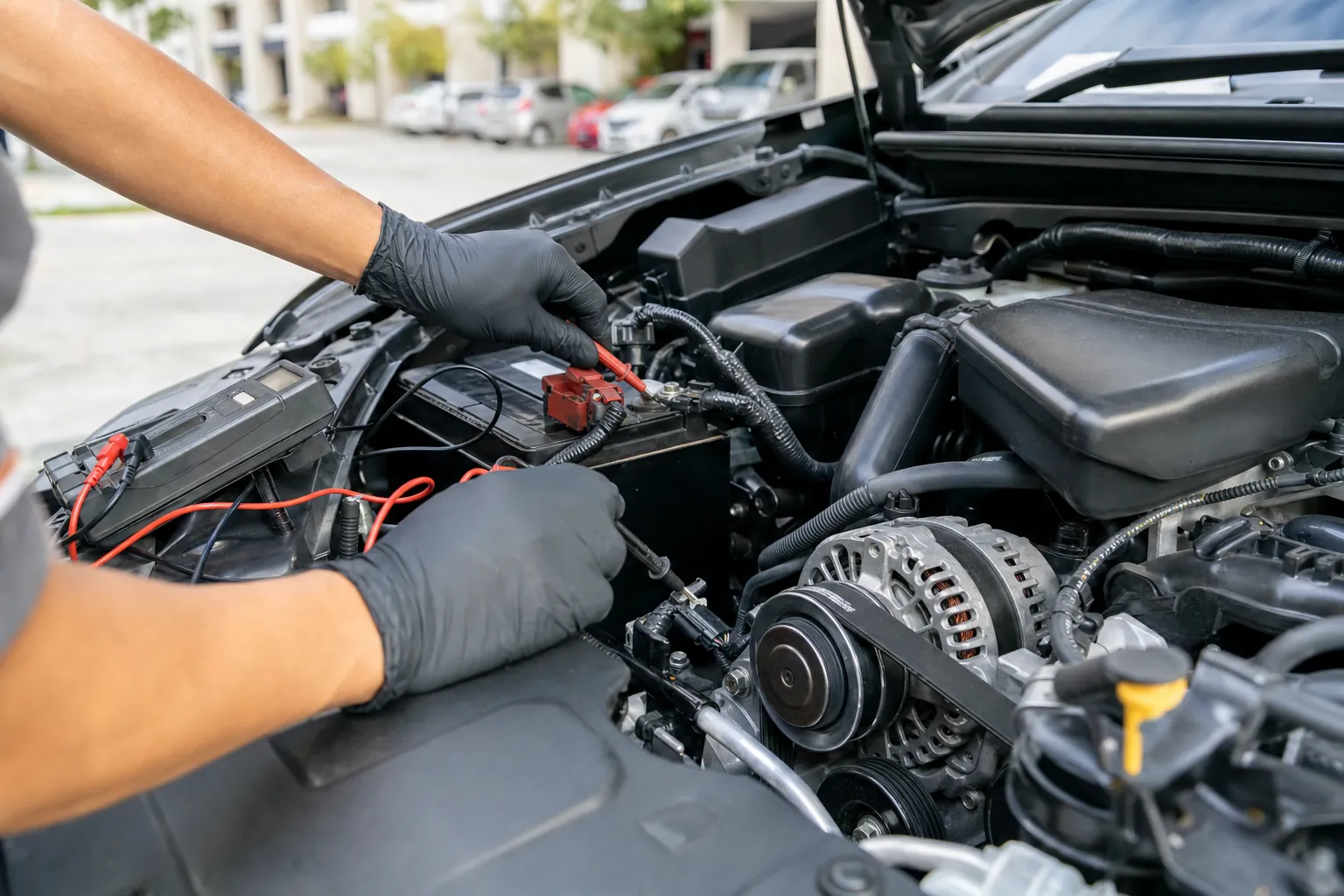
Battery Light On While Driving? Alternator, Battery, or Belt
If the battery light comes on while you drive, cut electrical load, get somewhere safe, and test the charging system before buying an alternator or battery.