Are Mobile Mechanics Cheaper Than a Repair Shop?
Are mobile mechanics cheaper? Compare towing, travel fees, diagnostics, and Dallas-Fort Worth mobile mechanic pricing before you book.
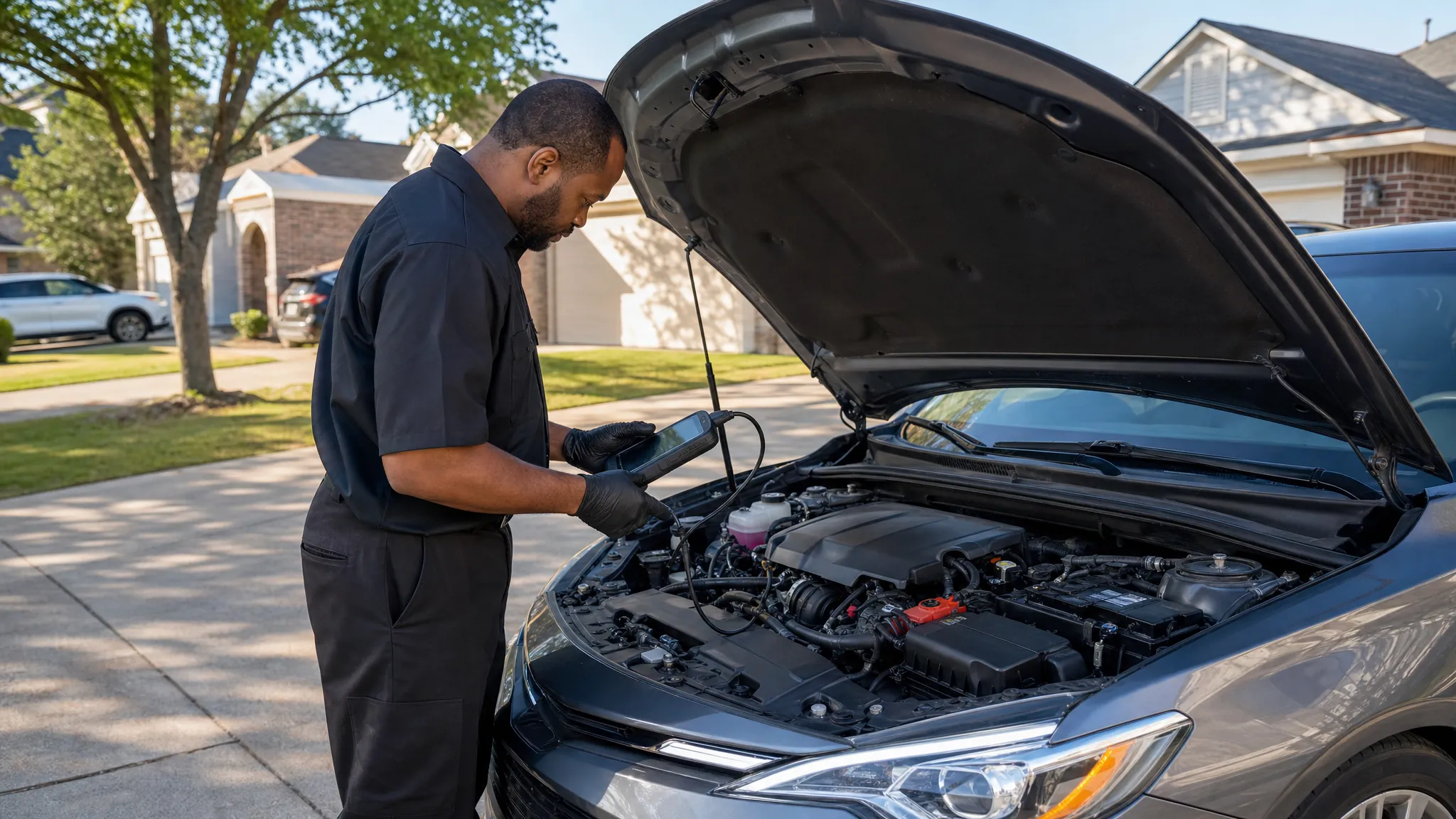
Sometimes. A mobile mechanic can cost less when the vehicle is stuck at home, work, or an apartment lot and the job can be done safely there. But the answer is not as simple as comparing an hourly rate. The useful comparison is the total cost of getting the car diagnosed and repaired, including travel, towing, parts, downtime, and whether the job really needs a repair shop.
For Dallas-Fort Worth drivers, that distinction matters most when a car will not start, a warning light appears, the battery keeps dying, or a brake or electrical issue makes driving to a shop a bad idea. A mobile visit can remove several steps from the day. It should not be treated as automatically cheaper for every repair, though. The best choice is the one that gets the right work done safely, without paying twice for the wrong first step.
Quick Answer
Mobile service can save money when it avoids a tow and handles a common repair on site. A repair shop can be the better value when a lift, alignment rack, major teardown, or longer indoor job is required.
What Rise High charges for the first visit
For a confirmed repair, Rise High charges a $50 booking and travel fee, separate from parts and repair labor. That is the right starting point when you already know what the vehicle needs and the repair is a good fit for a mobile visit.
When the cause is not clear, an on-site diagnostic visit is $150 total. A $50 non-refundable deposit reserves the appointment, and the remaining $100 is due when the diagnosis is complete. That price is for finding the problem, not a guess at a part replacement.
Those amounts do not represent a total repair quote, because parts, labor, vehicle access, and the confirmed fault all matter. They do make it easier to compare the real first step with a tow, a shop inspection, or a repair quote that assumes the cause has already been confirmed.
Compare the whole repair, not one line on the quote
It is tempting to compare only the labor rate. That misses the costs that appear before and after the wrench work starts. If the vehicle cannot safely make it to a shop, towing may become part of the shop route. If it can make the trip, you may still need a ride, time away from work, a second trip to pick it up, or a rental while the car sits in line.
Mobile service has its own costs. The mechanic is bringing tools, diagnostic equipment, and time to your location, so a booking, call-out, or travel fee is normal. When the cause is not yet confirmed, the smarter first move is often a diagnostic visit, not an instant parts quote based on a symptom.
In other words, a mobile mechanic may be cheaper because you avoid a tow and lost time, not because every on-site repair has the lowest labor price. A shop may be cheaper because its equipment lets a technician complete a complex job more efficiently. Compare the complete path from “the car has a problem” to “the car is fixed.”
When mobile service is often the better value
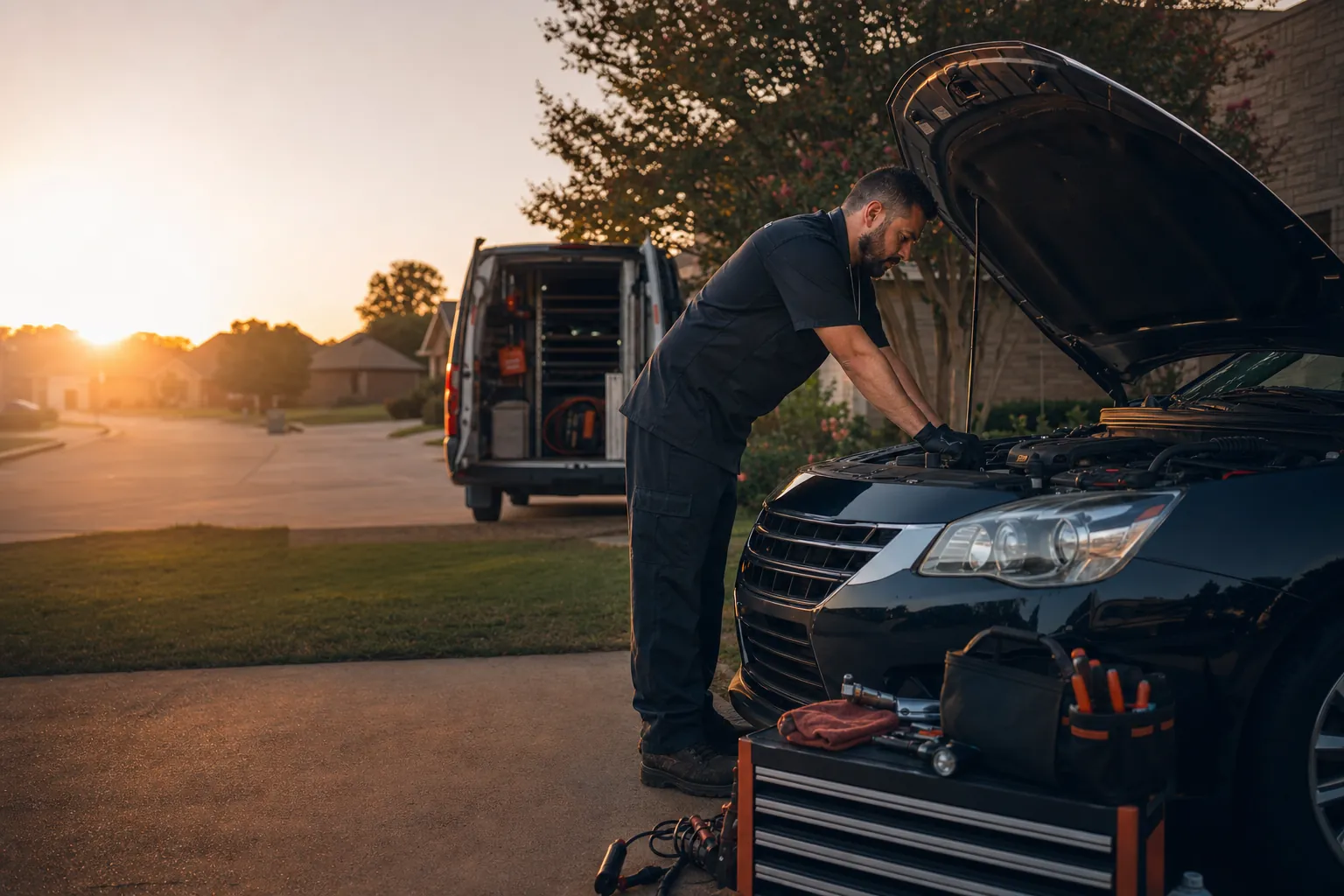
Mobile service is usually strongest when the vehicle is parked in a safe, usable location and the repair fits normal on-site tools. That can include no-start testing, battery and terminal service, starter or alternator work, many brake repairs, warning-light diagnostics, selected sensors, ignition components, and some cooling or suspension work.
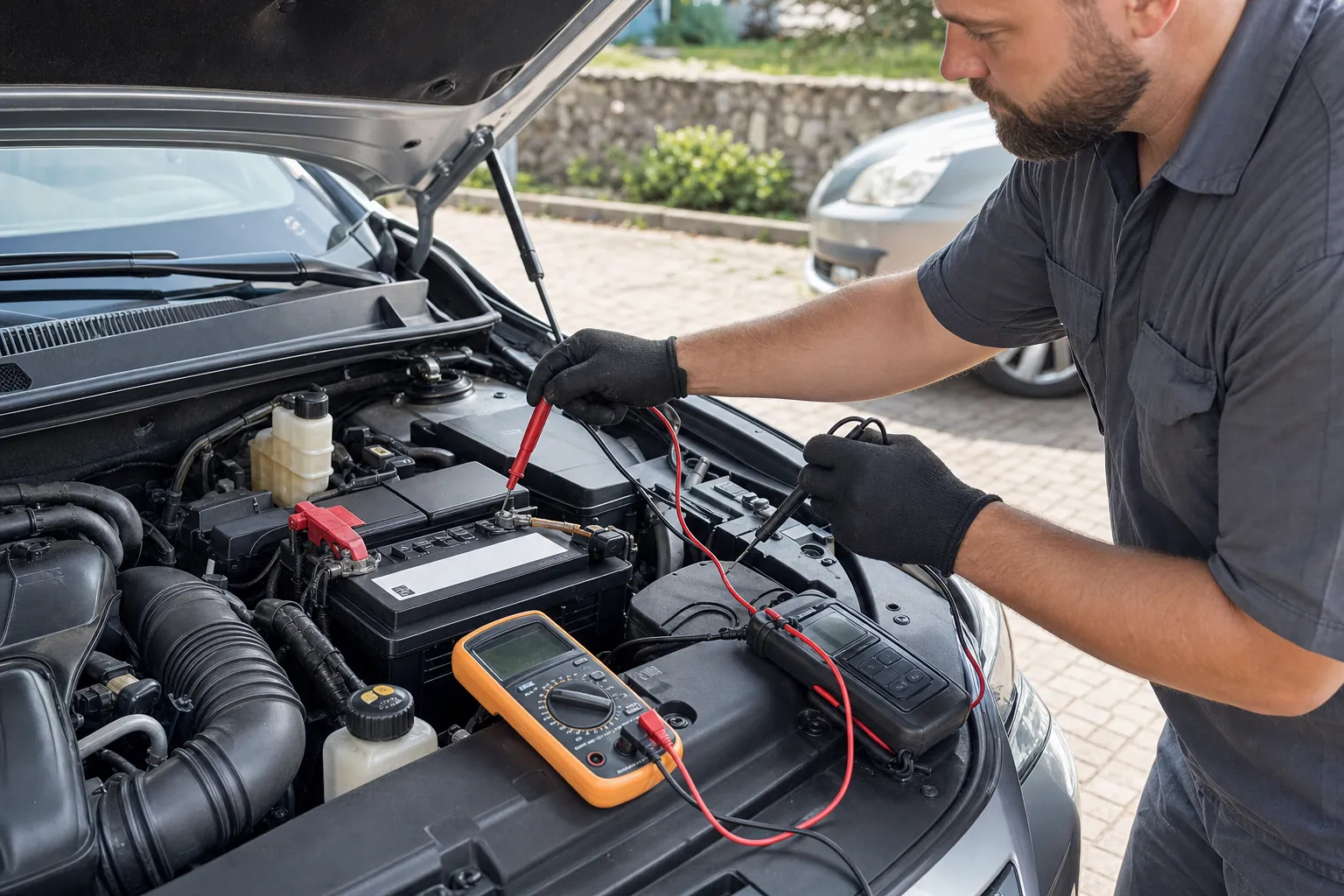
A no-start situation is the clearest example. A car with a weak battery, bad battery terminal, failed starter, charging problem, or electrical fault may not be practical to drive to a shop at all. A technician who can test the starting and charging systems where the car sits can prevent a tow and stop the expensive habit of replacing a battery, starter, and alternator one at a time until something works. Rise High’s mobile battery replacement service is designed around that same principle: test first when the cause is unclear.
Mobile service can also be better value when the repair is straightforward but your schedule is not. If the vehicle is at home or work, an on-site visit may keep a common repair from becoming a day of drop-off, rides, and pickup calls. Convenience is not just a nice extra when it keeps the real cost of car trouble from spreading into the rest of the week.
When a repair shop is the smarter spend
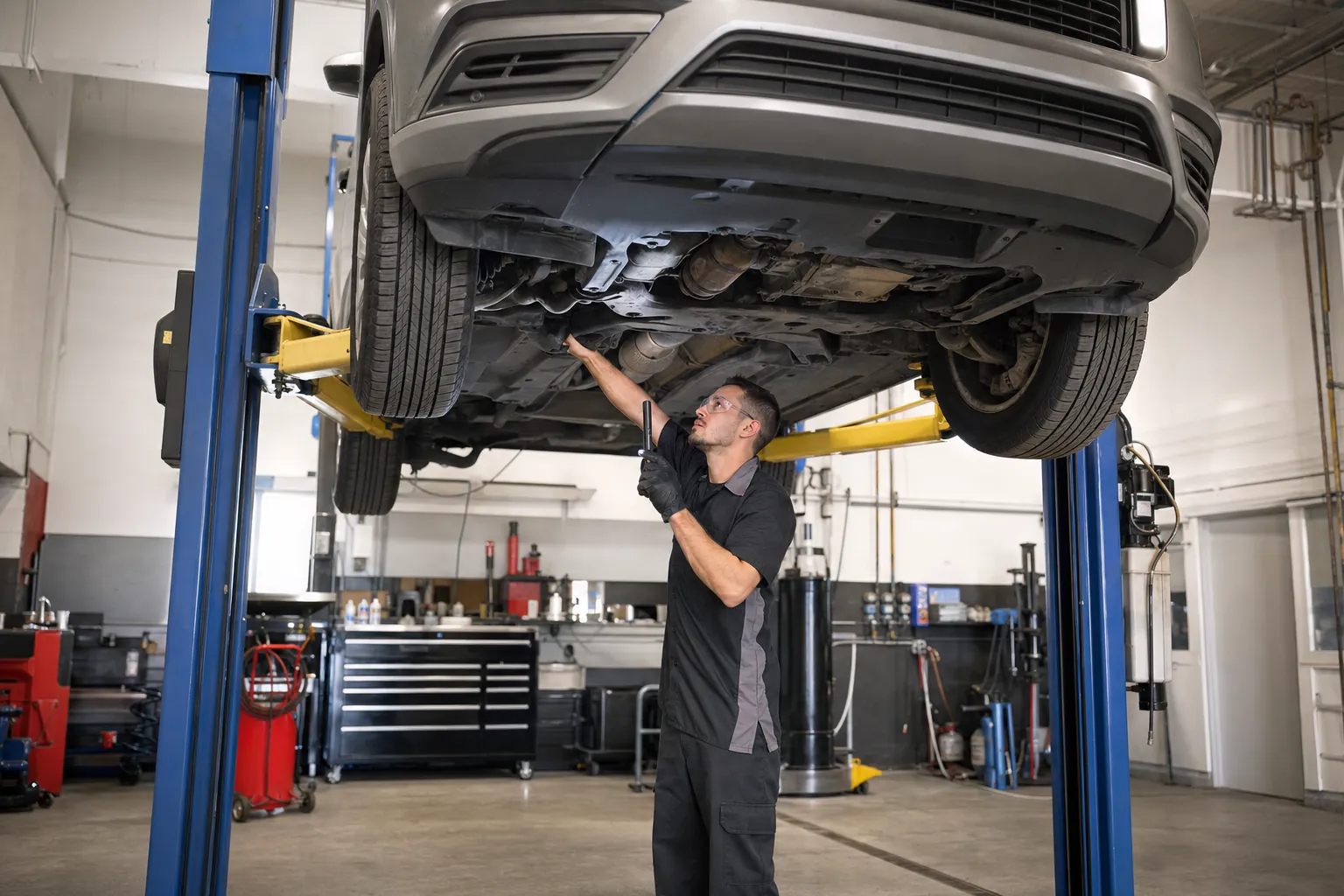
A good mobile mechanic will be honest about the limits. Shops have vehicle lifts, alignment equipment, tire machines, heavy presses, indoor work areas, storage space, and the ability to leave a vehicle safely apart while parts are ordered. Those are not small advantages when the repair needs them.
A shop is often the better route for alignments, tire mounting and balancing, major engine or transmission work, large exhaust repairs, structural work, jobs that need extensive disassembly, or anything that requires the car to stay indoors for more than a day. In those cases, trying to make a shop-only repair happen in a driveway can create more cost, more delay, and more risk.
That does not make a mobile diagnosis wasted money. A mobile technician may still be able to identify the failing system, explain why the repair needs a shop, and keep you from authorizing the wrong repair. For a vehicle you are considering buying, an on-site pre-purchase inspection can offer the same kind of value before the purchase becomes your repair bill.
The cheapest first visit is not always the cheapest repair
A low quote that skips diagnosis or ignores shop-only work can become two appointments, extra parts, and more downtime. Choose the service that fits the actual job.
How to compare two quotes fairly
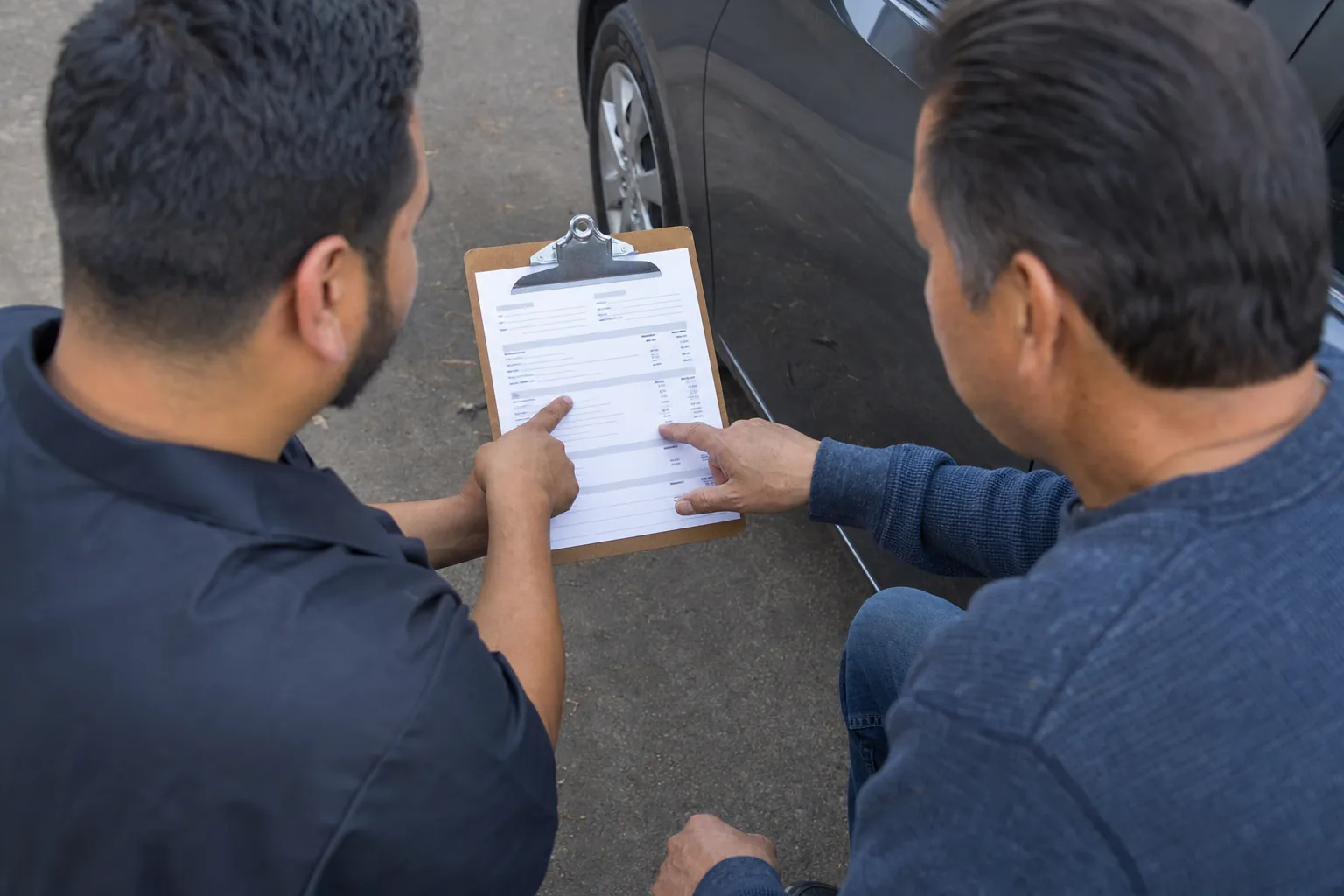
Before choosing mobile service or a shop, make sure both providers are describing the same repair. A quote that says “alternator replacement” is not equivalent to a quote that says “diagnose no-start condition.” One assumes the cause is known; the other is paying to find it. If the fault has not been confirmed, compare diagnostic visits first.
Then ask whether the travel or booking charge is separate, whether towing would be required, which parts are being quoted, and whether labor includes the expected installation work. Part quality matters too. An original-equipment part, a quality aftermarket part, and a low-cost unknown part can have very different prices and warranty expectations. A lower quote is only a better deal when you know what it leaves out.
Texas drivers should also get the agreement in writing before inspection, diagnosis, or repair begins. The Texas Attorney General’s car repair guidance says the authorization should spell out the work, charges, and whether parts may be removed or the vehicle disassembled. That is useful protection whether the vehicle is in a shop bay or parked in your driveway.
- Is the problem confirmed, or do I need diagnostic testing first?
- What does the visit, travel, booking, or call-out fee cover?
- Would the shop option require a tow, rides, or a second trip to collect the car?
- Are both quotes using the same part quality and warranty expectation?
- Does the repair need a lift, alignment equipment, an indoor bay, or longer teardown time?
- Will I approve additional labor or parts before the work changes?
Watch for a cheap quote that leaves out the real work
The lowest number is only useful when it describes the full job. Be cautious when a provider offers to replace a major part before asking about the vehicle, the symptoms, warning lights, recent work, or where the car is parked. An alternator, starter, battery, fuel issue, and wiring fault can all create a no-start complaint. A quick part guess may sound cheaper than a diagnostic visit, but it gets expensive when the new part does not fix the problem.
Clear pricing is usually specific pricing. You should know whether the quote is for a diagnostic visit, a confirmed repair, or both. You should also know whether the parts are included, whether a second visit may be needed, and what happens if inspection reveals seized hardware, corrosion, damaged wiring, or another problem that changes the labor. No mechanic can predict every surprise before looking at the car, but the approval process should never be a surprise.
It is also fair to ask about warranty coverage and part options. A quality aftermarket part may be a sensible value for many repairs, while an original-equipment part may make more sense for certain vehicles or components. The important thing is comparing like with like. A lower quote based on an unknown part, no diagnostic time, and no explanation of additional work is not automatically the better deal.
The work location can change the price and the answer
Mobile service works best when the vehicle is on reasonably level ground with room to work safely around it. A flat driveway, office lot, or accessible apartment space can make a common repair efficient. A steep driveway, narrow garage, busy roadside shoulder, poor lighting, locked gate, or property restriction may mean the job needs a different plan. Sharing that information early helps prevent an avoidable call-out or a visit that cannot safely move forward.
Weather and vehicle condition matter too. Some repairs need more time, clean access, or stable working conditions than an outdoor visit allows. That is not a reason to avoid calling a mobile mechanic. It is a reason to start with an honest description of the situation. The best provider will tell you whether to book the mobile visit, move the vehicle to a safer spot, or use a shop from the start.
Four common situations and the better first move
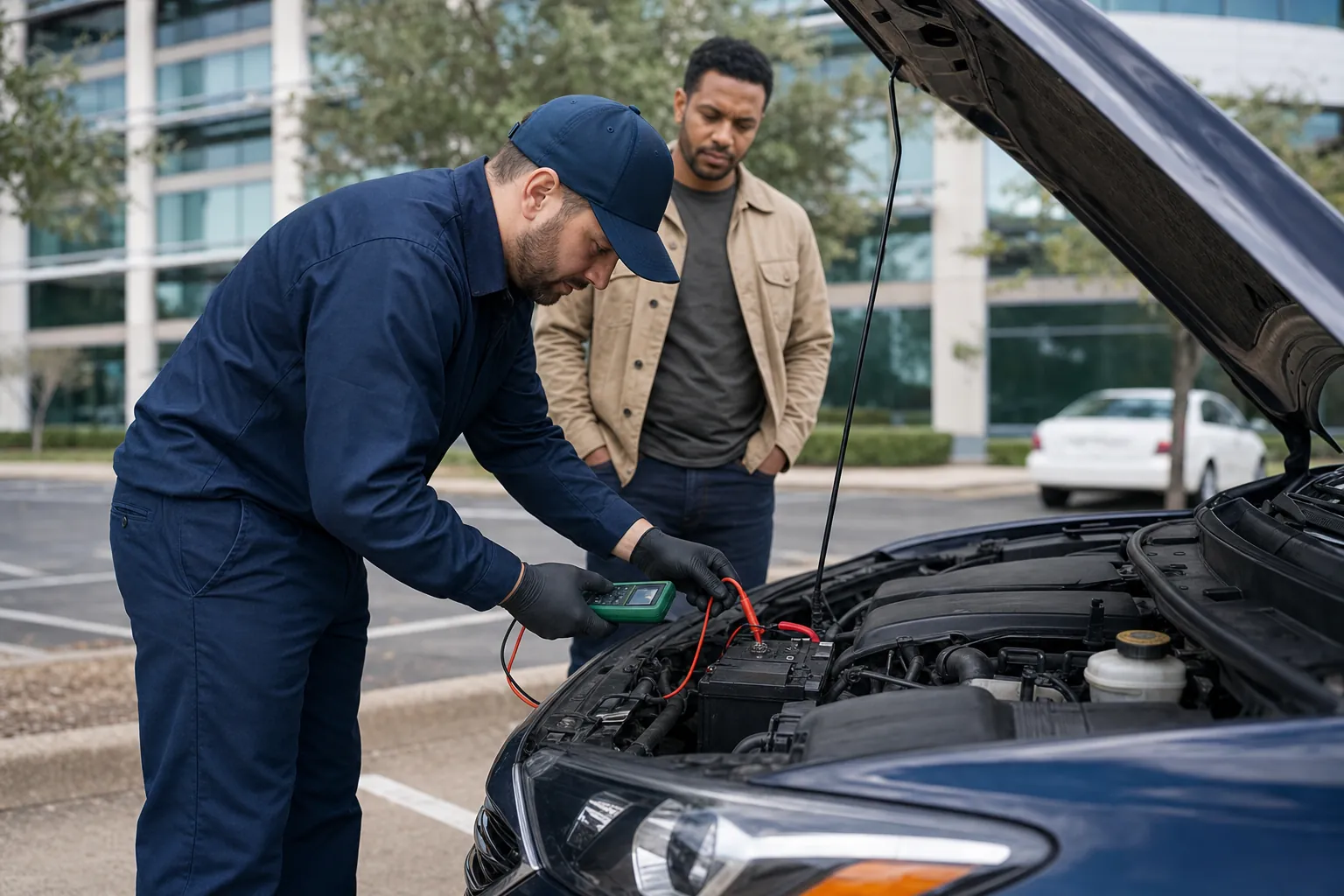
Dead battery or no-start: Start with mobile testing when the car is parked safely. The problem may be a battery, terminal, starter, alternator, fuse, wiring issue, or something else. The right test can save a tow and prevent buying a part based on a guess.
Brake noise or worn brakes: A mobile repair may be a good value when the vehicle is on level ground and the work is straightforward. If the car is unsafe to drive, the technician can help determine whether it is suitable for an on-site visit. For a broader view of mobile-friendly repairs, see Rise High’s service options.
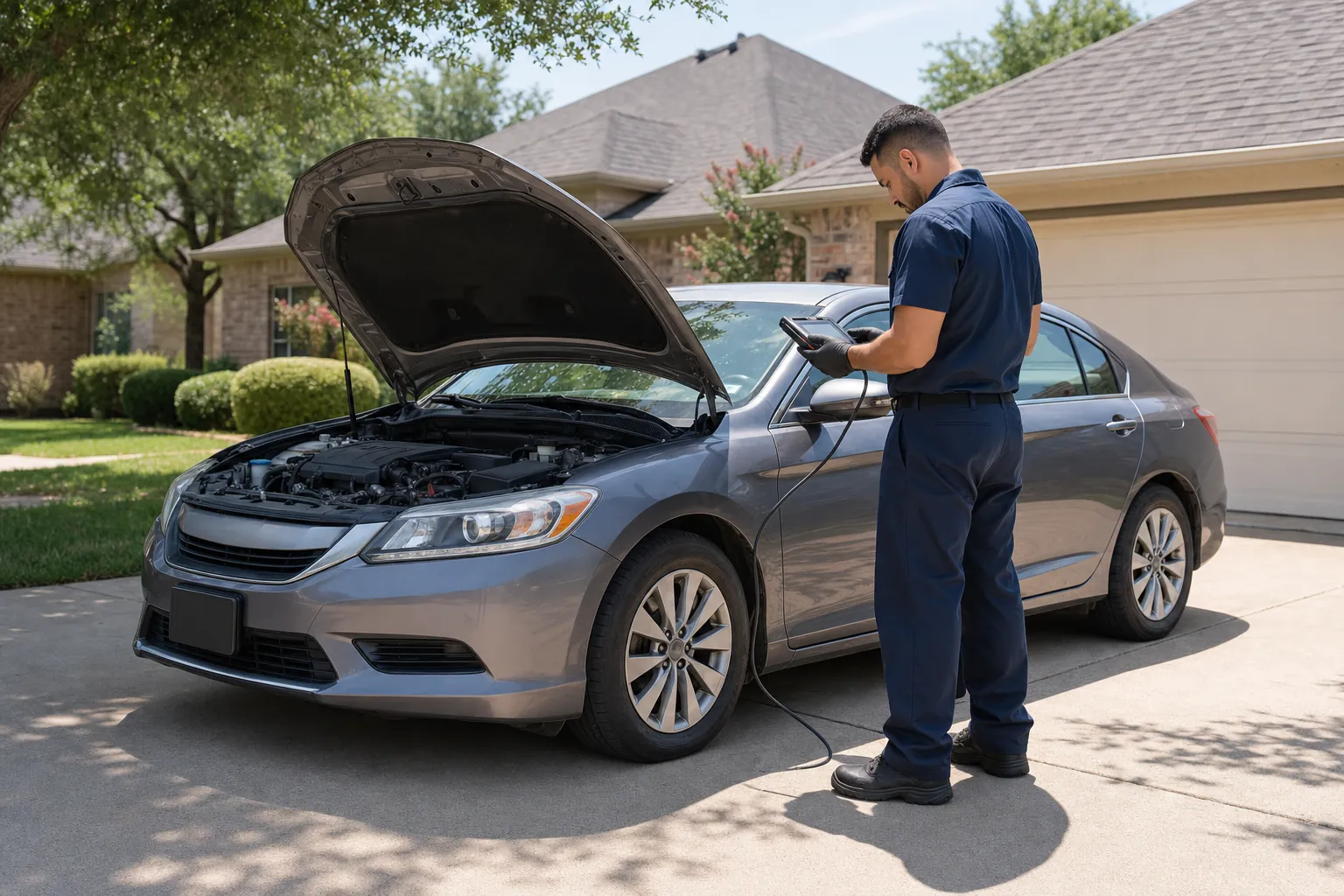
Warning light with no obvious symptom: A diagnostic visit is often the best first spend. A stored code identifies a system, not necessarily the failed part. Proper testing is what separates a repair plan from a parts-shopping list.
Vibration, alignment concern, or major underbody work: A shop is frequently the better call. Alignment and many underside repairs depend on fixed equipment that a driveway cannot replace. Paying for the right facility once is better than paying for an incomplete attempt and then the shop anyway.
How Rise High helps Dallas-Fort Worth drivers decide
Rise High is built for repairs that make sense where the car already sits. The business handles mobile-friendly diagnostics and repairs for gasoline and hybrid passenger vehicles, then gives a straight answer when the problem needs a repair shop instead. That is the standard customers should expect from any mobile service.
If you know the repair you need, a repair visit can be the right start. If the car will not start, has a warning light, keeps draining the battery, or has a symptom without a confirmed cause, start with a diagnostic visit. Rise High’s appointment process explains what to share before booking so the technician can recommend the right kind of visit.
Get The Right First Visit
Call or text with the vehicle year, make, model, location, and symptoms. Rise High can help you decide whether mobile service is a fit before you arrange a tow or book the wrong appointment.
Frequently asked questions
Are mobile mechanics cheaper than repair shops?
They can be, especially when a vehicle would otherwise need a tow or when the repair is a good fit for a driveway or parking lot. They are not always cheaper: a shop can be the better value when the job needs a lift, alignment equipment, major teardown, or a controlled indoor work area.
Do mobile mechanics charge travel fees?
Many mobile mechanics charge a booking, call-out, or travel fee, while others include the travel cost in the labor price. Ask how that fee works before the visit so you can compare two quotes fairly.
How much does a mobile mechanic visit cost at Rise High?
A confirmed repair visit has a $50 booking and travel fee, separate from parts and repair labor. When the problem is not yet confirmed, an on-site diagnostic visit is $150 total: a $50 deposit reserves the appointment and the remaining $100 is due when the diagnosis is complete.
Is it better to call a mobile mechanic or tow my car to a shop?
Start by asking whether the car can be inspected or repaired safely where it sits. A mobile diagnostic visit is often useful for a no-start, warning light, battery, starter, alternator, brake, or electrical problem. A tow and shop visit may be the better call when the repair needs a lift or specialized equipment.
How can I compare a mobile mechanic quote with a shop quote?
Compare the complete job, not one hourly rate. Ask what each quote includes for diagnosis, travel or booking, parts, labor, towing, approval of additional work, and any follow-up shop work. Make sure both providers are pricing the same repair and part quality.
Related posts
Car Won't Start but Lights Come On? No Clicking Noise
When your lights work but the car stays silent, learn the safe checks to make, what the symptom can mean, and when Dallas-Fort Worth diagnostics are the right next step.
Car Won't Start in Cold Weather? What to Check First
Cold weather can expose a weak battery or starting-system problem. Learn what to notice, what to avoid, and when Dallas-Fort Worth mobile diagnostics are the right next step.
How Much Does a Mobile Mechanic Cost?
How much does a mobile mechanic cost in Dallas-Fort Worth? Rise High charges $150 for diagnostics and a $50 booking and travel fee for confirmed labor-only repairs.
What Is a Mobile Mechanic?
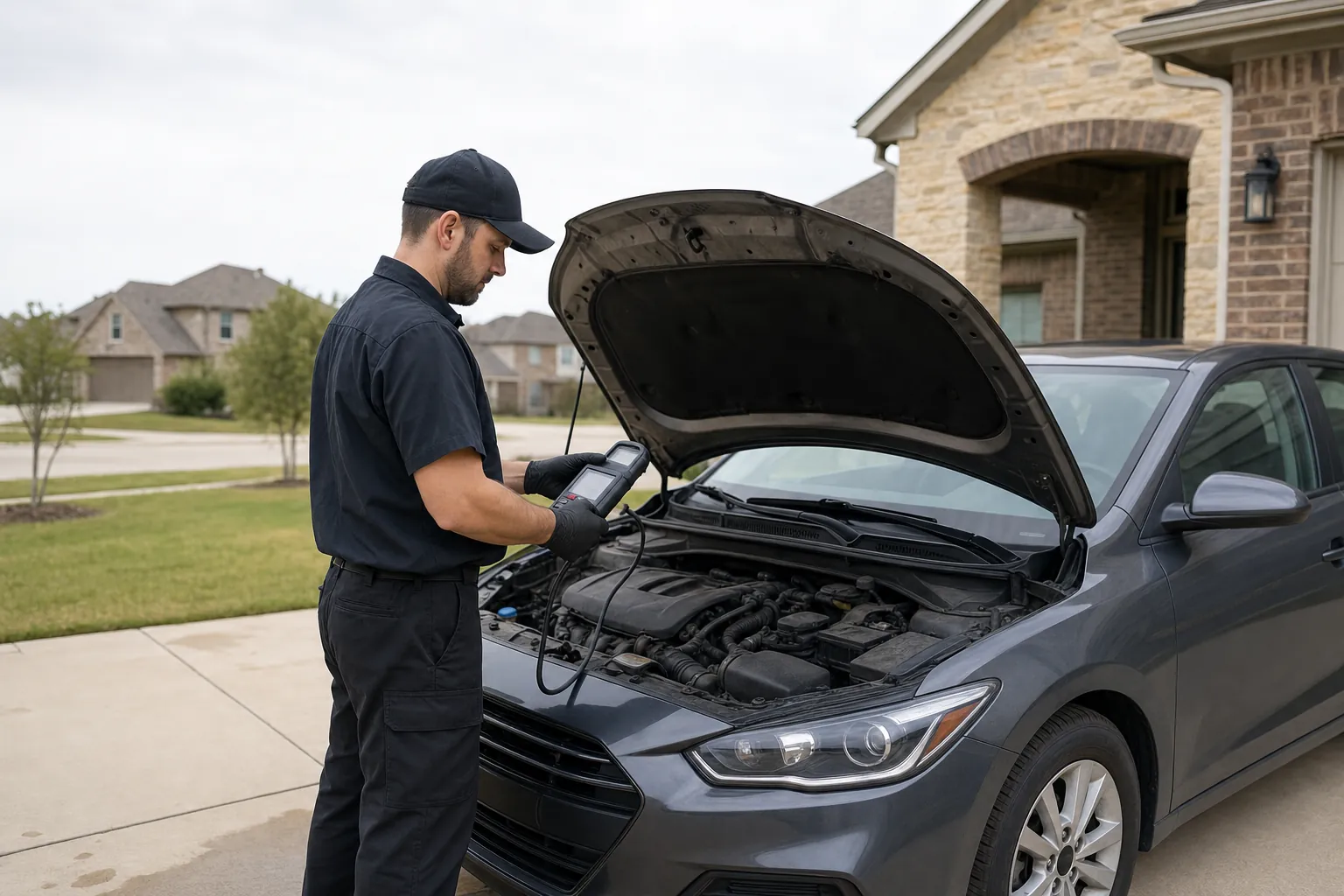
A mobile mechanic comes to your home, work, or apartment for on-site diagnostics and repairs. Learn what they can fix and when a shop is better.
Are Mobile Mechanics Reliable? A Driver's Guide
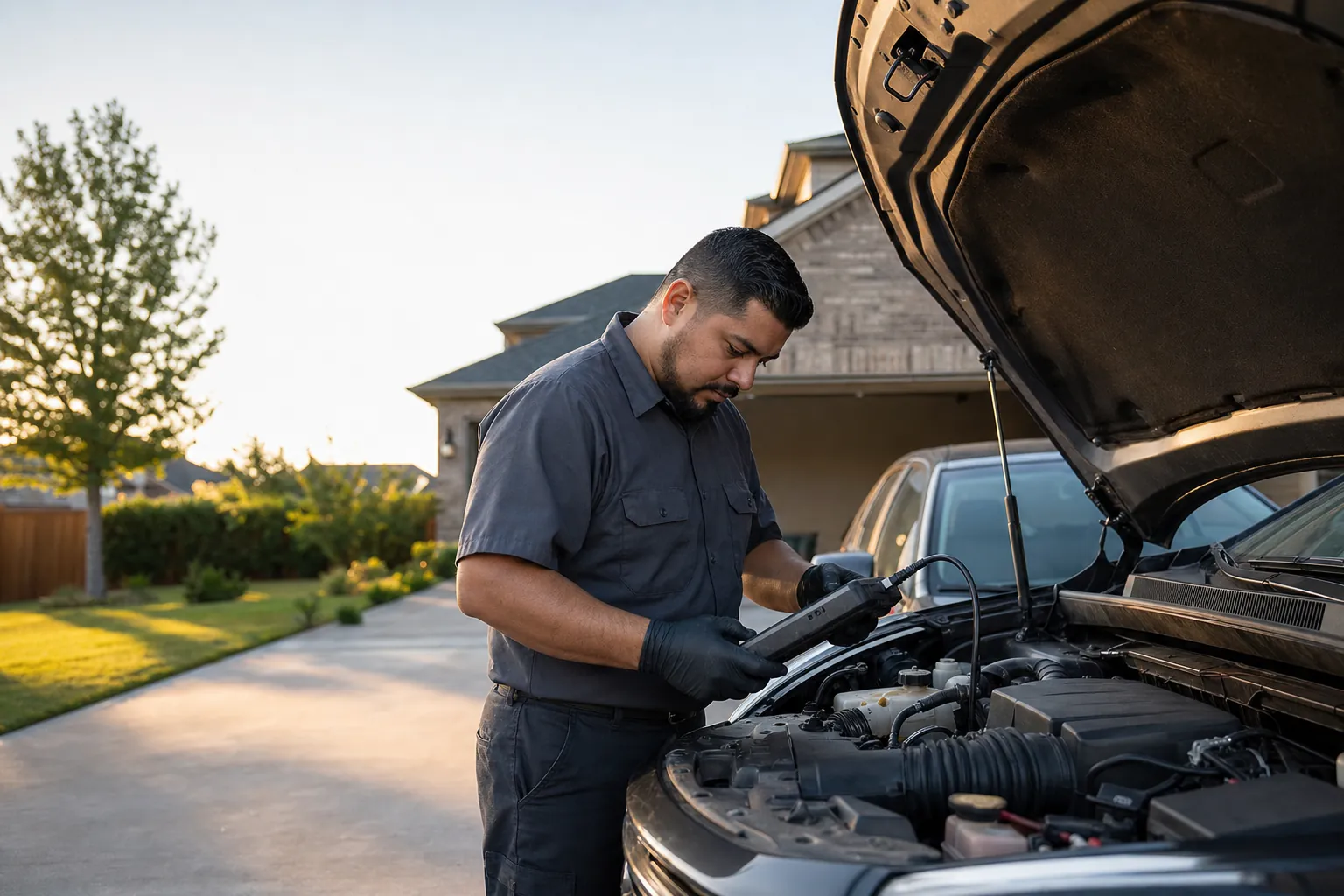
How to choose a reliable mobile mechanic, what to ask before they arrive, and when a Dallas-Fort Worth repair shop is the safer choice.
Can a Mobile Mechanic Replace a Starter?
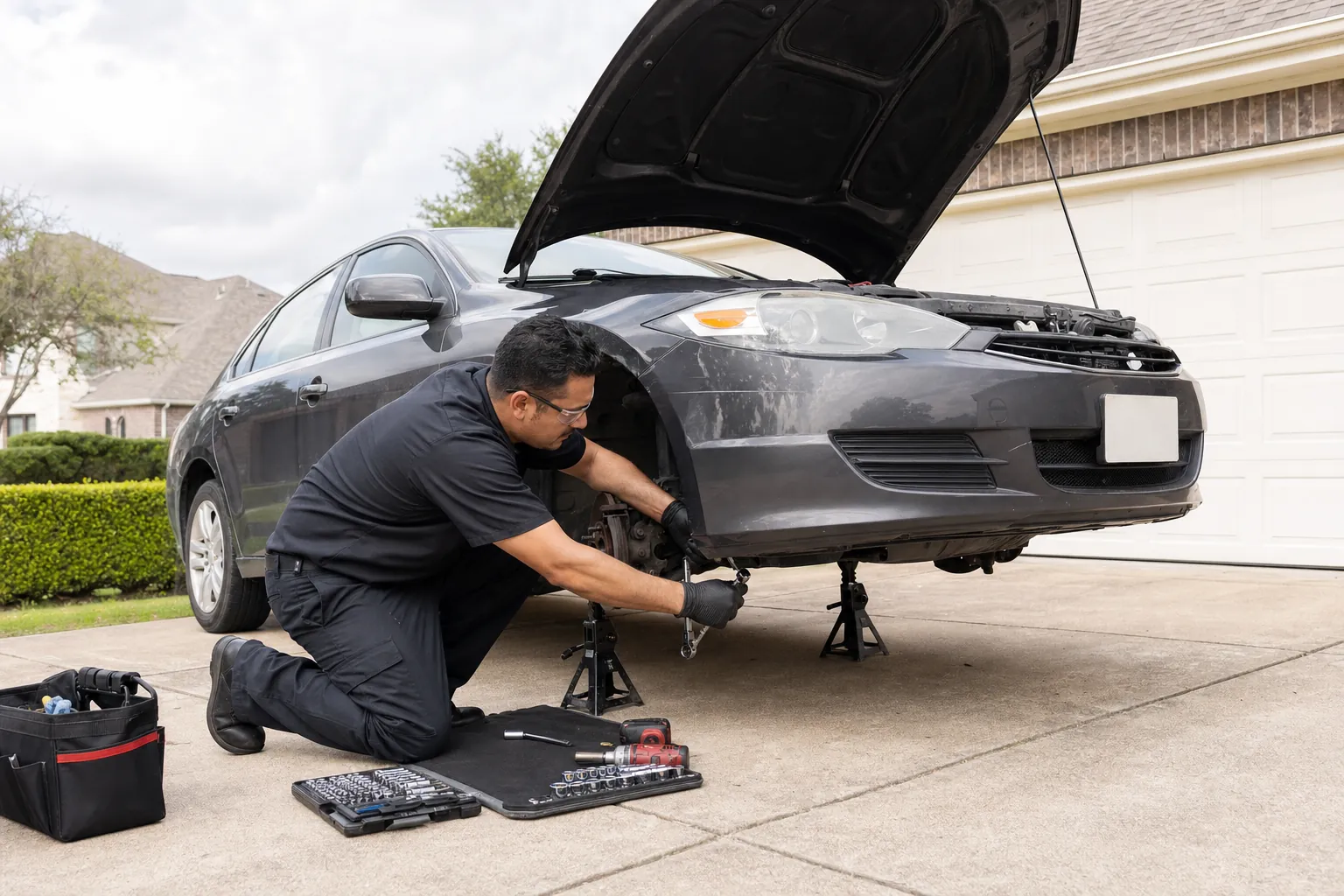
When a mobile starter replacement makes sense, why testing comes first, and when a Dallas-Fort Worth repair shop is the better call.
Can a Mobile Mechanic Replace an Alternator?
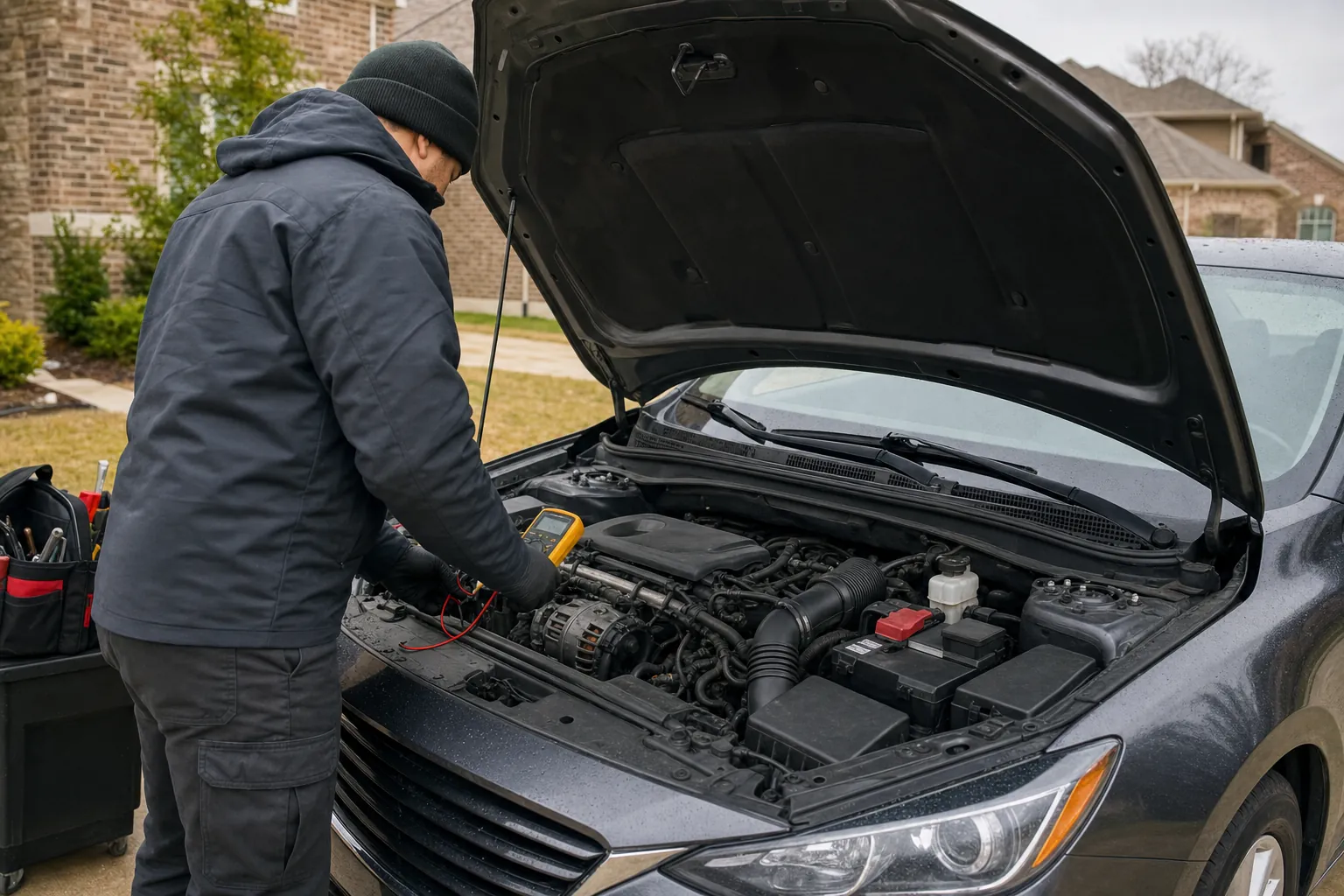
Yes, often. Learn when a mobile mechanic can replace an alternator at your home or work, when testing comes first, and when a shop is safer.
Mobile Brake Repair: What Can Be Done at Home?
What mobile brake repair can cover, when diagnosis comes first, and when Dallas-Fort Worth drivers should choose a repair shop.
Car Won't Start but Battery Is Good? Next Steps
What to check when your car will not start but the battery seems good, plus when Dallas-Fort Worth drivers should book mobile diagnostics.
Car Clicks but Won't Start? What to Check First
Car clicking but not starting? Learn the safe first checks, why a bad starter is not certain, and when to choose $150 on-site diagnostics.
Car Won't Start After Getting Gas? What to Do First
If your car will not start after refueling, note whether it clicks or cranks, avoid repeated starts, and see when mobile diagnostics can help.
Car Cranks but Won't Start? Do This First
If your car cranks but will not start, stop repeated attempts, note the symptom, and choose diagnostics before buying a starter, battery, or fuel part.
Car Loses Power While Driving? Pull Over Safely First
Car loses power while driving? Pull over safely, note warning lights and symptoms, then book mobile diagnostics in Dallas-Fort Worth when the cause is unknown.
Car Starts Then Dies? What to Do Next
If your car starts and then dies, note how long it runs, avoid repeated starts, and learn when Dallas-Fort Worth mobile diagnostics are the right next step.
Car Won't Start but Lights Work? What to Do First
If your car will not start but the lights work, do not assume the battery is fine. Learn what the symptom means, what to note, and when to book diagnostics.