Are Mobile Mechanics Reliable? A Driver's Guide
How to choose a reliable mobile mechanic, what to ask before they arrive, and when a Dallas-Fort Worth repair shop is the safer choice.
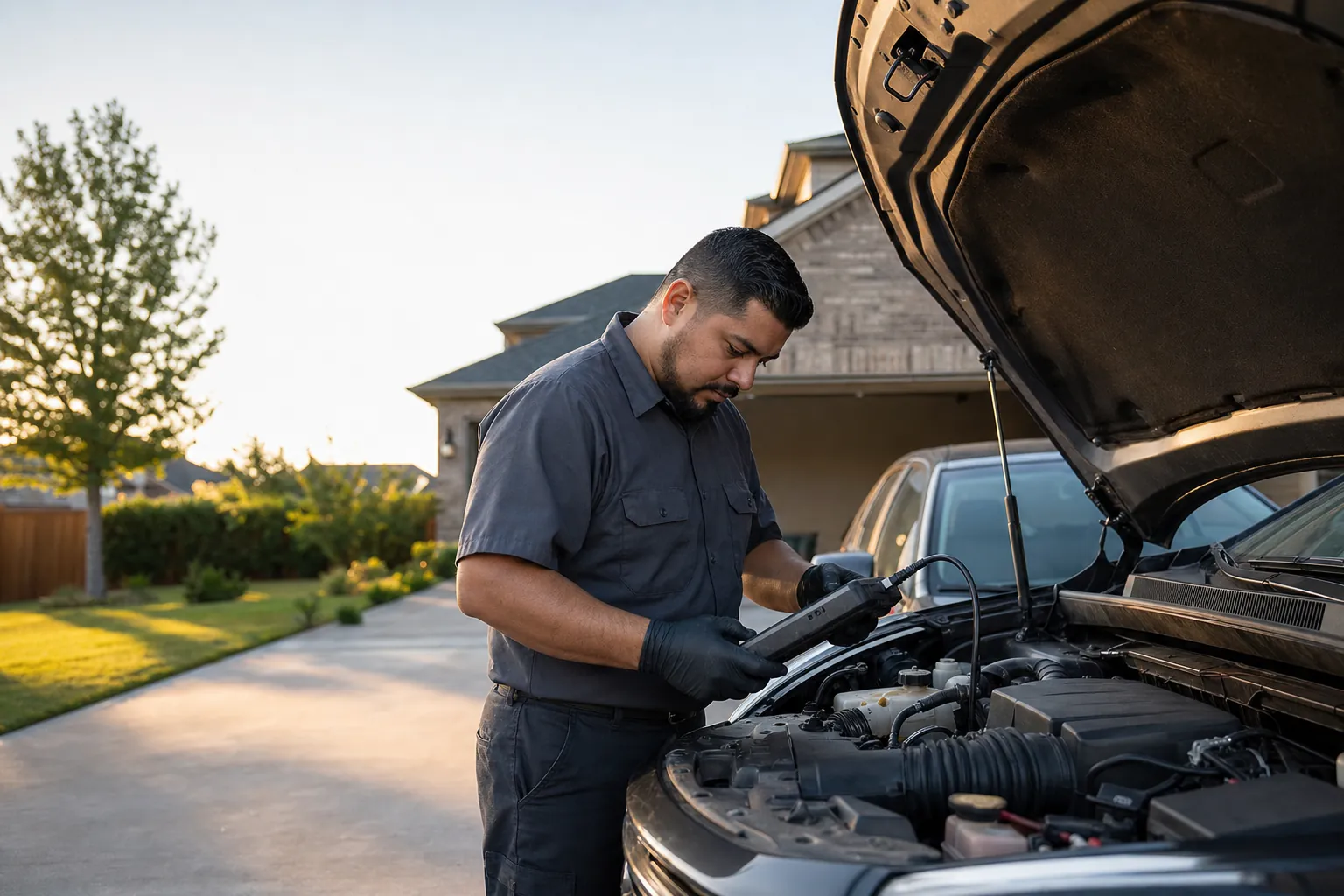
Yes, a mobile mechanic can be reliable. The good ones bring the same habits that make any repair professional trustworthy: they ask useful questions before the visit, diagnose before replacing parts, explain the estimate, protect your approval, and say when the job needs a shop. The fact that the mechanic comes to you is not the proof. The process is.
That distinction matters when a car will not start in a driveway, a battery keeps dying in an apartment lot, or a warning light appears at work. You need help quickly, but urgency is also when a vague promise can become an expensive guess. Use the checks below to choose a mechanic who earns the visit, then choose the right appointment for the actual problem.
Quick Answer
A reliable mobile mechanic has a real business presence, asks about the vehicle and symptoms, gives clear terms, diagnoses unknown faults, and will not force a shop-only repair into a driveway.
Reliability is more than arriving with tools
Mobile repair is not automatically less dependable than a shop visit, and it is not automatically safer or cheaper either. The right question is whether the mechanic has the skill, equipment, communication, and judgment for your vehicle and the specific work you need. A technician can be excellent at no-start testing, battery service, brakes, electrical diagnosis, and starter or alternator work while still telling you that an alignment or major teardown belongs in a shop.
That honest boundary is a good sign, not a reason to keep calling around. A reliable technician protects you from paying for an appointment that cannot finish the job. Rise High takes the same approach with on-site diagnostics: when the cause is not confirmed, testing comes before a parts recommendation.
1. Start with a real, reachable business
Before booking, make sure you can identify who will be working on your car and how to reach the business after the visit. Look for a working phone number, a clear service area, a consistent business name, and recent customer feedback that describes real visits. A quick social-media post may help you discover a provider, but it should not be the only evidence that the person is accountable for the work.
Ask who will be coming out, whether they regularly handle your type of vehicle, and how follow-up questions are handled. A professional does not need a polished script. They do need to be easy to reach and willing to give a direct answer. Rise High lists its phone, service area, visit types, and customer reviews so drivers can evaluate the business before they book.
2. Read reviews for patterns, not just stars
Reviews are most useful when they explain what happened. Look for repeated details about showing up when promised, diagnosing the problem correctly, communicating changes before charging more, and leaving the customer with a clear explanation. One five-star sentence that says only “great service” tells you less than several reviews that describe a no-start, electrical issue, brake repair, or difficult diagnosis from first call through completion.
Read the less enthusiastic feedback too. A fair business may have an occasional complaint, especially when a vehicle needs more work than the owner expected. The useful question is whether the response and the overall review pattern show accountability. Be wary of a page full of identical wording, a provider who cannot point to any real customer feedback, or someone who becomes evasive when you ask how a repair concern would be handled after the visit.
3. Expect questions before a confident answer
A reliable mechanic asks for the year, make, model, engine, symptoms, warning lights, recent repairs, and where the car is parked. Those details are not paperwork for its own sake. They determine whether the mechanic can bring the right parts and tools, whether the work is safe on site, and whether you need a diagnostic visit instead of a repair quote.
Be cautious when someone promises a starter, alternator, battery, or sensor replacement before asking what the vehicle is doing. A no-start can come from a weak battery, corroded terminals, a failed starter, charging trouble, wiring, a relay, a security-system issue, or another fault. Rise High’s mobile electrical repair service is built around testing those systems instead of treating one symptom as a confirmed part failure.
4. Get the appointment terms and estimate in writing
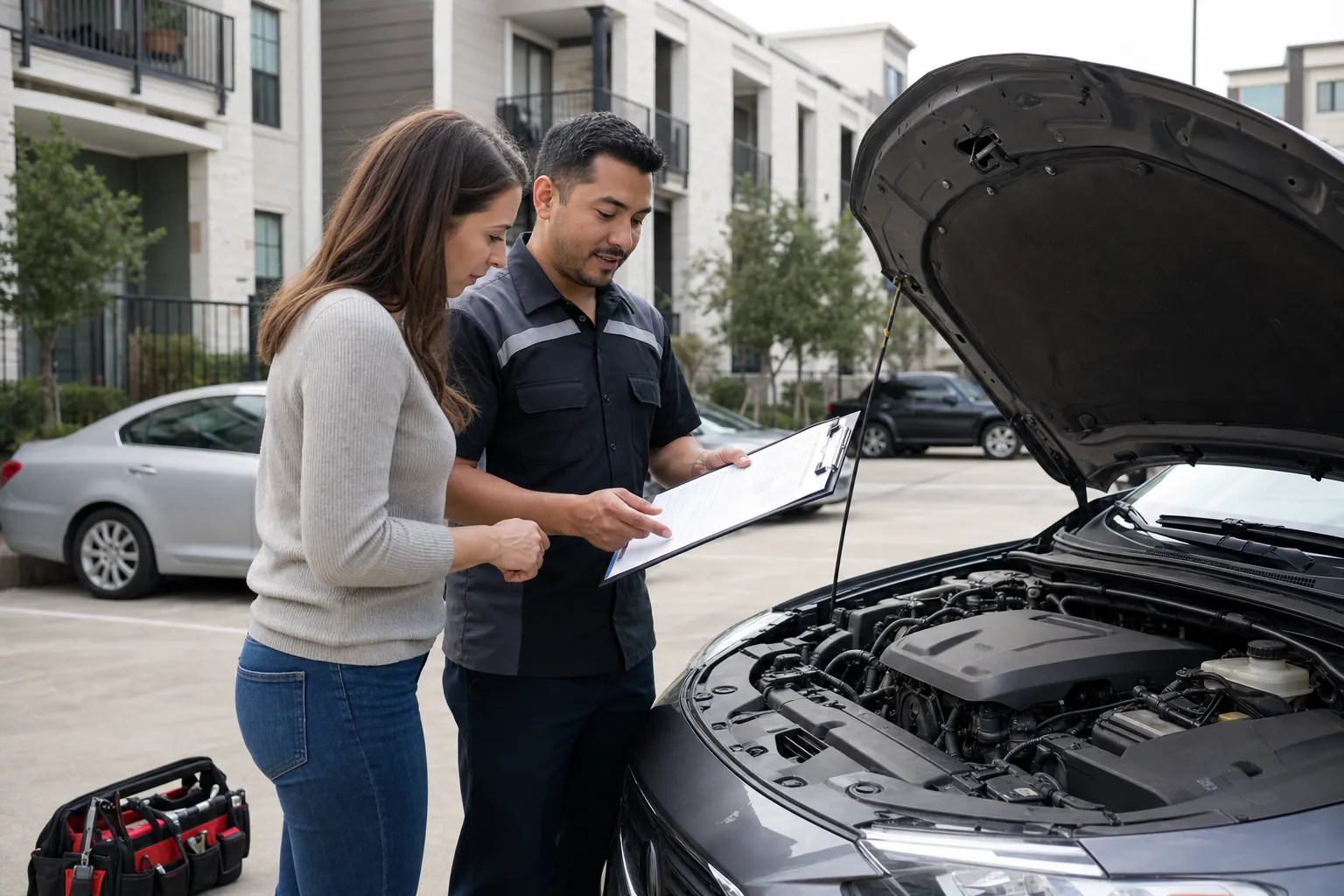
Clear terms protect both sides. Before the mechanic travels, ask whether you are booking diagnostics or a known repair, what deposit or travel fee applies, what that payment covers, and how you approve additional parts or labor. You should not have to guess whether the number you heard is for the full repair, a first inspection, or simply the trip to your location.
The Federal Trade Commission advises drivers to get a written estimate and ask questions about the work, parts, and warranty before authorizing auto repairs. Texas consumer guidance makes the same practical point: written authorization should explain the work and charges before testing, diagnosis, disassembly, or repair moves forward. Read the FTC’s auto repair basics and the Texas Attorney General’s car repair tips if you want a broader checklist.
5. Make sure unknown problems start with diagnosis
Diagnosis is not an upsell when the cause is unclear. It is the work that separates a repair plan from a parts-shopping list. A good diagnostic visit can include a scan for codes, live data, battery and charging tests, visual inspection, electrical checks, and targeted testing to confirm the failed system. A code can identify where to investigate; it does not automatically prove which part needs to be replaced.
This is especially important for warning lights, intermittent faults, no-starts, and batteries that repeatedly go dead. Drivers who replace parts based on a guess can easily pay for a battery, starter, and alternator without fixing the real issue. For a clear view of how a diagnostic visit differs from a repair quote, see the mobile mechanic cost guide.
A fast answer is not always a reliable answer
When the fault is unknown, the dependable first step is confirming the cause. Replacing the right part once is better than replacing several plausible parts and hoping one sticks.
6. Define what the appointment can reasonably accomplish
A clear scope prevents disappointment. A diagnostic appointment may confirm the cause and produce a repair plan, but it may not include the part installation unless the fault is simple, the part is available, and the work is safe to complete at the location. A known repair visit may be more direct, but the technician should still inspect the vehicle before beginning in case access, corrosion, previous repairs, or a different failure changes the plan.
Ask whether parts are included in the estimate, whether the mechanic supplies them or you do, what part quality is being quoted, and whether a return visit could be needed. The goal is not to demand certainty where a vehicle still needs inspection. It is to make sure you understand the decision point. A professional can say, “Here is what this visit includes, here is what I can confirm today, and here is what I will ask before the work expands.”
7. Check whether the work location is actually safe
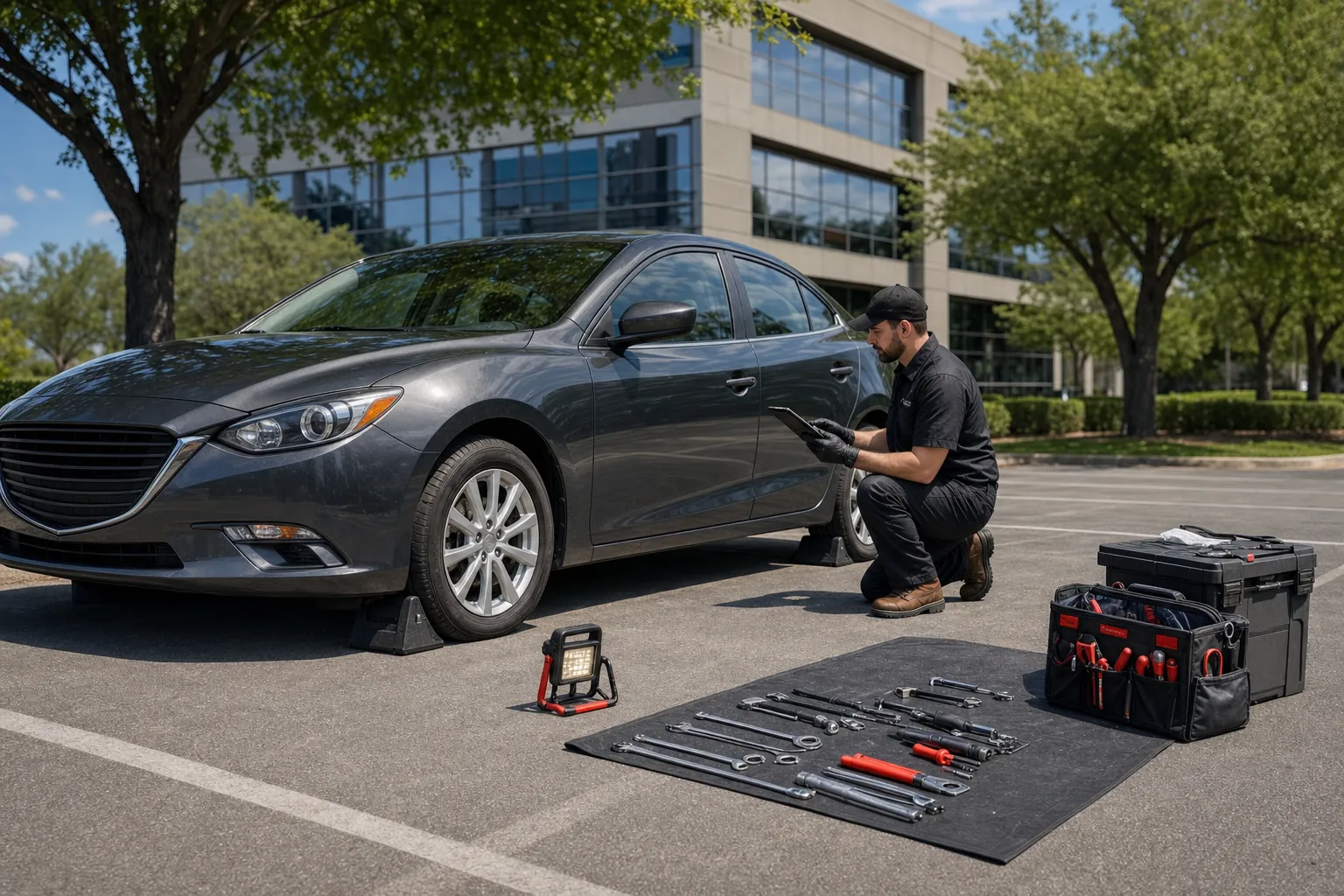
Reliable mobile repair depends on more than the vehicle. The work area needs level ground, room around the car, reasonable lighting, and a way for the mechanic to work without traffic, property restrictions, or avoidable hazards. A steep driveway, busy roadside shoulder, cramped garage, poor lighting, or locked apartment lot can change whether the repair is appropriate to perform on site.
Share those conditions before the appointment. Mention gate codes, parking rules, apartment policies, whether the vehicle is blocked in, and whether it can move. A trustworthy mechanic will either plan around the conditions, ask you to move the car to a safer spot, or tell you that the visit should not go ahead there. That is the kind of judgment that keeps a convenient repair from becoming a risky one.
8. Ask what the mechanic cannot do on site
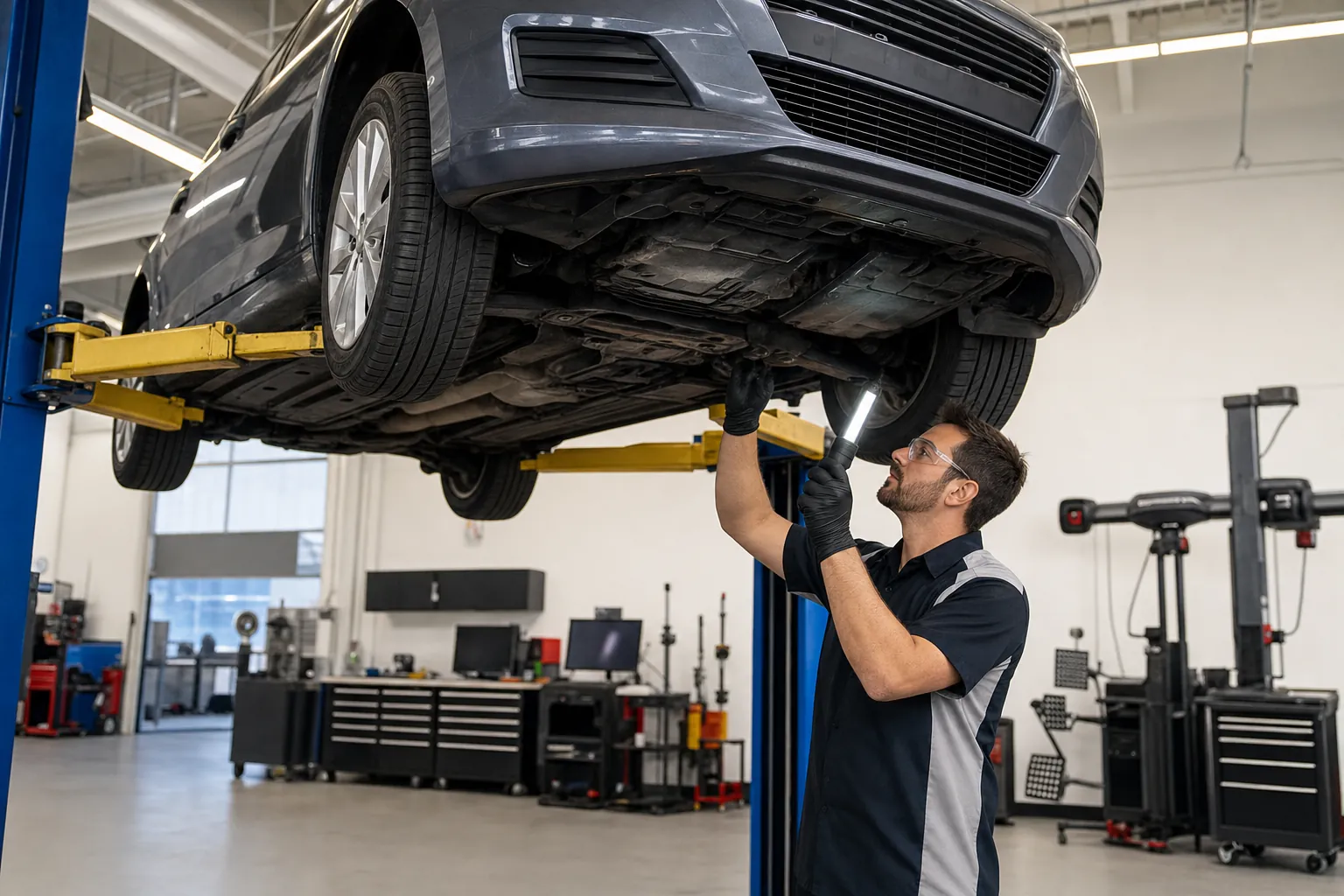
The best mobile mechanic is not the one who says yes to every job. Some repairs need the equipment and controlled environment of a repair shop: alignments, tire mounting and balancing, major engine or transmission work, structural repairs, long teardown, and work that requires a lift or several days with the vehicle apart.
That does not make a mobile visit useless. An on-site technician may still identify the failed system, explain why the repair needs a shop, and help you avoid approving the wrong first repair. If you are still deciding whether mobile work fits your situation, read what a mobile mechanic can do and the comparison of mobile service versus a repair shop.
9. Look for a clear approval process and follow-through
Car repairs sometimes reveal a second issue: seized hardware, damaged wiring, a worn connector, corrosion, or a part that failed for a different reason than expected. That possibility is normal. A reliable mechanic tells you what was found, explains the options, and gets approval before expanding the work. You should know whether a second visit, additional parts, or a shop referral is needed before the bill changes.
Ask how parts and labor are warranted, how receipts are handled, and what to do if a related symptom returns. The answer does not need to be complicated. It should be specific enough that you know who to contact and what information to keep. The same clarity should show up in the appointment process, from the first call through the final repair recommendation.
- The business is easy to identify and contact after the visit.
- The mechanic asks about the vehicle, symptoms, location, and safety conditions.
- The visit fee, estimate, parts, and approval process are clear before work begins.
- Unknown faults begin with testing instead of a guessed part replacement.
- The mechanic is willing to recommend a shop when the job needs shop equipment.
How Rise High helps Dallas-Fort Worth drivers book with confidence
Rise High Mobile Mechanics is built around mobile-friendly diagnostics and repairs for gasoline and hybrid passenger vehicles. The business helps with warning lights, no-start conditions, batteries and charging systems, starter and alternator problems, brakes, electrical faults, suspension, steering, cooling concerns, and selected light engine repairs when the vehicle and worksite are a fit.
If you know the repair you need, a repair visit may be the right start. If the symptom is unclear, the car will not start, the battery keeps draining, or a warning light keeps returning, start with a diagnostic visit instead. The appointment process explains what to share before booking, and the service overview shows the types of work that can often be handled where the car sits.
Start With The Right Visit
Call or text with the vehicle year, make, model, location, and symptoms. Rise High can help you decide whether to book a diagnostic visit, a repair visit, or a shop appointment.
Frequently asked questions
Are mobile mechanics reliable?
They can be very reliable when you choose a qualified, responsive professional who explains the work, provides a clear estimate, and is honest about repairs that need a shop. Reliability depends on the individual mechanic and whether the job suits an on-site setting, not simply on whether the work is mobile.
How do I know a mobile mechanic is legitimate?
Look for a real business identity, recent local reviews, a working phone number, clear service details, and a straightforward answer about experience, parts, pricing, and approval before work begins. Ask for the estimate in writing and avoid anyone who promises a major repair without first understanding the vehicle and symptom.
Should I pay a mobile mechanic before the repair is done?
A booking deposit or diagnostic fee can be normal, especially when the mechanic reserves travel time and diagnostic work. You should understand exactly what that payment covers, what remains due, and when you will approve parts and additional labor before the visit begins.
What repairs should not be done by a mobile mechanic?
A repair shop is usually the safer choice for alignments, tire mounting and balancing, major engine or transmission work, extensive teardown, structural work, and jobs that need a lift, a controlled indoor bay, or several days of access to the vehicle.
Related posts
How Much Does a Mobile Mechanic Cost?
How much does a mobile mechanic cost in Dallas-Fort Worth? Rise High charges $150 for diagnostics and a $50 booking and travel fee for confirmed repairs, plus parts and labor.
What Is a Mobile Mechanic?
What mobile mechanics do, which repairs fit an on-site visit, and when a Dallas-Fort Worth repair shop is the better call.
Are Mobile Mechanics Cheaper Than a Repair Shop?
Are mobile mechanics cheaper? Compare towing, travel fees, diagnostics, and Dallas-Fort Worth mobile mechanic pricing before you book.
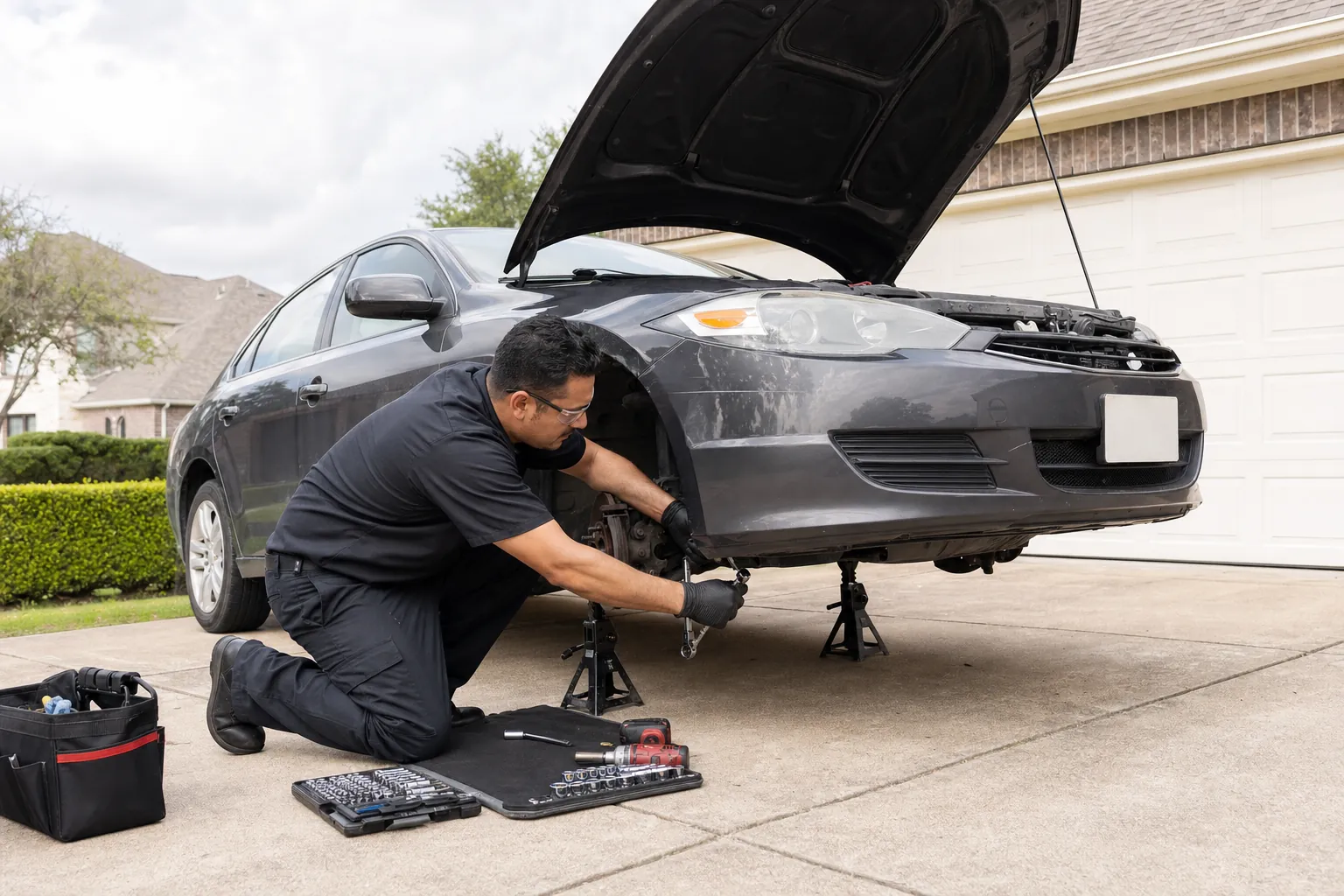
Can a Mobile Mechanic Replace a Starter?
When a mobile starter replacement makes sense, why testing comes first, and when a Dallas-Fort Worth repair shop is the better call.
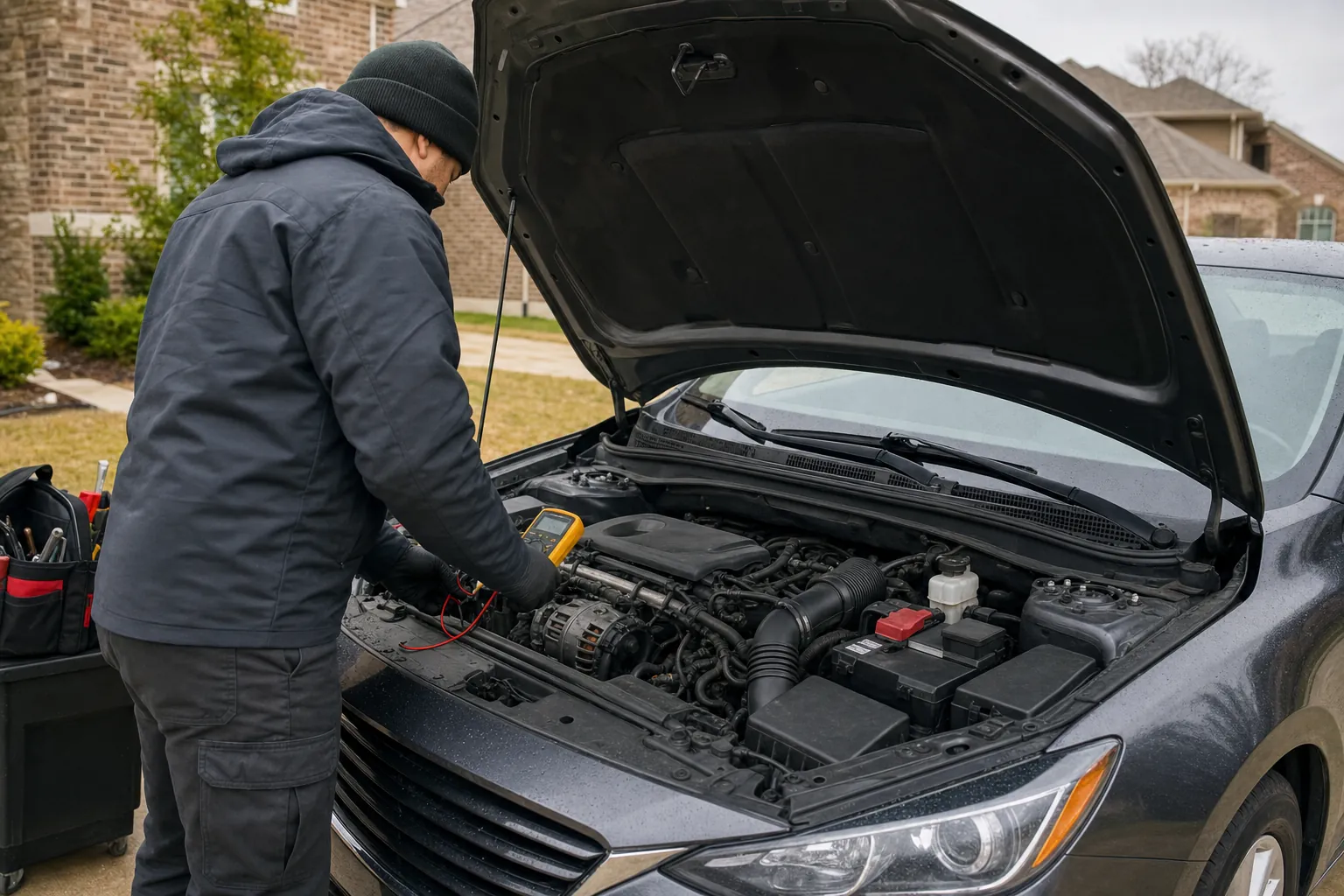
Can a Mobile Mechanic Replace an Alternator?
Yes, often. Learn when a mobile mechanic can replace an alternator at your home or work, when testing comes first, and when a shop is safer.
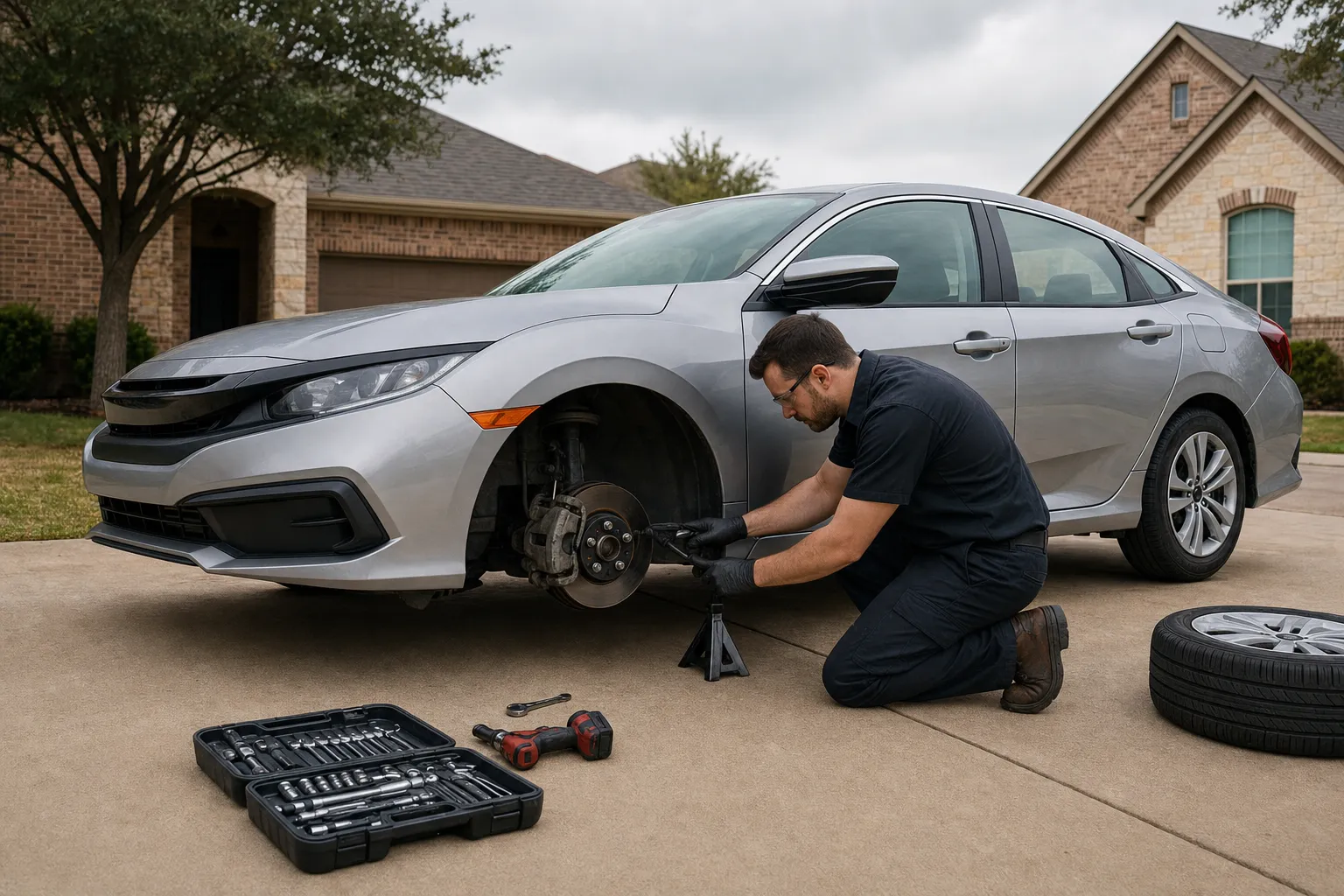
Mobile Brake Repair: What Can Be Done at Home?
What mobile brake repair can cover, when diagnosis comes first, and when Dallas-Fort Worth drivers should choose a repair shop.
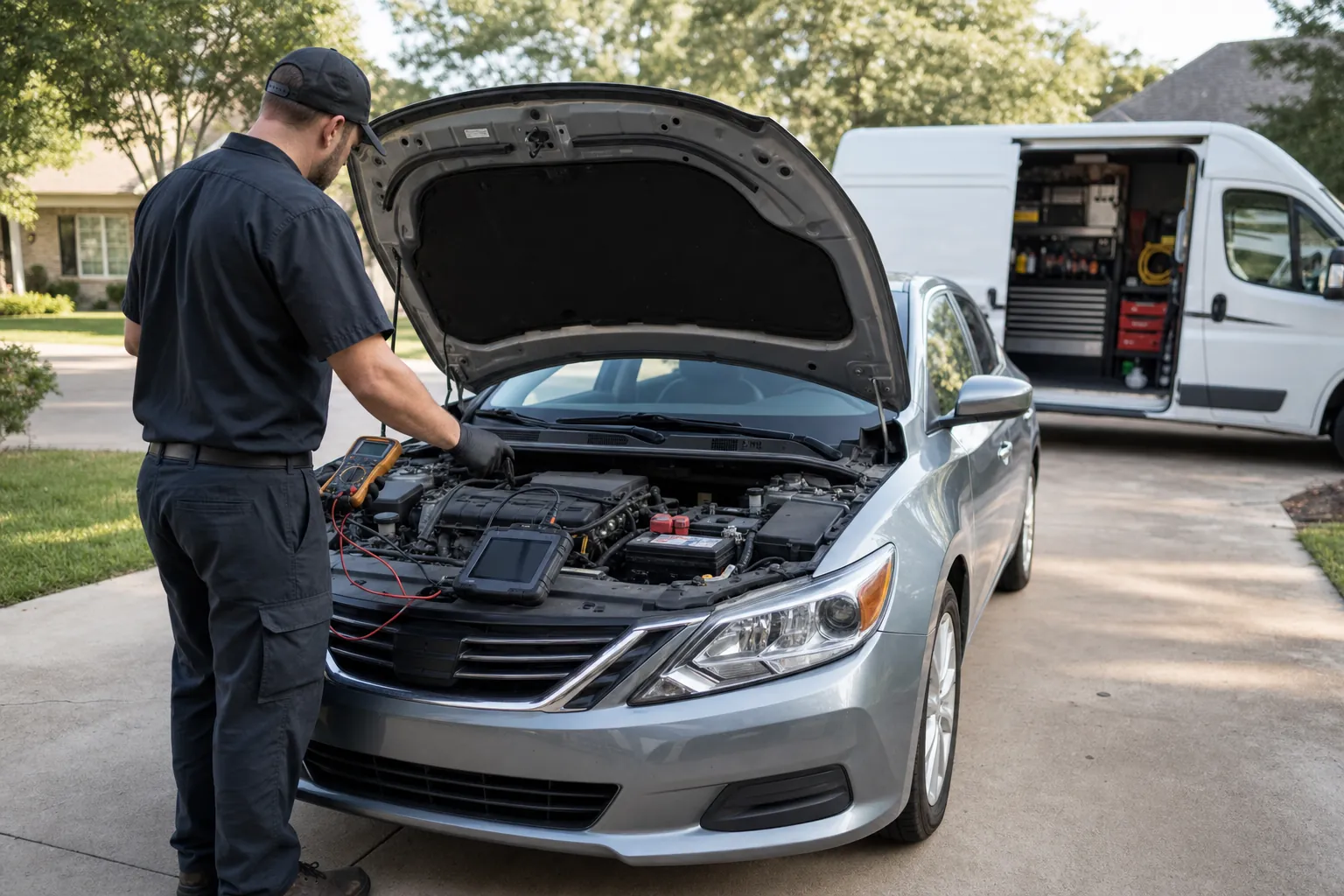
Car Won't Start but Battery Is Good? Next Steps
What to check when your car will not start but the battery seems good, plus when Dallas-Fort Worth drivers should book mobile diagnostics.
Car Clicks but Won't Start? What to Check First
A car that clicks but will not start may have a battery, cable, starter, relay, or safety-switch problem. Learn what the sound can tell you before booking service.
Car Won't Start After Getting Gas? What to Check
A car that will not start after getting gas can be a coincidence or a fuel-vapor issue. Learn what to note, what not to do, and when diagnostics make sense.
Car Cranks but Won't Start? What to Check First
A car that cranks but will not start needs a different diagnosis than a no-crank problem. Learn what to note, what to avoid, and when to book mobile diagnostics.